



 Weather

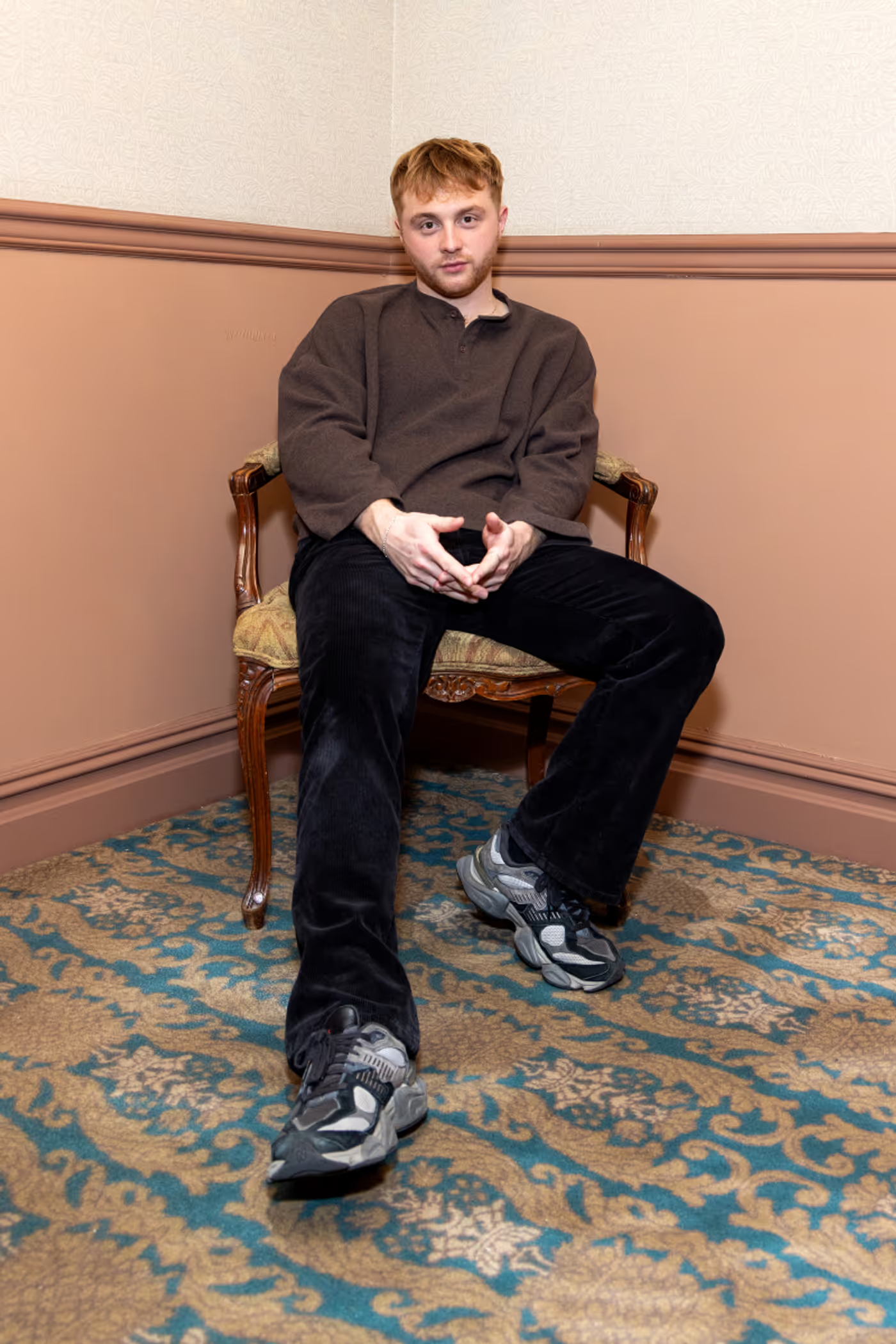
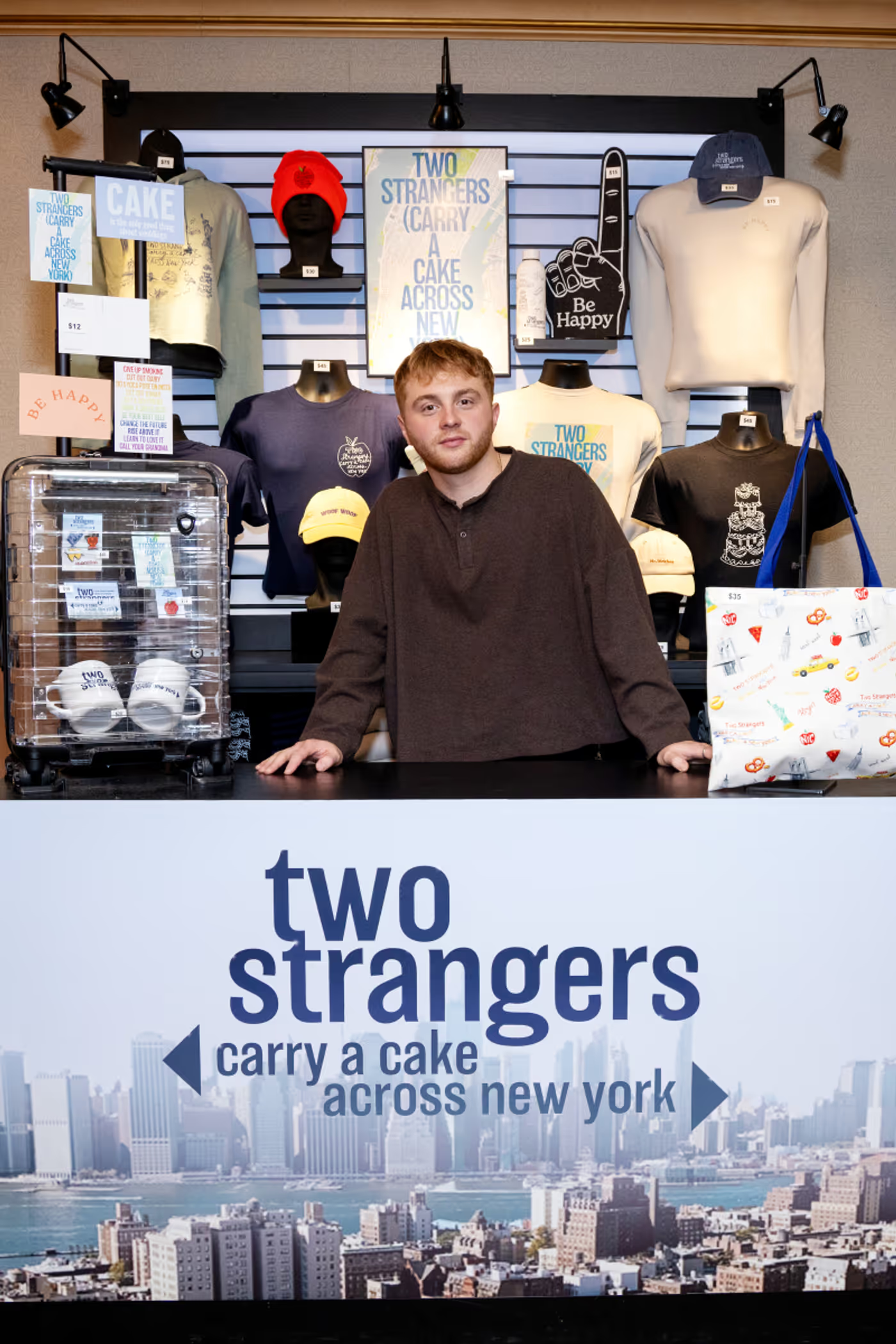
Sam Tutty is currently making his Broadway debut as Dougal in the New York premiere of Two Strangers (Carry a Cake Across New York)! Tutty’s previous credits include the West End premiere of Two Strangers (Carry a Cake Across New York) at the Criterion Theatre, the West End production of Dear Evan Hansen, which earned him an Olivier award, and more.
BroadwayWorld spoke with Tutty about bringing this show to New York audiences, the show going viral on social media, what he remembers most from opening night on Broadway, and more. Read the full interview and see photography from BroadwayWorld’s Jennifer Broski here!
Two Strangers (Carry a Cake Across New York) began in the UK before making its way to Broadway. What were the biggest adjustments for you—artistically or personally—in bringing the show to the US?
I had a conversation with myself that I didn’t want much to change, because I wanted the work that I had done, that had given me the gift of this opportunity, to be what the people who get to see it now see. With that being said, there were tweaks, I know how a scene, the pentameter of it all, should sound for a joke to land, I think there’s a real science behind it. And then when you do the show for as long as Christiani [Pitts] and I have now, you get to refine that rhythm, and then riff off of that, and it evolves.
There wasn’t much change, the change is starting now, which is really exciting because it’s coming from a place of real hard work with my co-star, and I’m very blessed, very lucky.
On that note, have you noticed any differences between UK and US audiences?
Absolutely! And I’m sure that I’d notice the other way around if the show was written in London and it was making it’s West End debut after a Broadway run. But, the fact that the show is set in New York, and it is now being performed in New York, there is just a level of energy that the audience feels, and deserve rightly so, to have an onus over these jokes. It’s written for them. It’s a love letter to New Yorker’s, to New York.
Kevin McCollum, our producer, had this great line that I’m stealing all the time, he said it’s the hero and the villain of the show, which is what it is in real life anyway. It’s such a fantastic city, but it comes with, as all city’s do, all of its obstacles. The main thing I’m realizing is there were so many jokes in the UK performances that were written as jokes, that I never realized until I presented it in front of a New York audience. I think it’s a testament to the audiences that we’ve seen that really heighten the show for its quality and its nuance.
The show had quite a viral moment. When did you first realize this show was resonating in that way, and how did that feel?
My younger brother, he sent me TikToks of me, and I’m not on TikTok. When he started showing me the numbers, as much as I don’t want to know that stuff, or want to care about that stuff, in today’s society, social media, and how important it is for the press, those things are important. And it made me realize that if this ever did transfer, it would be welcomed with open arms to many. To how many I had no idea until we actually had the gift of doing it here. We’re very blessed and very lucky.
It’s reinforced a faith in the industry that I thought I had lost. Producers have a lot of other things to worry about that I don’t have to worry about. I think they know good work, when they see an opportunity they’ll fight for it, and I’ve seen a lot of our producers fight for this show. It’s really reinforced, and reawakened, a trust, and a love for this industry that I had so many countless reasons to have lost faith in.
Take me back to your first Broadway performance. What do you remember most about that night?
I remember trying not to cry on opening night, that was a real tough one, I was emotional. My family was three rows from the front, and I clocked them during ‘New York’ and I was like, “Woah, okay! That’s fun.” But I remember just feeling the love and the support. Everyone was asking me, “You’re on Broadway, how do you feel?” And the only thing that you really can say is that you’re so grateful, and you’re so happy. But I often found that it was impossible for me to digest properly. Like, I didn’t know how to. I didn’t have the words, or maybe I wasn’t emotionally intelligent enough to actually absorb it all. But then I think that moment in ‘New York’ where I was trying not to cry was me finally digesting all of this. Which was a real relief for me, because I was wondering when it was all going to come, and when it did I was like, ‘That’s a cool place for it to happen, we can move on now.’
You’ve lived with this character now across different countries and different productions. How has your relationship to the role changed or evolved throughout this whole process?
I think he’s matured in the ways in which he’s allowed to mature. Obviously, he is inherently a very immature man, but there’s a groundedness in him that I think I was really hoping to find immediately, that I thought I had found, until you put on-and-off three years of your life into a show. Throughout the three years you realize, ‘Oh, now I’m understanding where I want him to be, and how I want him to behave, and how I want those jokes to land.’ I feel like I have a greater control over how I’m presenting myself as Dougal.