


 Weather
The parallel wars in Ukraine and Iran may be taking place in different parts of the world, but pro-Russian propaganda is increasingly attempting to blend the two, according to a recent report by EUvsDisinfo.
ADVERTISEMENT

ADVERTISEMENT
The aim, analysts say, is to discredit Ukraine by linking it to the conflict in the Middle East, while suggesting that Kyiv is losing international attention and support in the face of Russia’s full-scale invasion.
One of the main recurring claims is that Kyiv is unhappy that the Iran war is drawing focus away from Ukraine and pushing the war in Europe further down the political agenda.
In early March, Moscow-based analyst Sergei Poletaev, who supports the war in Ukraine, wrote that a prolonged conflict in Iran would not only divert global attention but also redirect key military resources — such as missile defence systems — towards the Persian Gulf.
Similar narratives have been echoed across Russian media since the escalation began, with some outlets even suggesting — without evidence — that Ukraine could stage incidents in Europe or Russia to regain the spotlight.
Is the Iran war drawing attention away from Ukraine?
Such a narrative is particularly prevalent on Telegram. Rodion Miroshnik, ambassador-at-large for Russia’s Foreign Ministry, wrote on his channel that “the shift of global attention from Ukraine to the Middle East deprives Zelenskyy of his main leverage — his ability to influence the media agenda, which he has successfully monetised in recent years”.
He added that the US would become “fully absorbed” by the Iran issue and “forget about Ukraine.”
However, this line of argument predates the current Middle East crisis.
In September 2025, Maria Zakharova, Russia’s foreign affairs ministry spokesperson, suggested — citing media reports — that Ukraine could be planning attacks on NATO countries to grab attention and then pin the blame on Moscow.
She warned that “Europe has never been so close to the outbreak of World War Three.”
European leaders have rejected the suggestion that tensions in the Middle East will weaken their position on Russia.
Speaking alongside Ukrainian President Volodymyr Zelenskyy at the Élysée Palace on 13 March, France’s President Emmanuel Macron said Moscow would be “mistaken” to believe the crisis in Iran could bring Russia any strategic relief.
He reiterated that the G7 would not reconsider sanctions. “Rising oil prices must not lead us to change our sanctions policy towards Russia,” he said.
Divisions among Western allies
Nonetheless, the US has since announced that it would ease restrictions on Russian oil and petroleum exports as a short-term measure to stabilise global markets, in a move that drew criticism from several European allies.
Countries including Germany, France, Norway and the UK opposed the decision, warning that it risked undermining sanctions efforts designed to weaken Russia’s economy as the war in Ukraine rages on.
In fact, in contrast to the US’s softening stance, EU member states agreed on 14 March to extend sanctions against Russia for another six months.
However, divisions remain in Europe. Belgium’s Prime Minister Bart De Wever suggested Europe should consider re-engaging with Moscow to restore access to cheaper energy, arguing that ending the war would be in Europe’s economic interest.
Other leaders — including Macron, Italy’s Giorgia Meloni, and Hungary’s Viktor Orbán — have expressed support for direct talks with Russia, while countries such as Poland and the Baltic states remain firmly opposed.
Energy and strategic pressure
Energy has also emerged as a key element in the broader geopolitical context.
Earlier this month, Russian President Vladimir Putin suggested that Moscow could redirect energy exports away from Europe towards alternative markets in Asia, while signalling that cooperation with European partners remained possible under certain conditions.
“We are ready to work with Europeans too, but we need clear signals that they are willing to engage and can guarantee long-term stability,” he said.
At the same time, rising oil prices have prompted concern among European leaders.
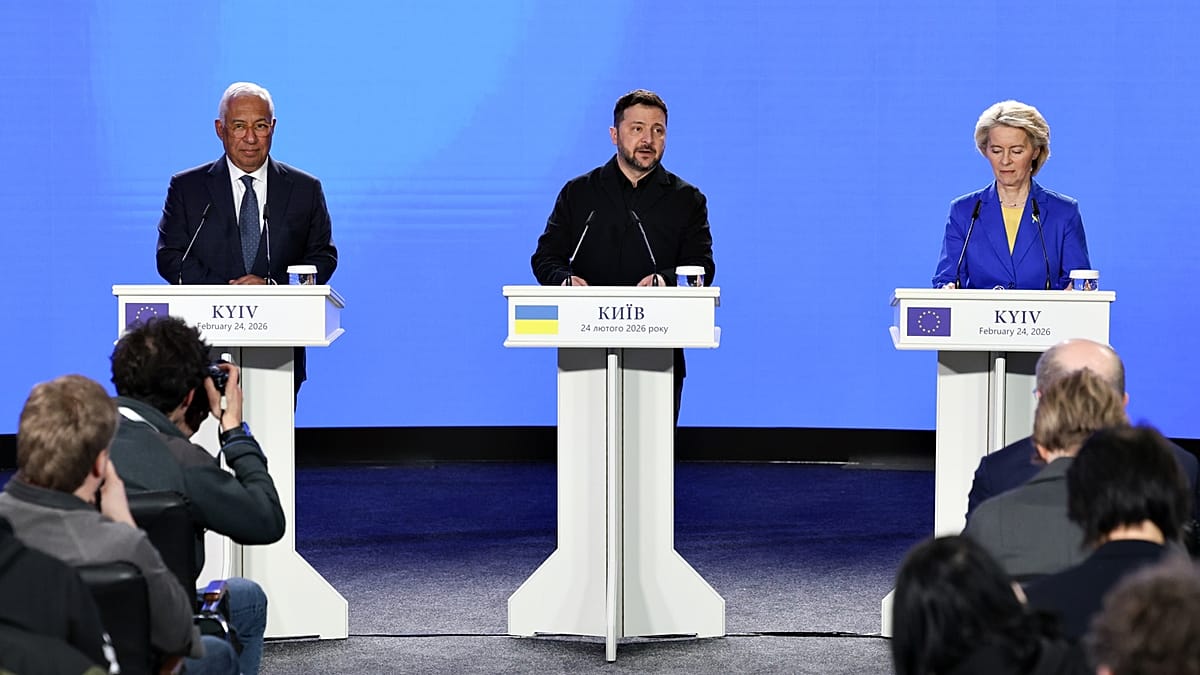
António Costa, President of the European Council, described Russia as a potential beneficiary of the situation, arguing that higher energy revenues and shifting global attention could indirectly support its war effort in Ukraine.
Read the full article here