



 Weather
Good morning. I’m Mared Gwyn and it’s Friday – here’s another packed newsletter to start your day.
ADVERTISEMENT

ADVERTISEMENT
The Munich Security Conference kicks off this morning, one year after US Vice President JD Vance stunned 2025 delegates with a blistering speech criticising Europe’s institutions.
For many, that speech marked the start of the unraveling of the US-Europe alliance – with ideological tensions continuing to surface, and the recent crisis over Greenland forcing Europe to recalibrate its strategic reliance on Washington. Secretary of State Marco Rubio will lead this year’s US delegation to the conference, where Ukraine is expected to take centre stage. Our reporters are on the ground in Munich bringing you the latest throughout the weekend.
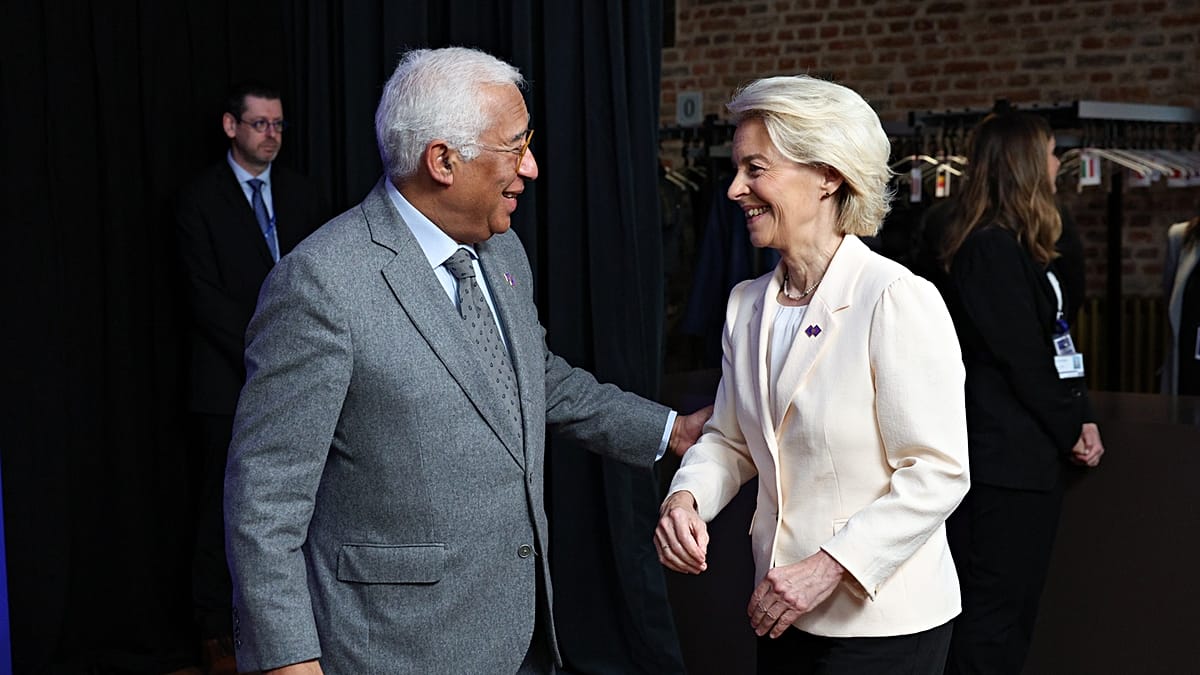
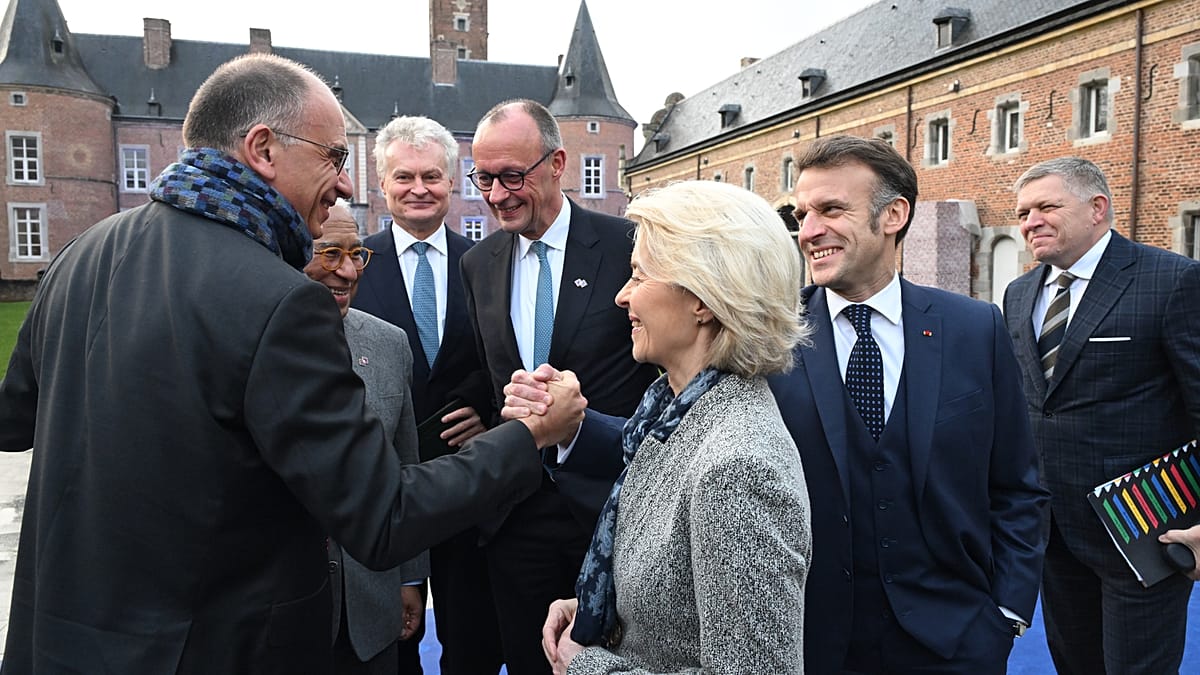
Strained ties with the US were also an impetus for yesterday’s informal EU summit at Belgium’s Alden Biesen castle, where leaders were joined by Mario Draghi and Enrico Letta to brainstorm ways of reviving Europe’s stagnant economic and fading competitiveness.
French President Emmanuel Macron clearly set out the sequencing expected in the months ahead, saying an “agenda” for Europe’s economic revival is needed by June.
“If in June, we don’t have concrete prospects and concrete progress, we will decide with ‘enhanced cooperation’,” he explained, referring to a clause in the EU treaties which would allow a group of at least nine EU countries to take steps to further integrate their economies without the need all 27 states to move as a bloc.
Von der Leyen name-checked two legislative files for which the legal tool will be considered: the first phase of the Savings and Investment Union, which aims to create a cross-border system to mobilise private savings into strategic projects, and the 28th regime, which aims to create a uniform framework to set up companies across the bloc.
Several other leaders backed the concept of a “two-speed” Europe that would allow smaller groups of EU countries to pick up the speed on reforms without necessarily moving as a bloc of 27 – inevitably transforming the way EU politics works.
Speaking to our EU editor Maria Tadeo from the talks at the Alden Biesen castle, European Parliament President Roberta Metsola supported the concept, saying “we’ve never been against member states going further.” “This is not an obstacle or a shortcut to unity, it’s rather a pathway to unity,” Metsola said. Watch.
There was also broad agreement on further simplifying EU laws to cut red tape for business, on tightening the single market in the areas of telecoms, capital and electricity, as well as on reducing reliance on foreign powers in strategic sectors.
Sectors in which the bloc could introduce a “European preference” in public procurement contracts to increase demand for European-made components will be decided in a later summit in March, Macron said.
France has been the most vocal advocate of the “European preference”. Yet a fresh draft of an EU legislative proposal known as the Industrial Accelerator Act seen by Euronews, and due to be unveiled later this month, suggests that the Commission is aligning with a German-championed flexible definition of “European preference” – which would allow content from foreign countries to be treated as equivalent to European-made goods if those nations are deemed “trusted partners.”
The main bone of contention continues to be how to inject new cash into strategic sectors.
“Let’s be cool”: That was the message of France’s Macron on Eurobonds, as he tried to ease the tensions around the debate on joint borrowing, which always exposes deep rifts between leaders.
“We know perfectly this choreography on Eurobonds,” Macron said. “What is clear is that we need more investments for innovation, so we have to finance it, and part of it will be financed by public money.” My colleague Jorge Liboreiro has more on the outcome of talks.
Macron also put on a show of unity with German Chancellor Friedrich Merz, jointly greeting the press and holding a bilateral meeting before the talks, despite their public statements in the run-up to the talks exposing divides. Both also attended a meeting of 16 select leaders convened by Rome and Berlin over breakfast.
A source close to the Spanish government vented frustration at Italy for convening the meeting, arguing it undercut EU solidarity. The format was born in order to allow countries aligned on a harsh migration policy to convene ahead of leaders’ summits – making Spain an unlikely participant. Sánchez later denied that he had raised any issues with Italian Prime Minister Giorgia Meloni.
EU’s crisis management chief backs Kyiv’s swift accession to the bloc
The European Commissioner for humanitarian aid and crisis management Hadja Lahbib has told Euronews that the bloc “needs to consider” the prospect of Ukraine becoming an EU member as early as 2027, a demand made by Ukrainian President Volodymyr Zelenskyy in the context of ongoing US-brokered peace talks.
“Ukraine is part of the European Union’s family (…) and we need to move forward,” Commissioner Hadja Lahbib told our correspondent Shona Murray in Kyiv, praising Ukraine’s commitment to implementing the necessary reforms to be EU-ready while withstanding a war of aggression.
Commissioner Lahbib spoke to Shona from a shelter set up to allow Ukrainians relief during prolonged electricity outages and amid freezing sub-zero temperatures. The Commissioner has pledged 1000 emergency generators to support emergency aid to the Ukrainian capital.
Lahbib described the shelters as “life-saving”, and said Ukrainian civilians as living “on the battlefield’ of Russian aggression as they face the severe daily consequences of Russia’s relentless pounding of Ukrainian energy infrastructure.
Shona also spoke to Kyiv mayor Vitali Klitschko, who described Ukrainians’ fight for “survival” as they live in freezing conditions. Asked about ongoing US-brokered peace talks, he called for a ceasefire followed by robust security guarantees that are not “short-term” fixes that allow Russia to regroup.
Watch Shona’s coverage from Kyiv on today’s show.
Commission wrong to hand Budapest €10 billion, ECJ top adviser says
The European Commission should annul its 2023 decision to release €10.2 billion in EU funds to the Hungarian government, the highest adviser of the European Court of Justice said on Thursday, my colleague Sándor Zsiros reports.
Advocate General Tamara Ćapeta concluded that Hungary had not fulfilled all the legal requirements to qualify for the funds. While such opinions are not legally binding, court rulings typically align with them.
In December 2023, the Commission decided to unfreeze €10.2 billion in funds which had previously been suspended to Hungary due to concerns over systemic corruption and rule of law violations, saying that Budapest had successfully delivered on justice reforms.
It came just before a key summit of EU leaders in which Hungarian Prime Minister Viktor Orbán was threatening to veto a €50 billion aid package for Ukraine and block the start of EU accession talks with Kyiv.
Orbán mysteriously left the summit decision-making room during a coffee break, allowing the other 26 leaders to approve the opening of accession talks. At a later summit in February 2024, Hungary lifted its veto on the €50 billion Ukraine support package.
The opinion comes just two months ahead of Hungary’s contested parliamentary elections in April. If the Court rules that the payment was in breach of the rules, the Commission may ask Hungary to repay funds or deduct the amount from future payments.
Sándor has the full story.
More from our newsrooms
Belgian federal police raid European Commission offices over alleged property sale irregularities. The Belgian federal police raided several European Commission buildings on Thursday as they probe suspected irregularities in property transactions carried out in 2024. Eleonora Vasques has the story.
French Defence Minister questions whether Russia ‘really wants peace’ with Ukraine. Minister Catherine Vautrin questioned whether Russia really wants a peace deal with Ukraine, considering the continued attacks being waged by the Kremlin against the country. Lauren Walker and Stefan Grobe have more.
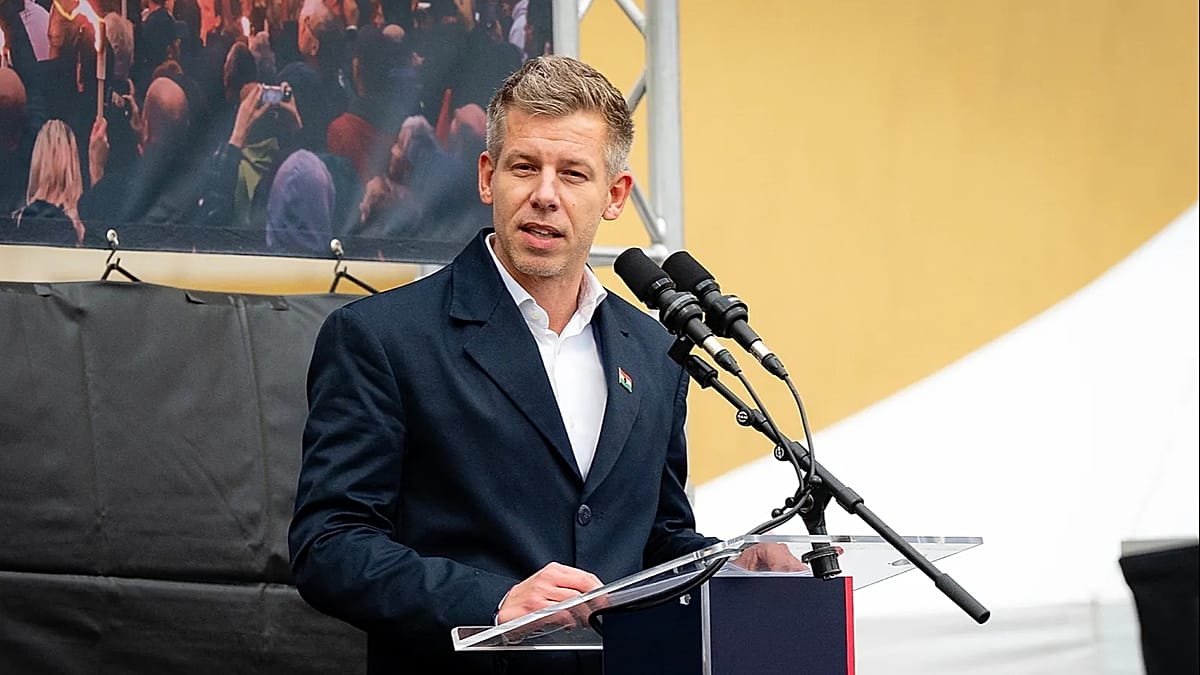
‘My conscience is clear’: Hungary’s opposition leader says he was lured into sex tape ‘honey trap’. Péter Magyar has claimed his former girlfriend lured him into a compromising situation and rejected allegations of drug use, saying Viktor Orbán’s government is using secret service methods to smear him. Sándor Zsiros explains.
We’re also keeping an eye on
- Munich Security Conference starts
- European Commissioner for enlargement Marta Kos to deliver a speech in Tallinn
That’s it for today. Jorge Liboreiro, Alice Tidey, Sándor Zsiros, Eleonora Vasques, Peggy Corlin, Maria Tadeo and Shona Murray. We’ll be back on Monday.
Read the full article here