



 Weather
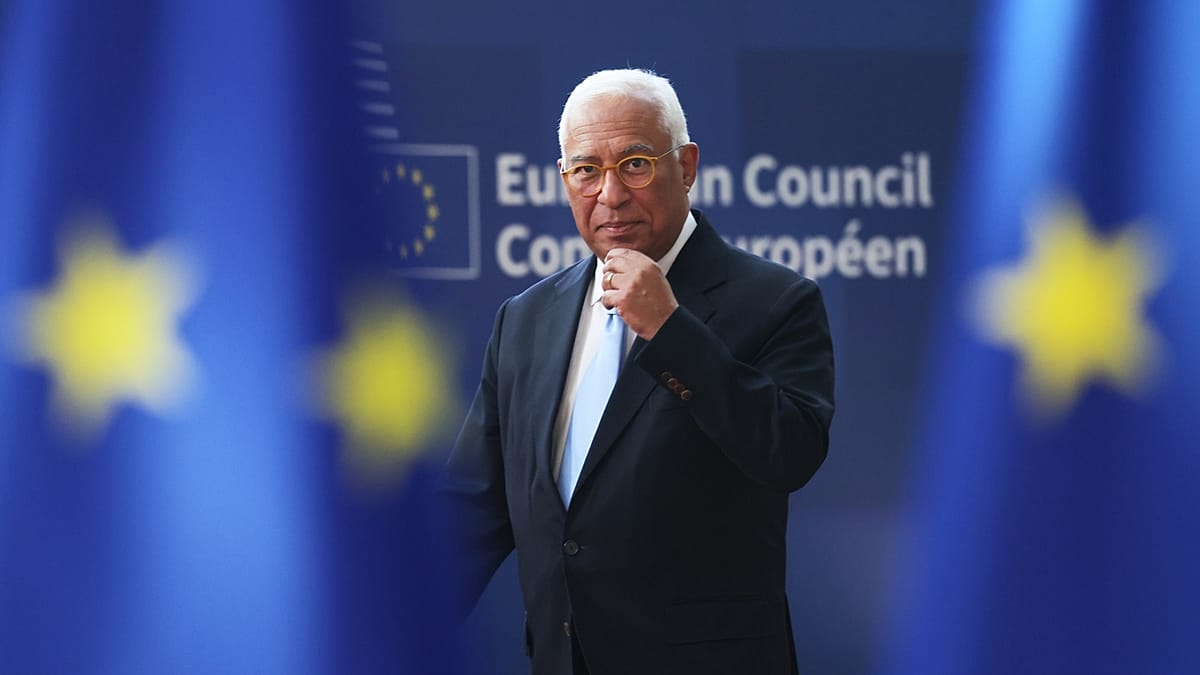
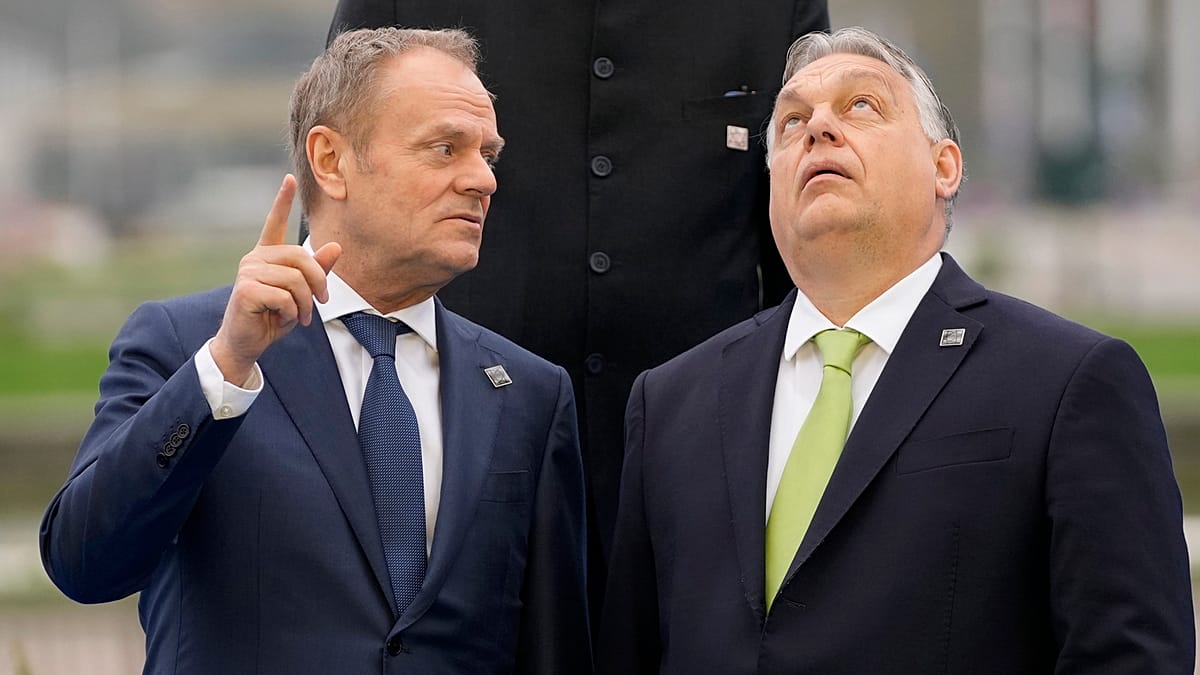
When it comes to Viktor Orbán’s veto, one man stands to lose the most: António Costa.
ADVERTISEMENT

ADVERTISEMENT
The explosive decision by the Hungarian prime minister to block the €90 billion loan to Ukraine at the very last stage of the process represents the most formidable challenge yet to Costa’s authority and integrity as president of the European Council.
The tensions came to a boil during last week’s summit, when leader after leader, including Costa, launched fierce criticism against Orbán for backtracking on the agreement that they had all painstakingly struck in a high-stakes meeting in December.
“Nobody can blackmail the European Council. Nobody can blackmail the European Union institutions,” Costa said after the discussions.
“It’s completely unacceptable what Hungary is doing. And this behaviour cannot be accepted by the leaders,” he added.
It was a remarkably harsh intervention by the president, who is known for his affable personality and perennial smile.
Since assuming office at the end of 2024, Costa, one of the few socialists left around a mostly right-wing table, has striven to develop warm relations with all 27 heads of state and government. That is fundamental for his job, which lacks executive powers and is primarily dedicated to ensuring the cohesion and consensus among leaders.
As president of the European Council, Costa’s prime task is to chair regular summits and uphold the joint conclusions that summarise the closed-door discussions. For outsiders, these conclusions might look stale and repetitive, but in Brussels, they are virtually sacrosanct as they outline the political direction and priorities for the whole bloc.
In December, Orbán explicitly gave his consent to the €90 billion loan on the condition that his country be entirely exempt from the common borrowing. Slovakia and the Czech Republic, two close allies, also benefited from the opt-out.
A triumphant Costa then announced: “We committed, we delivered.”
Orbán, however, has now come up with a demand that has nothing to do with the loan: the full resumption of Russian oil flows through the Druzhba pipeline. (Ukraine says the damage is extensive and the repairs could take one and a half months.)
“No oil, no money,” Orbán bluntly said last week.
Fuelling the outrage is the fact that Orbán is using his veto as an extra lever to propel his bruising re-election campaign. The incumbent currently trails his much younger rival, Péter Magyar, by double digits in opinion polls ahead of the 12 April contest.
The bold act of defiance presents Costa with a two-fold headache because it undermines both the validity of the conclusions and his ability to uphold them.
Privately, EU officials and diplomats lash out at Orbán but fear his unheard-of ultimatum might set a dangerous precedent on how collective decisions are taken from now on. While no one is pointing the finger specifically at Costa, it is his office, as the ultimate guarantor of European unity, that risks being left high and dry.
“It’s a turning point,” a senior diplomat said, dismissing the idea of coming up with an inventive Plan B to bypass the Hungarian. “If we talk about a Plan B, we give in to his demand. And nobody is willing to give in to blackmail.”
Balancing two camps
Though Costa insists the veto is “unacceptable”, the reality shows that, for all intents and purposes, it is being accepted – or at least tolerated through clenched teeth.
In the days immediately after Budapest announcedthe veto, Costa, alongside other leaders, went on the offensive, lashing out at Orbán for breaching the principle of sincere cooperation that underpins the collective decision-making.
But Brussels soon realised it could not go frontally against a member state. After all, officials reluctantly conceded, Hungary and Slovakia are still entitled to receive oil via Druzhba through an exceptional derogation in the sanctions regime.
This created a bizarre split screen in which, on one side, the EU asked Hungary to lift its veto on the loan to support Ukraine’s fight for survival and, on the other, the EU asked Ukraine to repair a pipeline carrying Russian oil that helps finance the invasion.
“The two issues are being handled as two different things, but they’re linked politically,” a senior EU official said.
The precarious strategy was further tested when Orbán vowed to “break the Ukrainian oil blockade by force”, and Ukrainian President Volodymyr Zelenskyy suggested he may give Orbán’s “address” to Ukrainian soldiers to precipitate a change of mind.
Brussels swiftly rebuked Zelenskyy for crossing the line and imploredthe rival camps to “dial down” their escalatory rhetoric. The Ukrainian leader heeded the call and eased off, whereas the Hungarian doubled down on his allegations of electoral interference.
Days later, Costa, together with European Commission President Ursula von der Leyen, sent a joint letter to Zelenskyy with a renewed offer: to organise an external inspection of Druzhba and pay for the reconstruction out of pocket.
“We hope that the EU assistance can pave the way for overcoming the current blockage and ensure the rapid repair of the pipeline,” they wrote. “This would allow to move forward in a timely manner with the EU Ukraine Support Loan funding for your own macro-economic stability and for the purchase of defence equipment.”
The overture fell flat. During the last summit, Orbán dismissed the external inspection, brushed off the backlash from other leaders and kept his veto firmly in place, all but confirming the dispute will drag on until the elections on 12 April.
Costa and von der Leyen are now scrambling to find a solution that simultaneously mollifies Orbán, respects the essence of the December agreement and prevents Kyiv from running out of foreign aid in the spring. A tall order, to say the least.
Given that Orbán has chosen to vilify von der Leyen in his incendiary campaign, ruling her out as a moderator between Brussels and Budapest, Costa is effectively alone.
Lifting the Hungarian veto is as much about supporting Ukraine as it is about salvaging the credibility of the European Council and, by extension, his own.
“What’s delicate for him is that it comes from a commitment that was not respected. And that, to our memory, has never happened before,” said another diplomat.
“That’s a real political and institutional challenge.”
Maïa De la Baume contributed reporting.
Read the full article here