





 Weather
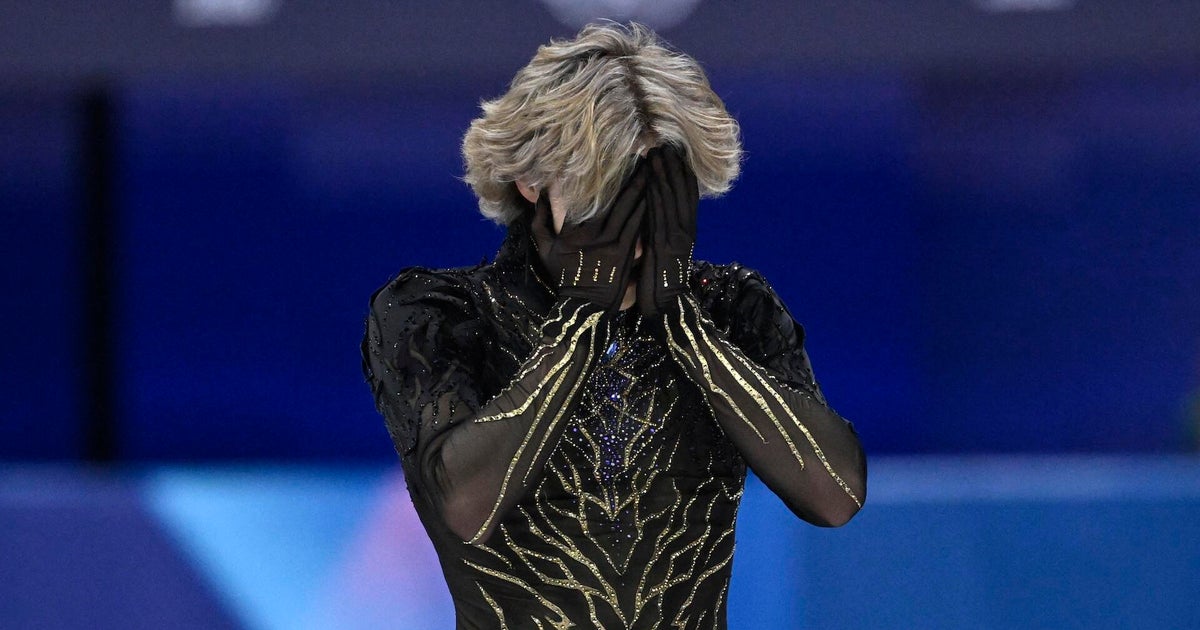
Ilia Malinin, Team USA’s “Quad God” star figure skater and current world champion, shared a video on social media Monday that included highlights, and some lowlights, of his competition so far in the 2026 Winter Olympics in Italy — speaking directly about the huge pressure faced by athletes at the top of their sports.
Malinin posted the video three days after he finished a disappointing eighth in the individual men’s event at the Milano Cortina Winter Games. Heavily favored to win a gold medal in the event, Malinin fell multiple times and failed to perform his signature quadruple axel in the free skate portion of the competition.
After failing to make the podium, Malinin acknowledged the pressure of competing in the Olympics, but said he was proud to finish.
“All I know is that it wasn’t my best skate, and it was definitely something I wasn’t expecting. And it’s done, so I can’t go back and change it, even though I would love to,” Malinin said to reporters after his performance on Friday.
WANG ZHAO/AFP
On Monday, Malinin shared the video on his Instagram page that included images of his triumphs — including his gold medal in the team event last week — juxtaposed with a black-and-white image of him with his head in his hands.
The video teased that a “version of the story” was to come on Saturday, when he’s scheduled to skate again in an exhibition event at the end of the Games, but it didn’t provide any further information.
“On the world’s biggest stage, those who appear the strongest may still be fighting invisible battles on the inside,” Malinin, 21, said Monday in a message that accompanied his video on Instagram. “Even your happiest memories can end up tainted by the noise. Vile online hatred attacks the mind and fear lures it into the darkness, no matter how hard you try to stay sane through the endless insurmountable pressure. It all builds up as these moments flash before your eyes, resulting in an inevitable crash.”
Given that pressure, Team USA says it aims to arm athletes with tools for their mental health before they even compete.
Dr. Jessica Bartley, senior director of psychological services for the U.S. Olympic and Paralympic Committee, told CBS News the pressure on athletes when they make it to the level of the Games is on another level due to the event only coming every four years, and the sheer size of the crowds and the venues in comparison to other competitions.
She says the focus for team leaders is on preparing first-time Olympians, so they at least know what to expect.
“We’re trying to get veterans involved, who’ve been there before, who can talk to them,” she told CBS News. “So, it may feel like the first time, but we walk them through a lot of the nuance of what this is gonna look like well before it happens.”
But Gracie Gold, a former U.S. figure skater and Olympic bronze medalist who has openly shared her struggles with mental health, said despite any preparation, when the lights are on and you step out in front of the crowds, it can be a uniquely isolating experience — and that only gets more intense in the moments when things don’t go according to plans and expectations.
“You’re alone in a way,” she told CBS News. “Sometimes I call it the aquarium effect, where you’re like, in the tank, and everyone’s like, staring. When stuff starts to go wrong, that’s not exactly an environment that’s conducive for calmness.”
Ashley Landis/AP 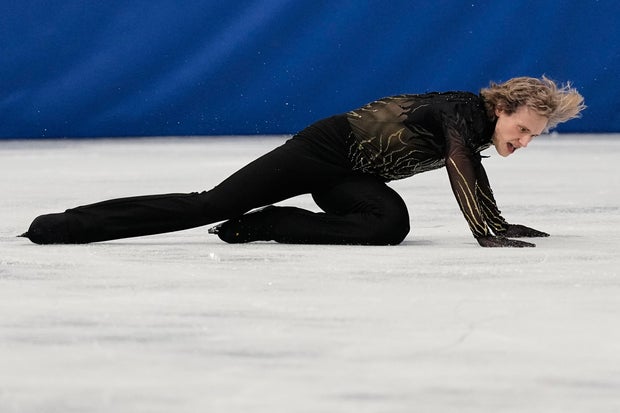
Gold said there’s no right or wrong way to handle the kind of situation Malinin found himself in on the ice Friday. The right way, she said, is whatever will make the athlete feel better and, most importantly, feel safe again.
Malinin has said he will compete in the 2026 World Figure Skating Championships, which are taking place in Prague.