


 Weather
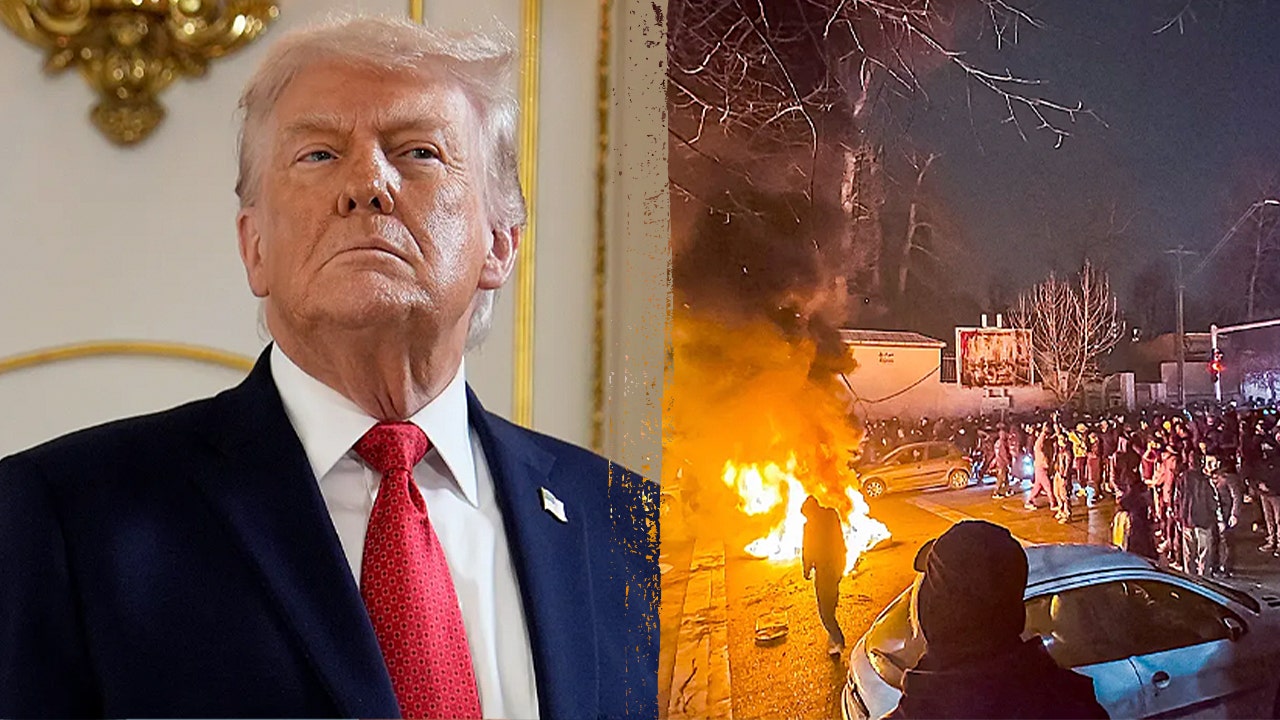
For the past year, staying in Donald Trump’s good graces has become a top priority for European leaders, who have gone the extra mile to appease the mercurial US president, rein in his most radical impulses and keep him firmly engaged in what is their be-all and end-all: Russia’s war on Ukraine.
Though Europe is by far the largest donor to Kyiv, nobody on the continent is under the illusion that the invasion can be resisted without US-made weapons and come to an eventual end without Washington at the negotiating table.
In practice, the strategic calculus has translated into painful sacrifices, most notably the punitive tariffs that Trump forced Europeans to endure.
“It’s not only about the trade. It’s about security. It is about Ukraine. It is about current geopolitical volatility,” Maroš Šefčovič, the European Commissioner for Trade, said in June as he defended the trade deal that imposed a sweeping 15% tariff on EU goods.
The same thinking is now being replicated in the saga over Greenland’s future.
As the White House ramps up its threats to seize the vast semi-autonomous island, including, if necessary, by military force, Europeans are walking an impossibly thin line between their moral imperative to defend Denmark’s territorial integrity and their deep-rooted fear of risking Trump’s wrath.
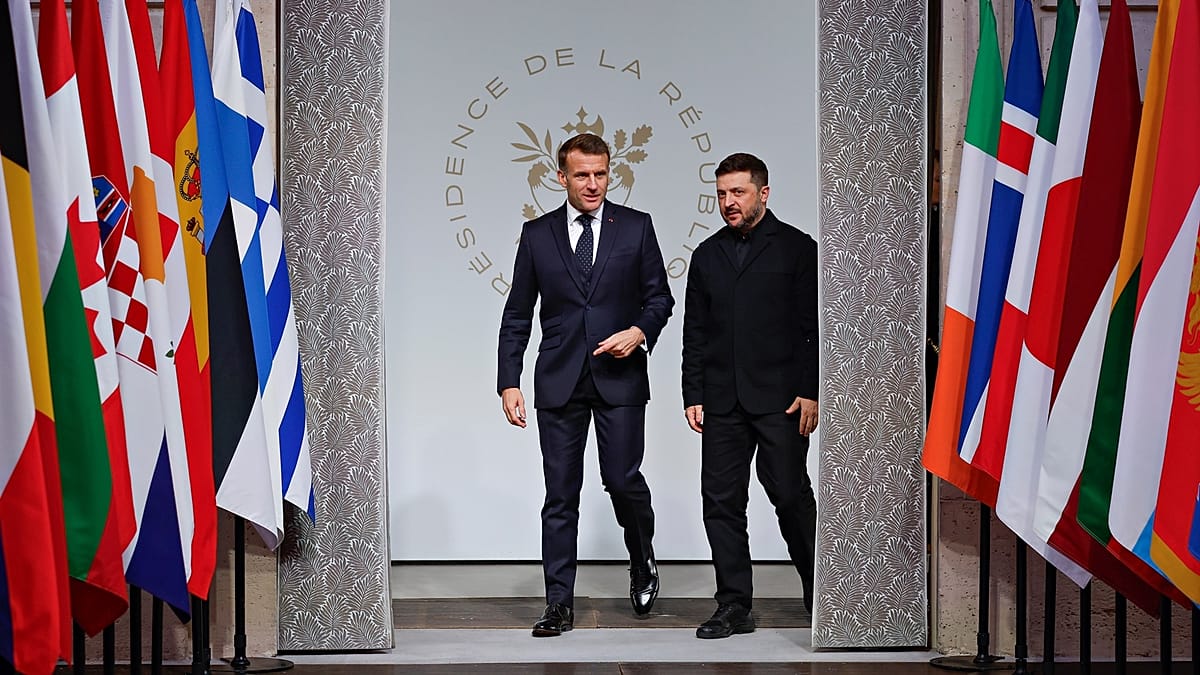
The precarity of the situation was laid bare at this week’s meeting of the “Coalition of the Willing” in Paris, which French President Emmanuel Macron convened to advance the work on security guarantees for Ukraine.
The high-profile gathering was notable because of the first-ever in-person participation of Steve Witkoff and Jared Kushner, the chief negotiators appointed by Trump.
At the end of the meeting, Macron hailed the “operational convergence” achieved between Europe and the US regarding peace in Ukraine. By his side, British Prime Minister Keir Starmer was equally sanguine, speaking of “excellent progress”.
But it did not take long for the elephant in the room to make an appearance.
Hard pivot
The first journalist who took the floor asked Macron whether Europe could “still trust” America in light of the threats against Greenland. In response, the French president quickly highlighted the US’s participation in the security guarantees.
“I have no reason to doubt the sincerity of that commitment,” Macron said. “As a signatory of the UN charter and a member of NATO, the United States is here as an ally of Europe, and it is, as such, that it has worked alongside us in recent weeks.”
Starmer was also put on the spot when a reporter asked him about the value of drafting security guarantees for a country at war “on the very day” that Washington was openly talking about seizing land from a political ally.
Like Macron, Starmer chose to look at the bright side of things.
“The relationship between the UK and the US is one of our closest relationships, particularly on issues of defence, security and intelligence,” the British premier said. “And we work with the US 24/7 on those issues.”
Starmer briefly referred to a statement published earlier on Tuesday by the leaders of France, Germany, Italy, Poland, Spain, the UK and Denmark in defence of Greenland.
The statement obliquely reminded the US to uphold “the principles of sovereignty, territorial integrity and the inviolability of borders” enshrined in the UN Charter – precisely the same tenets that Moscow is violating at large in Ukraine.
The text did not contain any explicit condemnation of the goal to forcefully annex Greenland and did not spell out any potential European retaliation.
“Greenland belongs to its people. It is for Denmark and Greenland, and them only, to decide on matters concerning Denmark and Greenland,” its closing paragraph read.
Conspicuous silence
The lack of censure was reminiscent of the European response to the US operation that just a few days earlier removed Nicolás Maduro from power in Venezuela.
Besides Spain, which broke ranks to denounce the intervention as a blatant breach of international law, Europeans were conspicuously silent on legal matters. Rather than condemn, they focused on Venezuela’s democratic transition.
Privately, officials and diplomats concede that picking up a fight with Trump over Maduro’s removal, a hostile dictator, would have been counterproductive and irresponsible in the midst of the work to advance security guarantees for Ukraine.
The walking-on-eggs approach, however, is doomed to fail when it comes to Greenland, a territory that belongs to a member of both the EU and NATO.
Danish Prime Minister Mette Frederiksen has warned that the entire security architecture forged at the end of World War II, which allies have repeatedly invoked to stand up to the Kremlin’s neo-imperialism, would collapse overnight in the event of an annexation. The worry is that trying to stay in Trump’s good graces at all costs might come at an unthinkable price.
“Europeans are clearly in a ‘double-bind’: Since they are in desperate need of US support in Ukraine, their responses to US actions – whether on Venezuela or Trump threatening Denmark to annex Greenland – are weak or even muted,” said Markus Ziener, a senior fellow at the German Marshall Fund.
“Europeans are afraid that criticising Trump could provide a pretext for the US president to conclude a peace deal at Ukraine’s and Europe’s expense. Is this creating a credibility gap on the part of the EU? Of course. But confronted with a purely transactional US president, there seems to be no other way.”
Read the full article here