




 Weather
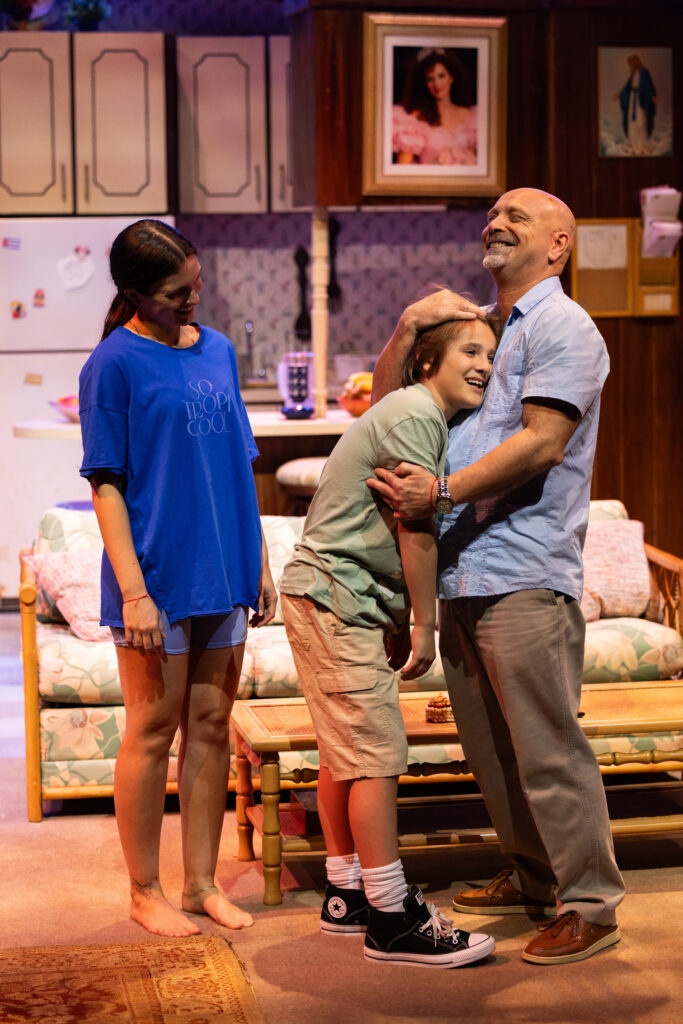
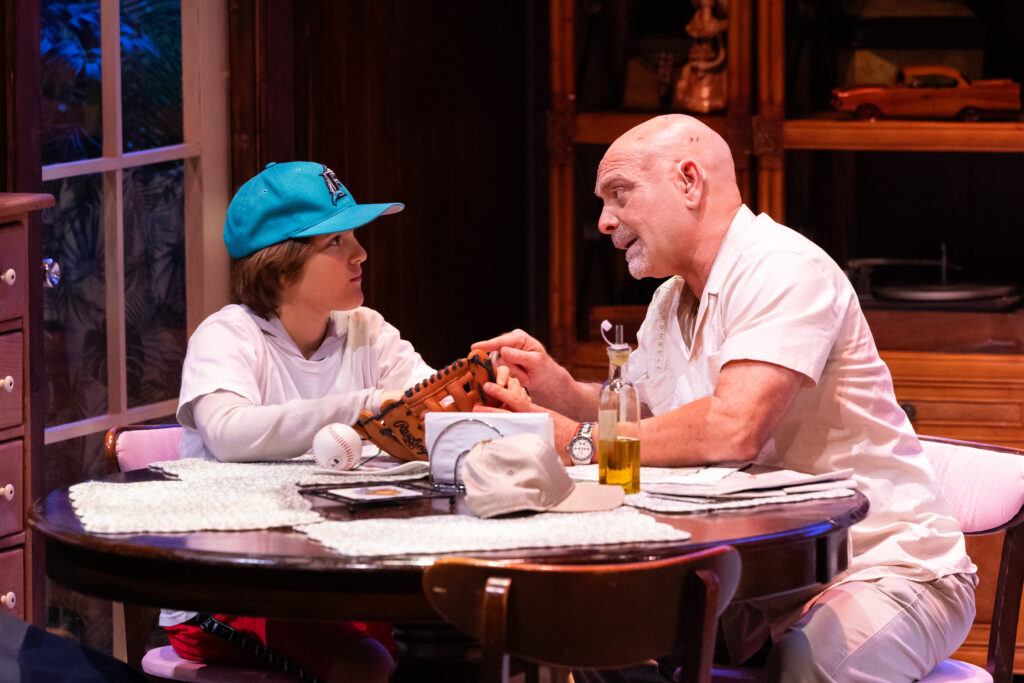
Kaelyn Ambert Gonzalez, Franco Kiglies and Andy Quiroga in the world premiere of How To Break In A Glove (Photos by Morgan Sophia Photography.)
By Raquel V. Reyes
City Theatre’s 30th season begins with an emotional and touching premiere How to Break in a Glove about an intergenerational Cuban-American family.
Chris Anthony Ferrer’s play from the company’s HOMEGROWN playwright development program had a four-year journey to the stage. The play was conceived during the first cohort of the HOMEGROWN program in 2021. The initiative with support from a Pérez CreARTE grant, gives “local playwrights the time, resources, and creative guidance to develop new work over multiple years, in conversation with artists and audiences from their own communities.”
This ‘Spring training camp,’ to use a baseball term in keeping with one of the play’s motifs, has proven itself and has borne a star pitcher. Ferrer tells an important family drama that is a universal story that mature audiences can relate to. How to Break in a Glove is a home run with a cast that hits it out of the park.
How to Break in a Glove’s talented five-person cast is believable and succeeds in bringing tears and laughs to a meaty and complex story about family secrets, messy love, and the cycle of trauma those secrets cause.
The play opens with a father and son talking about baseball. The son is excited to learn how to play the game because he knows how much the grandfather likes it. We learn that the father and mother are separated; he still cares for her, but she is working through (avoiding) her emotions. The grandfather scolds the father for the tardy return of the son.
But in the next turn, the grandfather gives him money to fix the car trouble that caused the delay. From the start, Ferrer sets up a family dynamic where concern for one another is buried under dysfunction. The relatable situation hooks the audience and has them hoping those glimmers of love and compassion will resolve into a happy reunification.
Short scenes and an excellently curated soundtrack of salsa and Miami 90s hits keep the pace moving.
Franco Kiglies, the 13-year-old actor portraying the 11-year-old son, Tony, deserves admiration. The role is not an easy one, even for a seasoned young actor such as Kiglies. Tony is an anxious child worried about his thirty-something mother, who is staying out all night after separating from her husband (Tony’s dad) and moving back home to her parents. The people-pleaser tween’s anxieties manifest as cutting and diazepam pill popping, serious behavioral health issues.
Kiglies adeptly meets the tall order of stumbling, passing out, and signaling about the body harm coping behavior. While the family’s worry about Tony’s health and well-being is pivotal to the plot and the handling of the serious subject is done exceptionally well, there may be an argument that it is not entirely necessary for the story’s success. A less severe version of the consequences of generational trauma could work equally or better and put less of a demand on a young actor. It would be interesting to know if Ferrer modifies that aspect of the script for future productions.
The grandparents of the story, Aledia & Francisco Romero, are played by Barbara Bonilla and Andy Quiroga. They are well cast and perfect in their roles. Aledia, the strong and loving matriarch, issues a dying wish—to reveal a secret and heal the broken relationship between Francisco and Carmen (Tony’s mother). The scene is powerfully delivered by Bonilla. Quiroga portrays Francisco wrestling with her request and the sorrow of the situation beautifully. Throughout the play, Bonilla and Quiroga dance and fight like a long-married couple that has weathered life’s ups and downs.
Randy Garcia and Kaelyn Ambert-Gonzalez play the middle generation of the family, Carmen & Carlos Lugo. They, too, are perfect and measured. The ensemble feels like a genuine family, the kind that loves hard and is working on fixing its dysfunction. Director Gladys Ramirez has done a brilliant job in bringing them together to deliver this emotional yet tender story.
The detailed and accurate set contributes to the play’s ease and tempo. High praise to Scenic & Properties Designer, Andrew Rodriguez-Triana, and Set Construction team, Rey Bode & Little Shop Woodworks, for creating a perfect replica of a 1999 Hialeah double-wide trailer home. From the corrugated exterior to the cream with gold trim kitchen cabinets to the bent bamboo sofa to the outdoor foliage. The audience has a feast of verisimilitude to graze upon. Lighting Designer Eric Nelson adds to the realness with a dusky blue backdrop and lighting washes that feel the way only light bouncing off an Okeechobee Boulevard canal can, if you know you know.
How to Break in a Glove has plenty of great lines to quote: “A million mistakes woven together,” and “I am not who I want to be yet, either,” and “Karma? ¿Qué cama?” which is delivered for laughs by Aledia from her convalescent bed.
Chris Anthony Ferrer is clearly a talented playwright. One hopes Ferrer will take some gentle feedback that his story deserves a better and more approachable title. The baseball glove analogy works, albeit forced, but it does not entice the casual theater-goer and it disappoints someone expecting a Field of Dreams or Bull Durham-like story. Nor does the title do justice to this wonderful and needed contribution to the theatrical catalog.
How to Break in a Glove from City Theatre and Adrienne Arsht Center at the Carnival Studio through Feb. 22. 7:30 p.m. Wednesday-Saturday; 2:30 p.m. Sunday. Running time 100 minutes. Tickets $66.69 – $72.54. https://www.arshtcenter.org/tickets/2025-2026/theater-up-close/
Raquel V. Reyes is the author of the award-winning Caribbean Kitchen Mystery series. Her latest novel is Barbacoa, Bomba, and Betrayal. Find her across social media as @LatinaSleuths and at www.LatinaSleuths. com.