



 Weather
As pressure mounts to calibrate a joint European Union response to the United States’s threats over Greenland, EU leaders with ties to US President Donald Trump have yet to push back hard against his latest statements.
Trump threatened on Saturday to impose a 10% extra tariff on goods from European countries that oppose the sale of the Arctic island to the US, and warned that if the US has not been allowed to purchase Greenland by June 1, the rate will be hiked to 25%.
As the EU scrambles for ways to deal with the situation, the process of reaching a joint EU position could depend on three countries in particular: Slovakia, Hungary and the Czech Republic..
Slovakian Prime Minister Robert Fico met Trump in Mar-a-Lago on Saturday, the same day that Trump issued his latest tariff threats on social media. Speaking on a flight back to Slovakia, Fico hailed the two countries’ bilateral ties, adding that both Trump and he were critical of the EU.
“We did not avoid the assessment of the EU, its competitiveness, energy and migration policy, while there was a complete agreement in viewing the EU as an institution in deep crisis,” Fico said in a video released on Sunday – not mentioning Greenland or expressing solidarity with the countries Trump directly threatened.
On Sunday, meanwhile, Hungary’s Viktor Orbán announced he had received a letter from Trump inviting him to join the Board of Peace, a body aimed at helping establish post-war administration and reconstruction in Gaza.
“With President Donald Trump comes peace. Another letter has arrived. Hungary’s efforts for peace are being recognised. President Trump has invited Hungary to join the work of The Board of Peace as a founding member,” Orbán tweeted.
But the Hungarian government has kept silent over Trump’s latest threats. Orbán has previously said that the issue of Greenland can be discussed inside NATO and need not prompt an international crisis.
Czech Prime Minister Andrej Babiš posted on X on Monday afternoon to say there is no question that Greenland is an autonomous Danish territory, but he stopped short of calling for pushback against Trump’s threats.
“There is no doubt about that. But we will support dialogue, not declarations,” Babiš wrote. “Foreign policy is about diplomacy, not about who posts the stronger statement on social media.”
Earlier, Babiš gave an interview to a conservative Hungarian website, Mandiner, where he said Trump is not helping Europe, but helping the US with his program to “make America great again”.
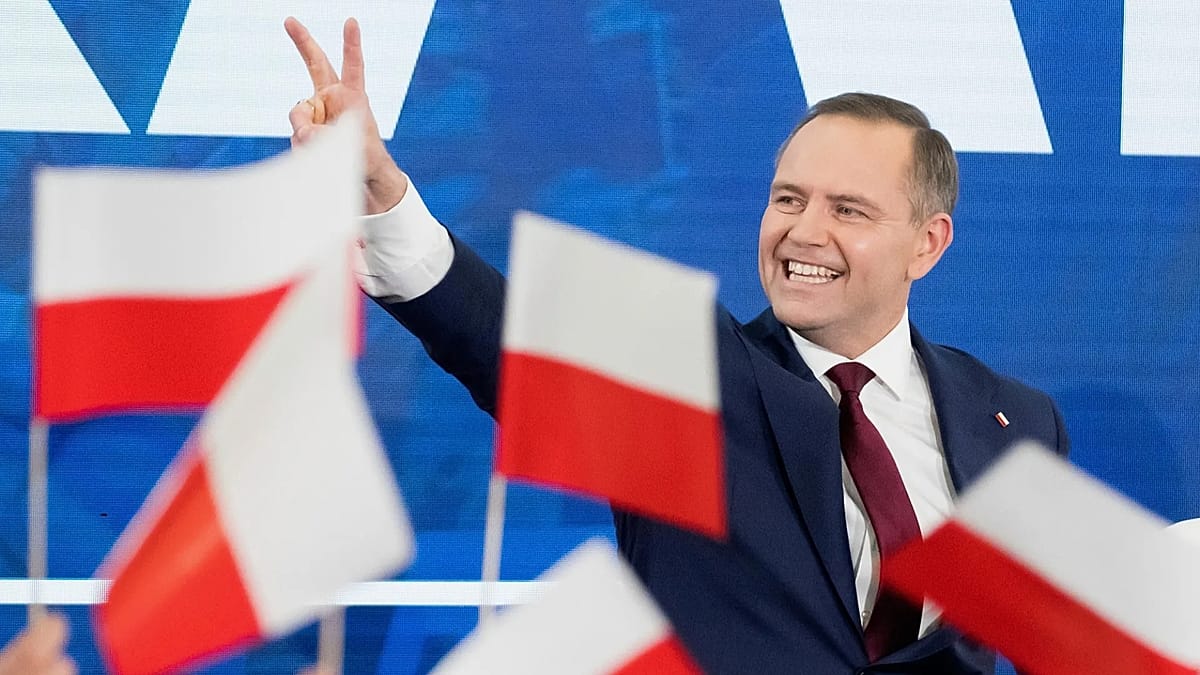
Babiš also described himself as one of the biggest European supporters of Trump, also naming Orbán and Polish President, Karol Nawrocki.
One outlier in Europe’s pro-Trump right is Italian Prime Minister Giorgia Meloni, who on Sunday criticised Trump’s stance as a “mistake” that could be the result of a misunderstanding.
“The prediction of a tariff increase against nations that have chosen to contribute to Greenland’s security is a mistake, and I don’t agree with it,” Meloni said during a visit to South Korea.
The President of the European Council, António Costa, is convening a special EU summit on Thursday evening to discuss the Greenland issue and agree a collective response.
The agreement of Hungary, Slovakia and the Czech Republic will be needed, and their positions are as yet unknown.
But according to Fabian Zuleg, Chief Executive at the European Policy Centre, unity cannot become an excuse for paralysis when it comes to Greenland.
“If unity cannot be achieved, those governments that are unwilling to act – such as Hungary, but also others on a case-by-case basis – must be excluded, and exclusion must have consequences”, he said, arguing that states blocking collective action at the European level should no longer be able to benefit fully from shared defence, security cooperation or industrial investment.
“Solidarity is a two-way street and not unconditional.”
Read the full article here