




 Weather
Published on
•Updated
On Sunday, Spain suffered one of the most tragic train accidents in the country’s recent history. Forty-two people have died, and more than 40 are still reported missing. Last night, another train incident took place in Barcelona, killing one and injuring more than 30.
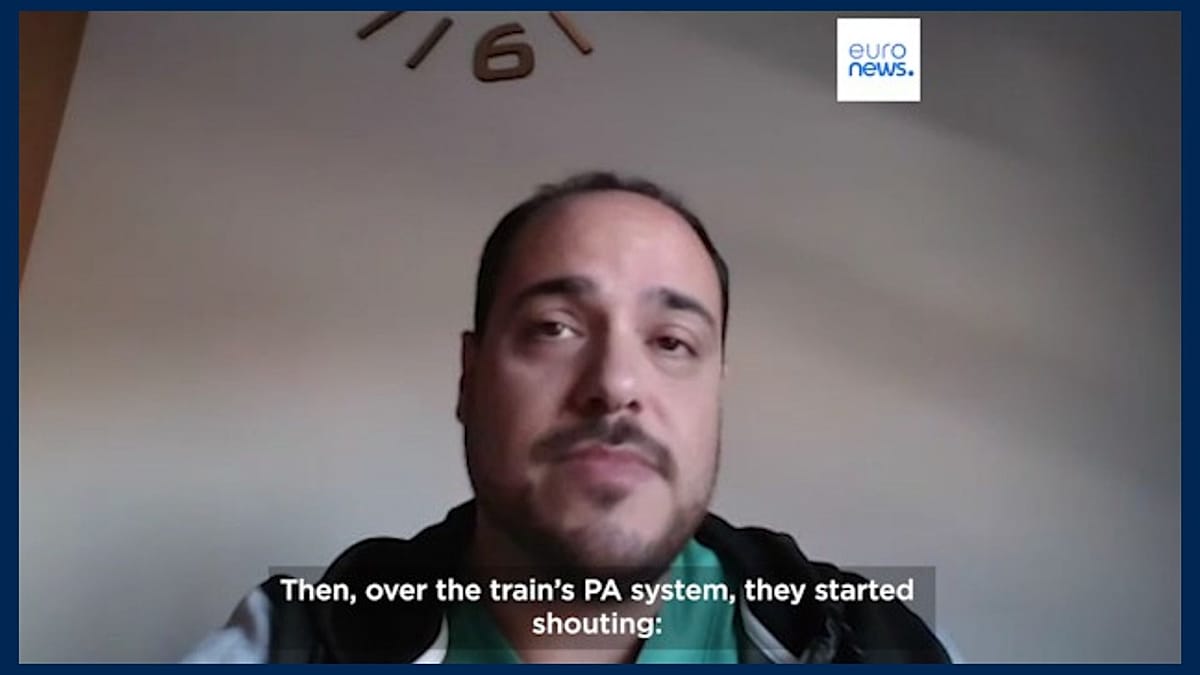
Aboard one of the two trains involved in the Sunday crash, the Iryo, was Javier Garcia Iglesias, a 37 year-old nurse from Madrid. He was travelling from Córdoba to Spain’s capital, and Euronews spoke to him about the incident, which he said “still hasn’t fully sunk in yet.”
Garcia recounts how long it took for him to understand what had happened: “I thought the train had run over something, and I didn’t realise another train was involved until an hour and a half later.”
He only began to realise the magnitude of the incident when the train speakers announced that healthcare staff and those with first aid knowledge were needed in the last carriages of the train. He then rushed to help, like many others.
‘The worst didn’t happen to me’
“As I reached the back of the train, I started to see smoke, suitcases everywhere, and a deceased person. That’s when I realised it was far more serious than I had thought,” he says, adding that the worst didn’t happen to him because he was in “carriage 4 instead of carriage 8.”
Most of the medical assistance took place outside the train, and those providing aid, like Javier, had to “break the windows of the train in order to get out,” he recalled. He also noted that with no proper equipment the situation was similar to “war medicine.”
Once outside, he does not remember everything that happened, but explained that “some passengers were trapped between seats, and we couldn’t get them out, meaning priority was given to those who could be reached first while medical teams arrived.”
“I don’t even remember how long they took, but it seemed a lot. We were in the middle of nowhere,” he added.
‘Every single person who could help did it’
As time went on, Javier and the passengers around him were informed that two trains had been involved in the accident and that many had lost their lives.
Despite the tragedy, Javier said that the one thing he will always remember is the humanity everyone showed. “Every single person who could help did, and people from the nearby village brought us food and water.”
After several hours, his assistance was no longer needed, and he was taken by a bus provided by the train company to Madrid, his final destination and where he does shift work as a part-time nurse. He spends the other half in Fuensalida, a town in Toledo.
He said it will be a while before he boards a train again. The same goes for other Spaniards: “Like with any trauma, it will be difficult to overcome.”
Read the full article here