





 Weather
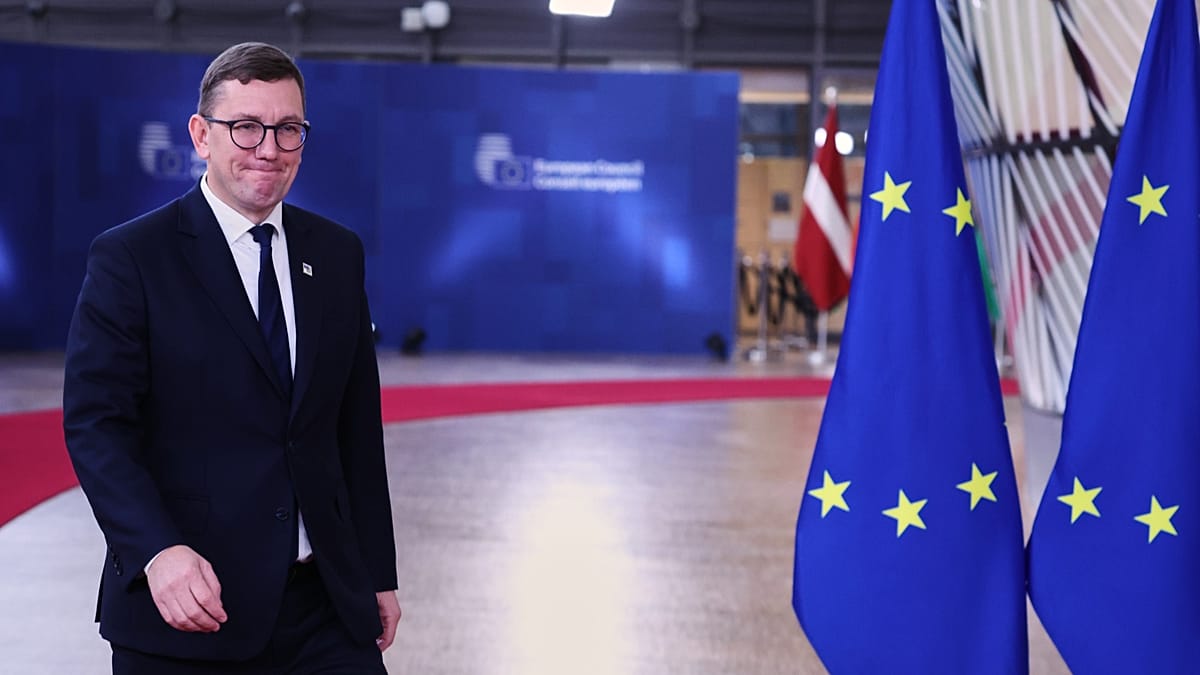
In Tallinn, starting a company can take minutes. Registration, taxation and contracts are handled online, often without a single interaction with a civil servant. For entrepreneurs, the state is designed to stay out of the way.
This efficiency has made Estonia, with a population of 1.3 million, one of the EU’s most business-friendly countries. It also raises a difficult question for Brussels: if one small country can make business so easy, why does the EU still struggle to function as a single market or to initiate its EU-INC plan?
A small ecosystem with significant impact
Estonia’s startup sector punches above its weight. More than 1,500 startups operate in the country, with a combined enterprise value of about €36.3 billion in 2023. This is among the highest in Central and Eastern Europe.
The sector’s economic impact is increasing. In the first quarter of 2025, startups generated over €400 million in turnover and paid €63 million in employment taxes. They employed nearly 19,700 people. Estonia regularly ranks high in global startup and innovation indexes despite its small population.
For many founders, the attraction is speed and predictability, qualities often missing elsewhere in the EU.
A digital state built early
Estonia’s digital transformation did not happen overnight. According to Rainer Kattel, professor at University College London’s Institute for Innovation and Public Purpose, the country’s trajectory was shaped long before independence.
“If you go back to 1990, it’s not a surprise that Estonia became a digital country,” Kattel told Euronews. He points to a strong Soviet-era research base in cyber and digital technologies, combined with proximity to Finland and Sweden during the GSM and the Nokia boom.
Political leadership also mattered. In the early 1990s, Estonia was led by a generation of young politicians who understood that competing across many industries was unrealistic.
“They were looking for something to catch up quickly,” Kattel said. “Focusing on digital technologies rather than cars or heavy industry was almost a natural development path.”
That choice created a state where nearly all public services are available online. The system is based on a secure national digital ID and the ‘once-only’ principle, meaning authorities do not ask for the same information more than once. The core technology is X-Road, a decentralised data-exchange layer that lets institutions share data securely without centralising it.
E-Residency opens the door
Estonia’s most internationally visible innovation is e-Residency. Launched in 2014, the program allows non-residents to obtain a government-issued digital ID and run an Estonian company online in the EU.
By 2023, e-residents had created around 4,600 companies, about one-fifth of all new Estonian businesses that year. Around 38% of startups founded in 2023 were linked to e-residents. The programme generates roughly €67.4 million in taxes and fees annually, around 10 times the government’s investment.
Non-EU freelancers and founders can access the EU single market through Estonia without relocating by using digital infrastructure.
Estonia’s corporate tax system is designed to support business growth. Companies are not taxed on reinvested profits, but only when profits are distributed. This approach encourages long-term growth, particularly for startups.
Digital tools like the e-Tax Board reduce administrative work. This makes Estonia attractive to international entrepreneurs without aggressive tax competition.
Two success stories, not one
Despite the branding, Kattel cautions against treating Estonia’s digital government and startup ecosystem as a single story.
“There are two very different success stories,” he said. One is digital government, identity, access to public and private services, and secure infrastructure. “The other success story is around the startup environment, which has almost nothing to do with the government infrastructure.”
He argues that the startup boom was mainly driven by early private-sector successes like Skype. The sale of Skype in the early 2000s brought capital, experience, and global networks to Estonia. This group of entrepreneurs is sometimes called the “Skype mafia.”
“If you look at the first two or three generations of Estonian startups, almost all of them go back to Skype,” Kattel said. “That success showed it’s possible and in business, success breeds success.”
He adds that Estonia’s unicorns do not rely on government data systems for their central operations. “None of them use public health data or state databases,” he said. “In terms of infrastructure, these are almost entirely separate ecosystems.
Can the EU replicate Estonia?
Estonia’s model has influenced EU policy. The Interoperable Europe Act, in force since 2024, and the European Interoperability Framework promote data sharing, digital identity, and cross-border interoperability. X-Road is open-source and is already used nationally in Finland and Iceland, with pilot projects in Germany.
It is technically possible to replicate Estonia’s model. However, political and institutional factors complicate the situation.
Estonia benefited from limited legacy IT systems, a centralised state and high trust in government. “There’s a ‘we got this’ mentality in small Nordic and Baltic countries,” Kattel said, noting that trust in state institutions is much higher than in many larger EU members.
In more diverse societies, he argues, centralised digital identity systems raise legitimate concerns. “For very good reasons, many EU countries are more reluctant to have identity in one place and trust the state with it,” he said, pointing to privacy risks and fears of political misuse.
The limits of EU-INC
Estonia’s success also exposes the limits of the EU’s single market. Despite decades of integration, companies still face 27 corporate regimes, fragmented digital services and national procurement systems.
“You still can’t just create a business once and operate everywhere, like in the US,” Kattel said. Even basic cross-border services stay disconnected. “If you’re an Italian citizen and go to a doctor in Belgium, that doctor has no idea who you are.”
For Kattel, the EU’s weakness lies not only in regulation but also in demand. “We have focused on supplying rules,” he said, “but we haven’t created EU-wide demand for services, technologies or procurement.”
Estonia shows what a coherent digital system can achieve within a single country. The EU is still far from functioning as a fully integrated economic space. The main challenge is not the lack of models but the need for political decisions that go beyond technology.
Read the full article here