





 Weather
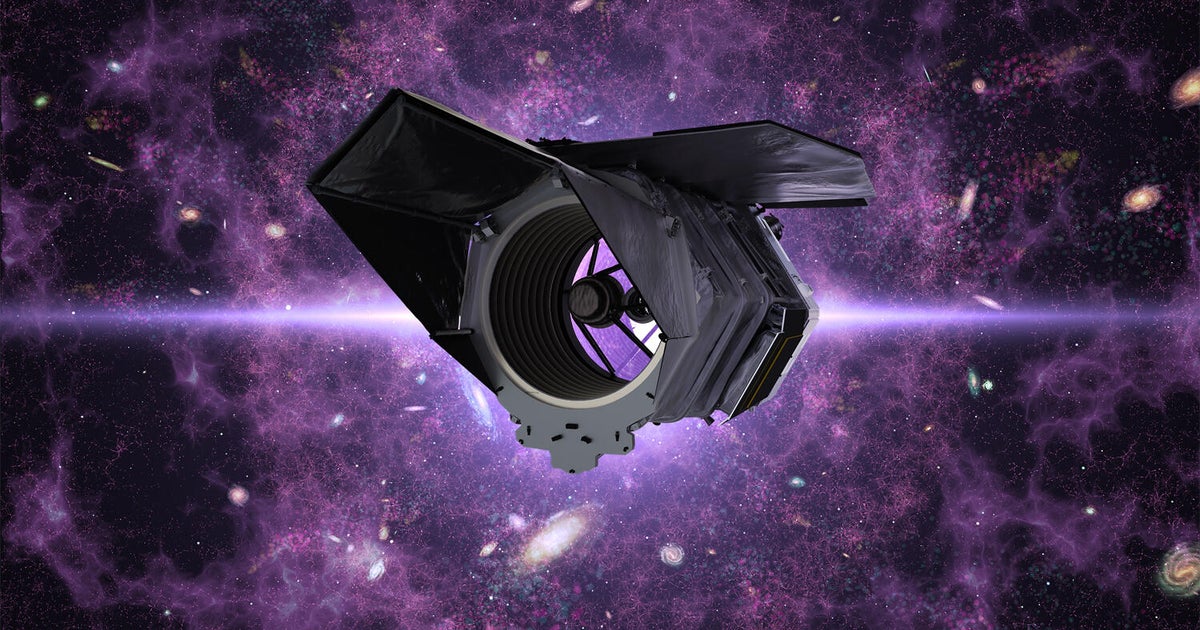
Using a donated Hubble-class mirror originally built for a spy satellite, NASA’s Roman Space Telescope launched Sunday on a $4.3 billion mission to open a new window on the universe, taking wide-angle, ultra-sharp images that would require a half million 4K TVs to show in full.
Put another way, officials say a single full-resolution image from Roman’s 300-megapixel wide-field camera would cover 45 city blocks or the entirety of El Capitan in Yosemite National Park. And it will collect that data faster than any previous NASA spacecraft.
The Hubble Space Telescope has beamed back about 172 terabytes of data over 30 years while Roman will downlink a staggering 2,500 terabytes over its five-year primary mission.
Put yet another way, Roman’s sensitive wide-field camera and advanced detectors will scan broad swaths of the cosmos 1,000 times faster than Hubble, collecting as much data in one month as its older cousin could manage in a century.
A “sheer powerhouse” of a telescope
The flood of data is expected to shed new light on the nature of “dark matter, dark energy and the structure of the universe itself and accelerate the … discovery of potentially habitable planets outside our solar system,” said NASA Administrator Jared Isaacman.
“Roman will give the Earth a new atlas of the universe,” he added.
NASA science chief Niki Fox described the telescope as “a sheer powerhouse” and “literally a speed machine.”
“The speed at which we’ll be scanning the sky, delivering vast amounts of data and returning results will be at an unprecedented rate, never done before,” Fox added.
NASA 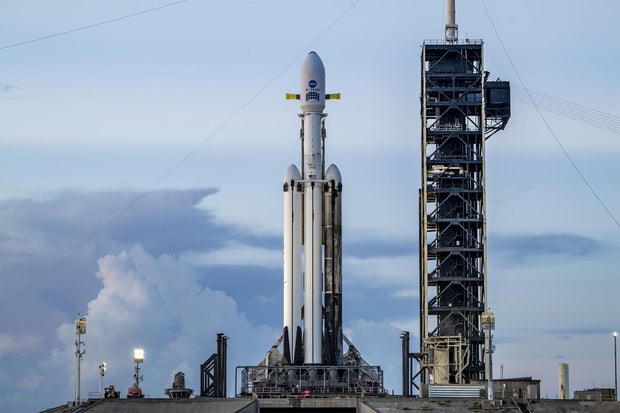
The 42-foot-long, 18,000-pound telescope is named for the late Nancy Grace Roman, NASA’s first chief astronomer, who championed the value of space telescopes throughout her career and was instrumental in the development of the Hubble Space Telescope. As such, she is often referred to as “the mother of Hubble.”
The new telescope launched atop a triple-core SpaceX Falcon Heavy rocket at the Kennedy Space Center at 7:26 a.m. EDT.
It is bound for Lagrange Point No. 2 (L2), a gravitational eddy of sorts about a million miles on the opposite side of Earth from the Sun, where it will remain in place with minimal use of fuel. The James Webb Space Telescope is stationed in the same region for the same reason.
From the vantage point of L2, Roman will study the effects of dark matter, the mysterious substance that pervades the universe, holds galaxies together and accounts for most of the mass in the cosmos, acting as a brake on the expansion of space itself, which is carrying galaxies farther and farther apart.
At the same time, Roman will work to gain statistically significant insights into the nature of the equally mysterious dark energy, a repulsive force presumably present since the Big Bang that became dominant about 5 billion years ago as the universe expanded and thinned out. Ever since, the expansion of the cosmos has been speeding up.
NASA 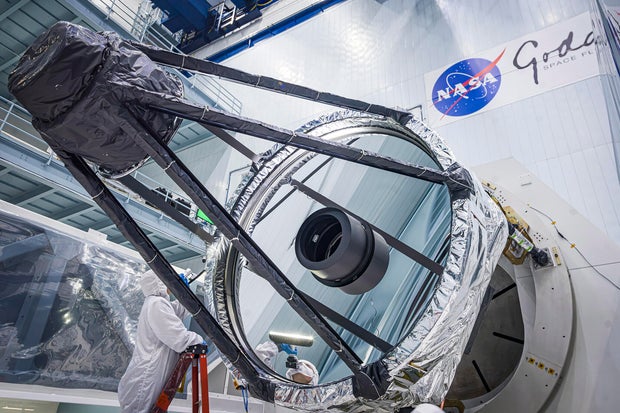
A new understanding of the universe
Roman may help resolve a conflict between the strength of dark energy in the very early universe, as measured by probes studying the remnant 3-degree glow of the Big Bang’s immediate aftermath, compared to Hubble observations of a specific type of supernova that indicate a slightly different value.
When the Hubble Space Telescope was launched in 1990, estimates for the age of the universe, from its Big Bang birth to the present, ranged from about 10 billion years to 20 billion years.
Hubble was able to determine the speed of that expansion — the Hubble Constant — and thus the time that has passed since the Big Bang to an accuracy within 1%: 13.8 billion years.
But detailed studies by researchers using spacecraft studying the afterglow of the bang — the 3-degree cosmic background radiation — came up with a different number. The mismatch — known as “the Hubble Tension” — suggests some critical element is missing in the current understanding of the universe and the forces driving its evolution.
“We’re seeing evidence that the Hubble constant, as inferred from very early times, is not consistent with the Hubble constant that we measure closer to now, which is telling us that the model that connects those two things might not be quite right,” said project scientist Julie McEnery. “We have a slight tension in our expectations for how structure should grow and evolve.”
That “slight tension” indicates a potentially serious flaw in the standard model of cosmology, the current understanding of how the universe, and everything in it, has evolved. It might even indicate dark energy is not the constant force it is thought to be, but might somehow change over time.
NASA 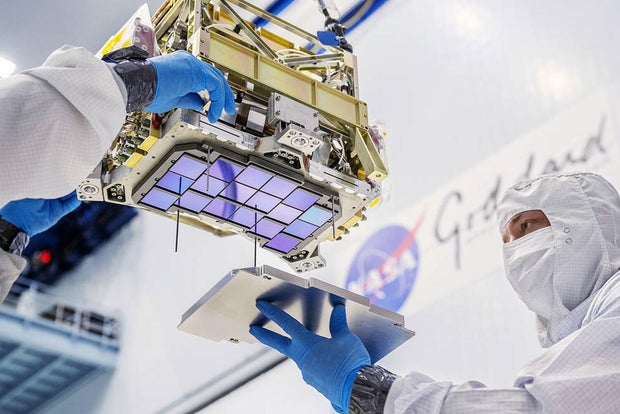
“We’re probably not going to confirm the standard model of how the universe works,” McEnery said. “We’re very likely to demonstrate that our standard model is wrong, and to set ourselves on a path to figuring out how does our universe really work. It’s hard to get [a better question than] the fundamental nature of your universe!”
Roman’s wide-field camera is one of two instruments aboard the spacecraft. The other is an advanced coronagraph equipped with deformable mirrors that can block out the glare of a star to detect the vastly dimmer light reflected from the atmosphere of an orbiting planet.
Roman’s coronagraph is expected to detect Jupiter-size planets orbiting Earth-like stars. By analyzing that reflected light, researchers may be able to tease out the elemental composition of those atmospheres.
“We think that we will be capable of detecting exoplanets that are about 100 million times fainter than their stars, and with that capability, we are hoping to see … a Jupiter twin around a nearby star using visible light reflected from its cloud tops for the first time,” said Vanessa Bailey, the Roman coronagraph instrument scientist at the Jet Propulsion Laboratory. “Then, we can use that light to study the composition of its atmosphere.”
About 6,200 exoplanets have been discovered to date using smaller instruments like NASA’s Kepler Space Telescope. Roman is expected to discover more than 100,000 exoplanets over 18 months of observations.
It will take three to four months to “commission” the spacecraft, calibrating its instruments and testing its myriad subsystems before science operations can begin in earnest.
The solar-powered Roman is built around a 7.9-foot-wide, 410-pound primary mirror — one of two donated to NASA by the National Reconnaissance Office, the secretive agency that manages many of the nation’s high-end spy satellites.
The mirrors, the same size as Hubble’s, were built for a classified project that later was canceled. But both were ground to near-perfect prescriptions, allowing them to look down and focus on Earth, not out into deep space.
NASA has no plans or funding to utilize the second mirror, focusing instead on building a single “flagship” observatory.
NASA 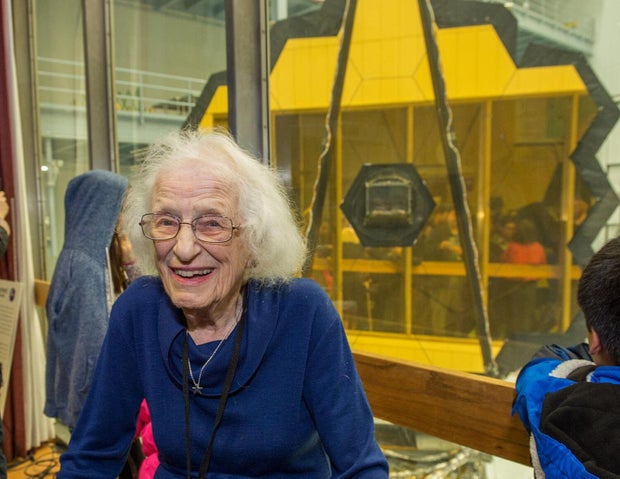
The donated mirror’s curvature, smoothness and polish had to be modified to ensure the desired astronomical prescription, and the telescope’s trusses and other components had to be altered to enable them to withstand the ultra-low temperatures at Lagrange Point 2.
“I think our engineering team thinks of it as we received a set of well-tested parts that included highly calibrated optical systems,” said project manager Jackie Townsend. “But we really had to sort of start over and make it our own to work at our operating temperatures.”
In the end, the project came in ahead of schedule and under budget. But even with an effectively “free” primary mirror, the telescope will still cost taxpayers some $4.3 billion to build, launch and operate for its five-year primary mission.
A wide view of the sky
Three “core” surveys are planned over the course of Roman’s planned five-year mission.
The High-Latitude Wide-Area Survey will focus on a huge swath of the sky looking out of the plane of the Milky Way — 12% of the entire sky — avoiding obscuring star clouds and dust marking the galactic disk. The goal is to catalog the distribution of a billion or more galaxies.
Those data, collected over 520 days, will help researchers better understand how dark matter and energy have combined over cosmic time to drive the evolution of structure in the universe.
The High-Latitude Time-Domain Survey will require 180 days of observations over two years. The telescope will repeatedly image the same regions in an area of 90 full moons to make movies capturing short-duration events ranging from supernova blasts to the radiation emitted when stars fall into black holes.
McEnery described such transient events as “things that go bump in the night.”
The Galactic Bulge Time-Domain Survey will focus on the core of the Milky Way, the central bulge of stars, gas and dust where a supermassive black hole affects the trajectories of nearby stars.
Imaging across an area spanning 8.5 full moons, Roman is expected to find tens of thousands of exoplanets by watching hundreds of millions of stars and looking for signs of “microlensing,” a phenomenon in which the light of a background star is enhanced, or magnified, by the gravity of an intervening object.
Mission managers have also left room for “general astrophysics” topics not covered in Roman’s three core surveys. The first such program, known as the Galactic Plane Survey, will monitor the disk of the Milky Way from one side to the other, covering an area of 3,455 full moons.
Some 20 billion stars will be mapped along the way, providing the most complete portrait of the galaxy and its structure ever captured.
“What makes me most excited about Roman is the discovery potential,” McEnery said. “With 2 billion galaxies, we’ll have 2,000 objects that are one in a million. We’ll be exploring patches of sky as a function of time with exquisite sensitivity. We’ll find new things that go bump in the night.
“I very much hope, and in fact expect, that the most exciting science from Roman will be a surprise, something we couldn’t predict. And that will set the stage for the next deeper set of questions for future missions to address.”