





 Weather
Published on
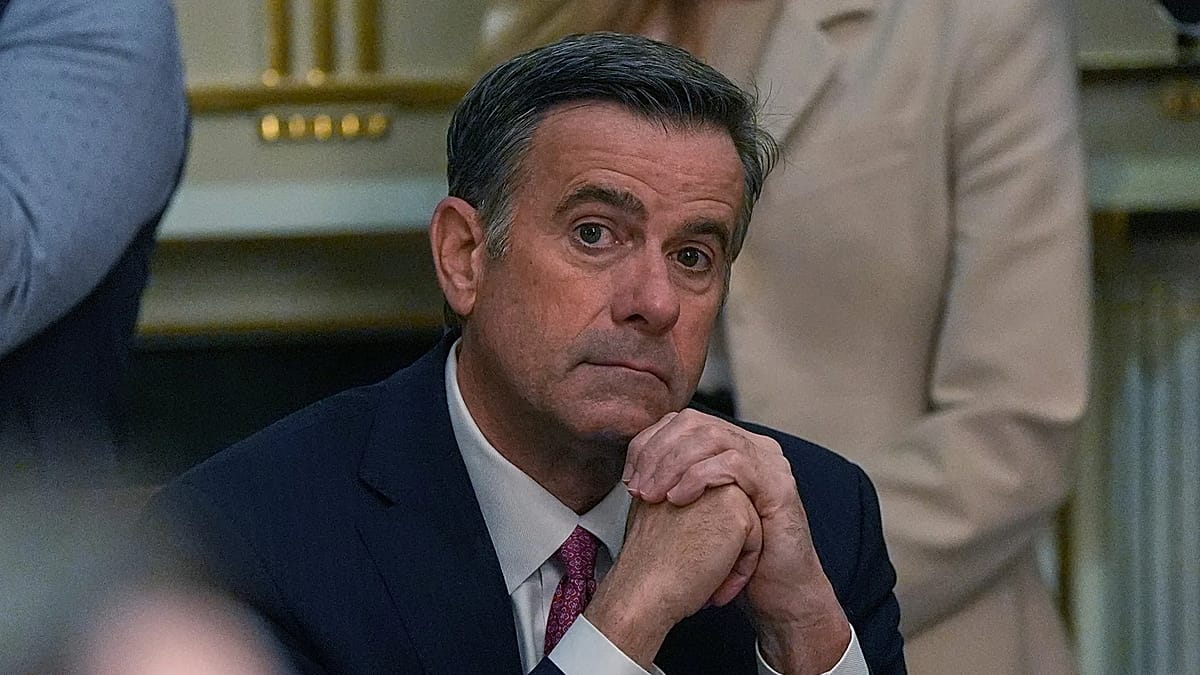
CIA Director John Ratcliffe’s surprise visit to Moscow on Tuesday sparked speculation about the trip’s sudden nature and what message Washington considered important enough for the US spy chief to deliver in person.
ADVERTISEMENT

ADVERTISEMENT
The Kremlin confirmed that Ratcliffe held talks with Russian intelligence officials during his hours-long visit, but said he did not meet Vladimir Putin.
“No meetings with Putin were planned,” Kremlin spokesman Dmitry Peskov said.
Putin was briefed on the outcome of the discussions, according to the Kremlin.
Neither Washington nor Moscow have disclosed what was discussed, leaving the purpose of the unusual visit unclear.
Ratcliffe travelled to the Russian capital on Tuesday in his first known visit to Russia since becoming CIA director, making the journey at a particularly tense moment in Moscow’s all-out war in Ukraine and amid growing concern over possible Russian escalation against Europe.
But its timing, the precautions surrounding Ratcliffe’s arrival and his position within the Trump administration prompted speculation that the CIA director was carrying a message considerably more sensitive than those normally handled through diplomatic channels.
The US asked Ukraine not to strike Moscow or St Petersburg while Ratcliffe was in Russia, according to reports citing people familiar with the matter.
Kyiv reportedly learned that a senior US delegation would travel to Russia, but was not initially told that Ratcliffe would be part of it.
The request is significant given Ukraine’s expanding campaign of long-range strikes inside Russia, including attacks against energy and military infrastructure as well as sites financing the Russian war machine.
A warning to Moscow?
One possibility is that Ratcliffe travelled to Moscow to warn of the risk of further Russian escalation.
US intelligence reportedly raised concerns that Moscow could be preparing for further mobilisation not only to sustain its war against Ukraine but also to seek to test NATO’s resolve through provocations against alliance members.
The visit comes amid growing concern over Russian activity in NATO territory, following a series of suspected sabotage operations and drone incursions in recent months.
The theory draws a striking parallel with the last known visit to Moscow by a CIA director.
William Burns travelled to the Russian capital in November 2021, as Russian forces were massing around Ukraine, to warn the Kremlin against an invasion and spell out the consequences Washington believed would follow.
Despite repeated assurances from Moscow that it had no plans to invade Ukraine, Russia launched its full-scale invasion three months later.
Ratcliffe is also regarded as one of the senior Trump administration officials most supportive of continued US assistance to Ukraine, including intelligence used to support Kyiv’s long-range operations.
His arrival therefore came at a sensitive moment for both Moscow and Kyiv.
Ukraine, NATO or Iran?
Ukraine is not the only possible explanation.
The visit also comes amid mounting tensions between Washington and Moscow over Iran, Russia’s closest partner in the Middle East.
Russia has been accused of providing Tehran with intelligence on US military assets, while Washington has stepped up economic pressure on Iran in a bid to finish the war it started in late February.
Peskov described contacts between the two intelligence services as positive but said it was too early to judge whether they could improve wider relations between Washington and Moscow.
Ratcliffe’s visit was sensitive enough to remain unannounced and important enough for the CIA director to travel to Moscow himself, even if only for a few hours.
Read the full article here