




 Weather
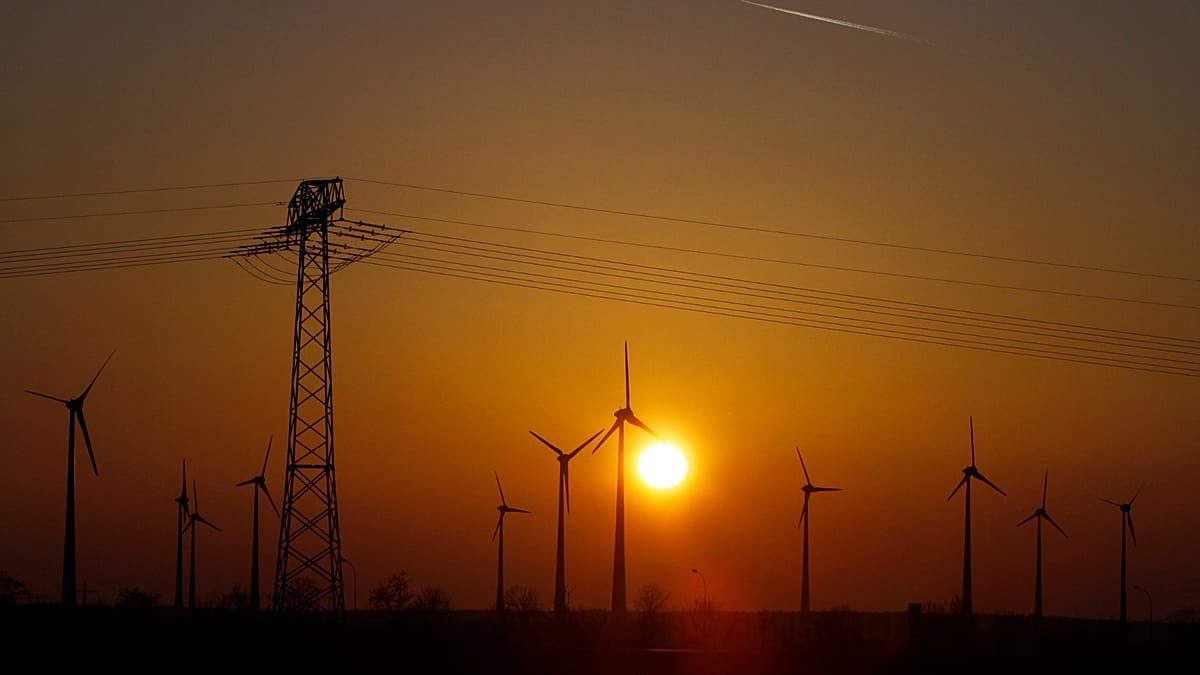
If the European Union wants to reach energy sovereignty, it should accelerate renewable energy and heat pumps rather than locking itself into new gas imports, according to a new report by the Institute for Energy Economics and Financial Analysis (IEEFA).
ADVERTISEMENT

ADVERTISEMENT
The think tank contends that expanding wind, solar power and heat pumps is the most effective long-term answer, estimating that in 2024, these technologies displaced 8.8 billion cubic meters of liquefied natural gas (LNG) – roughly equivalent to two-thirds of the EU’s imports of Qatari LNG that year.
According to the study, if the bloc meets its existing deployment targets over the next five years, gas demand could fall by around 25 percent by 2030, saving twice the volume of LNG Europe could potentially import from Qatar.
“IEEFA estimates that achieving the EU’s targets of installing at least 4 million heat pumps, 75GW of solar and 22GW of wind annually over the next five years could cut gas demand by around a quarter by the end of 2030,” the authors write.
They argue that while the EU successfully reduced its dependence on Russian pipeline gas after Moscow’s invasion of Ukraine, it has replaced one vulnerability with another by sharply increasing imports of LNG, mainly from the United States and Qatar.
But as the the study points out, replacing Russian gas with LNG from other countries simply shifts Europe’s dependence to different suppliers, which are vulnerable to their own geopolitical risks.
EU LNG imports rose by 84 percent between 2021 and 2025, leaving the bloc exposed to geopolitical disruptions such as recent damage to Qatar’s export facilities and tensions in the Strait of Hormuz.
The study suggests that the EU should seek to eliminate the need for imported gas and double its efforts on renewables as its major response to the climate and energy transition, arguing they have become central to energy security as geopolitical tensions continue to threaten global gas markets.
With the EU preparing to ban Russian gas imports from 2027 while simultaneously grappling with instability in the Middle East, the think tank supports the European Commission’s latest electrification ambitions while endorsing renewable power and heat pumps as strategic security assets.
China’s growing advantage
However, the IEEFA analysis is based on optimistic assumptions that the EU will meet ambitious deployment targets for renewables and heat pumps and continue investing heavily in electricity grids – even if financing to revamp the bloc’s power infrastructure is a contentious part of ongoing political talks.
The EU’s clean energy targets require renewables to make up at least 42.5 percent of the bloc’s energy consumption by 2030, with an aspirational goal of 45 percent, supporting its binding goal of climate neutrality by 2050.
However, clean power accounted for 26.2 percent of the EU’s energy consumption in 2025, still well below the bloc’s target, according to EU data.
Moreover, the study doesn’t assess barriers such as permitting delays, the high cost of heat pumps, grid congestion, and political resistance that could slow the transition.
And then there’s the matter of China. A recent analysis by Oxford Economics argues that Europe’s energy crisis caused by the US and Israel’s war against Iran is creating a major strategic opportunity for Beijing.
Years of industrial policy have given Chinese firms a dominant position in the global manufacturing of solar panels, batteries, electric vehicles, wind turbine components and heat pumps, allowing China to capture much of the investment flowing into the energy transition.
Chinese exports of clean-energy technologies have already accelerated since the conflict, particularly to Europe, Asia, Africa and Latin America, according to the think tank.
“Recent technological and geo-economic developments have strengthened China’s rise as the world’s first electrostate,” reads the study published on 13 July.
The emerging term “electrostate” describes a country whose geopolitical influence stems not from oil and gas reserves but from controlling the technologies, manufacturing capacity and critical mineral supply chains needed for electrification. This contrasts with traditional “petrostates” such as Russia and Gulf producers, whose influence depends on fossil fuel exports.
Ultimately, the report warns that while Europe is scrambling to end one dependency, it risks getting into another one: even as EU countries reduce exposure to volatile fossil fuel markets faster than was once thought possible, they could become increasingly reliant on Chinese manufacturing and supply chains.
Read the full article here