



 Weather
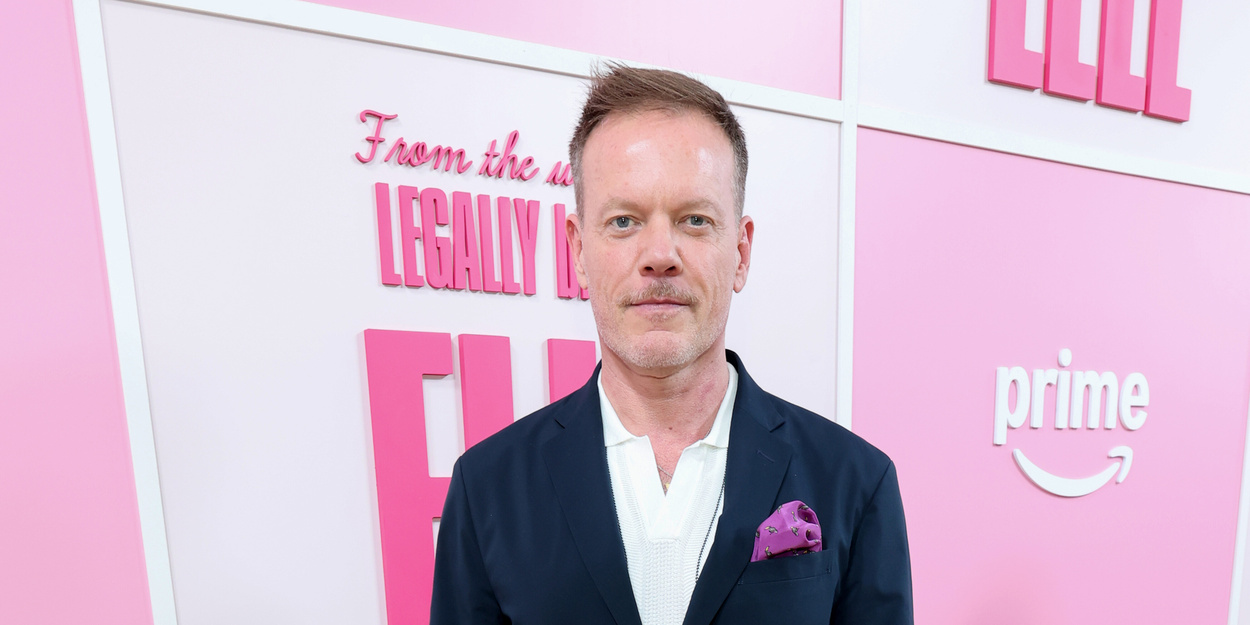
Jason Moore is no stranger to working with larger-than-life characters. Having directed stage shows like Shrek the Musical and The Cher Show, Moore intimately knows how the craft of bringing beloved figures to life in a whole new way. Enter Elle Woods.
For audiences introduced to Legally Blonde in the early 2000s, the pink-wearing Elle justifiably reigned as one of the most iconic female characters of the era. By dismantling gender stereotypes and being unapologetic herself, Elle has remained a stalwart pop culture presence in the years since, and Prime Video’s new prequel series of the same name proves that she won’t be going anywhere anytime soon.
Led by the infinitely likable Lexi Minetree in the title role, the series transports the character to the city of Seattle circa 1995, where Elle finds herself feeling out of place for the first time in her life. As she acclimates to the new setting, she uncovers a nefarious plot in her community, and with the help of new friends, attempts to uncover the culprit, while also learning valuable lessons about herself and the kind of person that she wants to be for those in her circle.
To kick off the series, Moore helmed the first two episodes, and also served as executive producer for the whole season. We caught up with the Tony-nominated stage and screen director, who spoke about working with Minetree to find the essence of Elle, his theatrical directing style, and returning to direct Avenue Q decades after the original production. All Season One episodes of Elle are now streaming on Prime Video.
This interview has been condensed for clarity and length.
You have worked on other established IP before, such as Shrek the Musical. What did you learn about working on big franchise titles that was helpful for you to utilize going into Elle?
I think you start asking questions like, “What do people expect to see?” [With] a prequel, that’s a little less prescribed, so that becomes more like “What of the character [do] they want to see?” For Elle, I think especially [it being] pre-9/11 when it came out, it was a very joyous, very optimistic way of a character viewing the world. Dragging that forward was the most important part. There’s also, at first, people who are protective of the IP [and] are nervous about it. You want to show them that you understand it, and that you love it also.
This is a generation of young people that need the viewpoint of Elle Woods when life is cynical, and people are exposed to everything at a young age, and there are a lot of things that can knock you off your self-confidence. Really, what people are showing up to see is Shrek, Cher and Elle Woods. So that becomes incumbent on Brian d’Arcy James [as Shrek], Stephanie J. Block [as Cher], or Lexi Minetree to [portray] the essence of the character. And to me, that actually isn’t vague.
You need to pick two or three things that look natural on your actor that were also what the original did. So for Lexi, she went to a Broadway voice coach named Kate Wilson. [They] talked about the intonation and the breath and the mannerisms and reactions. Let’s come up with a bank of two or three of those, and then abandon the rest. Trust that if you can get a few things right, you’re calling it back, but you’re not trying to do a mimic or a copy.
And the cheeky part of that answer is you have to love it, and then you have to forget it. Because if you’re constantly worried that you’re not going to live up to something or be better than, or people are going to think it doesn’t work, that’s just no place to create from. You also have to trust that you’ve done the work, and trust that your love for it will show through.
What were some of those things that you knew you wanted to do?
I signed on to it because the script was so good. It is a really high bar, and then finding Lexi meant that that bar was going to get set. You want [it to look] specific but timeless. The production design is very, very ’90s. It’s colored clear phones and pagers, but the photography was modern. It was like if you had modern photography and you photographed an exact replica of a bedroom from the ’90s. It would look sort of modern, but the thing you’re photographing is actually authentic. That was a governing principle in terms of how the show was going to look.
I wanted to shoot it widescreen. I wanted it to have a lush kind of deep photography aspect to it because the world of Elle is very layered and plush. The original movie had a really bright color palette. Our color palette is reminiscent of that, but it’s not kind of bubble-gummy. It’s not like an old Trapper Keeper necessarily.
It also makes sense because of where it’s set, which is darker Seattle.
Yeah. Knowing that the bulk of the show was going to be in Seattle, the contrast of those two things was always written in. The notion of Elle being a ray of sunshine in a sort of cloudy environment was kind of an image that we all worked with. In fact, if you look at the pilot, there are all these sun flares every time Elle comes on. She kind of carries her own follow spot.
Part of Lexi’s performance was deciding that Elle Woods is a theatrical character. She’s bigger than life, but we wanted it to feel grounded and feel like we could investigate the mother-daughter emotion and the toxic teenager emotion.
We had a code on set where it was like, “Okay, let’s do the slightly theatrical version. Let’s do the slightly bigger breath, the slightly bigger reaction, the ad-libbed line.” We were very aware of turning those dials. It was very precise on the set, but a lot of those decisions we made in editorial. Does that feel a little too broad for this? Or does it feel too everyday?
Because you work in musical theater, was there anything you pulled from the musical that informed how you approached these episodes or as an executive producer?
[My work] tends to be a pretty heightened comedy, but done in a very grounded way. I’m a big fan of the musical, and I think I kept saying, “Courtney, take your break,” for the first little bit, not remembering that it wasn’t in the movie. But I think my general interest and style and theatricality influenced it more than the actual musical did.
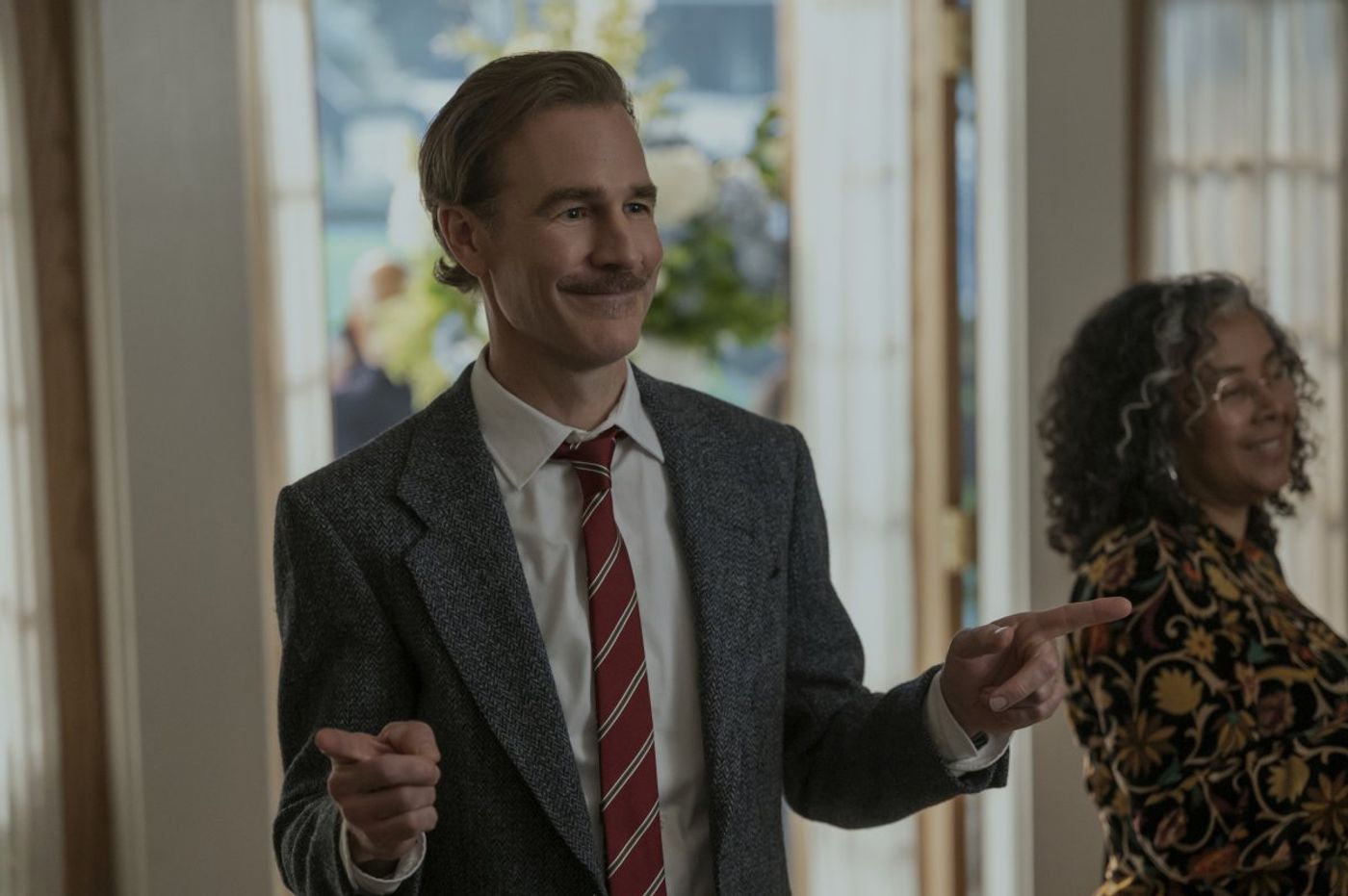
I wanted to ask you about the late great James Van Der Beek. He plays a pretty significant role in this season and I believe you had worked with him before on Dawson’s Creek. Can you talk about getting him for this series and what it was like working with him for Elle?
I directed five episodes of Dawson’s Creek back in the day [and] I got to know James and that whole gang. Legally Blonde has a bit of nostalgia to it, and we were always kind of aware that there was this thing about the ’90s going on. In some ways, James was another reminder, like the presence of Reese in the movie or in the show. It just aligned on so many levels: his talent, us loving him as a person, and then also just this interesting meta factor that it brought. We had a meeting and it was just fun to see him again and reconnect. I only directed the first two and his character doesn’t show up until episode three, so I didn’t have the honor of actually directing him.
He was an incredible man. There’s a reason his talent endured, and he brought a devilish sense of humor to the set. He has a really generous light touch with other people. He also has so many kids; he became a real dad. On the set, we were always laughing because it’s like, “You’re the dad now. You’re not the son.”
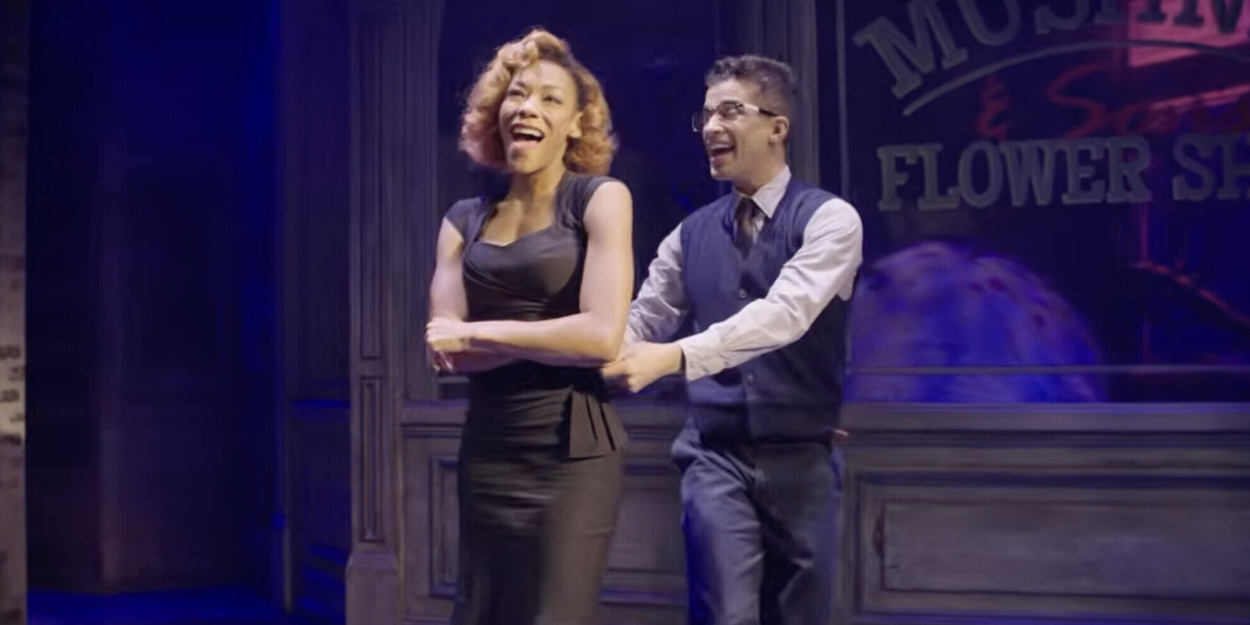
You recently directed a production of Avenue Q in London, which of course you did on Broadway more than 20 years ago. You’ve had lots of directing experience since that time. How did that inform how you approached the material now, given all the things you’ve done since then?
I’m a much better director now, so it was fun to go back and see where I’ve matured. We made that show about people in their 20s when we were in our 20s. We’re not in our 20s anymore. You see it differently. And also having a different set of young collaborators, trying to make it work for young people now.
I felt like I was also able to, frankly, correct a lot of things that I think were not great directing the first time, or I was able to add layers on top of it that I think made the show more interesting. It was always interesting, but with this particular group of people, it had a take on it. I think it has more heart because the humor isn’t shocking anymore.
At the time, everyone was distracted by puppet sex and humor. Now that’s not a big deal; I think people are feeling the emotion of it more, which is also what we were feeling. It’s the show people know with all the great lines, but some really, really funny new jokes that partially address the time difference. We live in a time now where it’s even harder to get an apartment, so suddenly that seems even more urgent. We were able to change things that made it feel like this could apply today, even though it also could apply 30 years ago.
Photo Credit: Kevin Mazur/Getty Images for Prime Video/Prime Video