





 Weather
FULLERTON, Calif. () — A patient diagnosed with glioblastoma, an aggressive form of terminal brain cancer, is marking seven years since his diagnosis after undergoing a specialized laser treatment that doctors say helped manage the disease after it returned.
At Providence St. Jude Medical Center, 65-year-old Larry Anderson recently reviewed brain scans with neurosurgeon Dr. Hector Ho that showed significant progress.
“This was way back in 2019 and this is his newest one and it looks beautiful,” Ho said.
The milestone is unusual for a glioblastoma patient. Anderson reacted to the anniversary with humor.
“Seven years, amazing! Give me a present,” Anderson laughed.
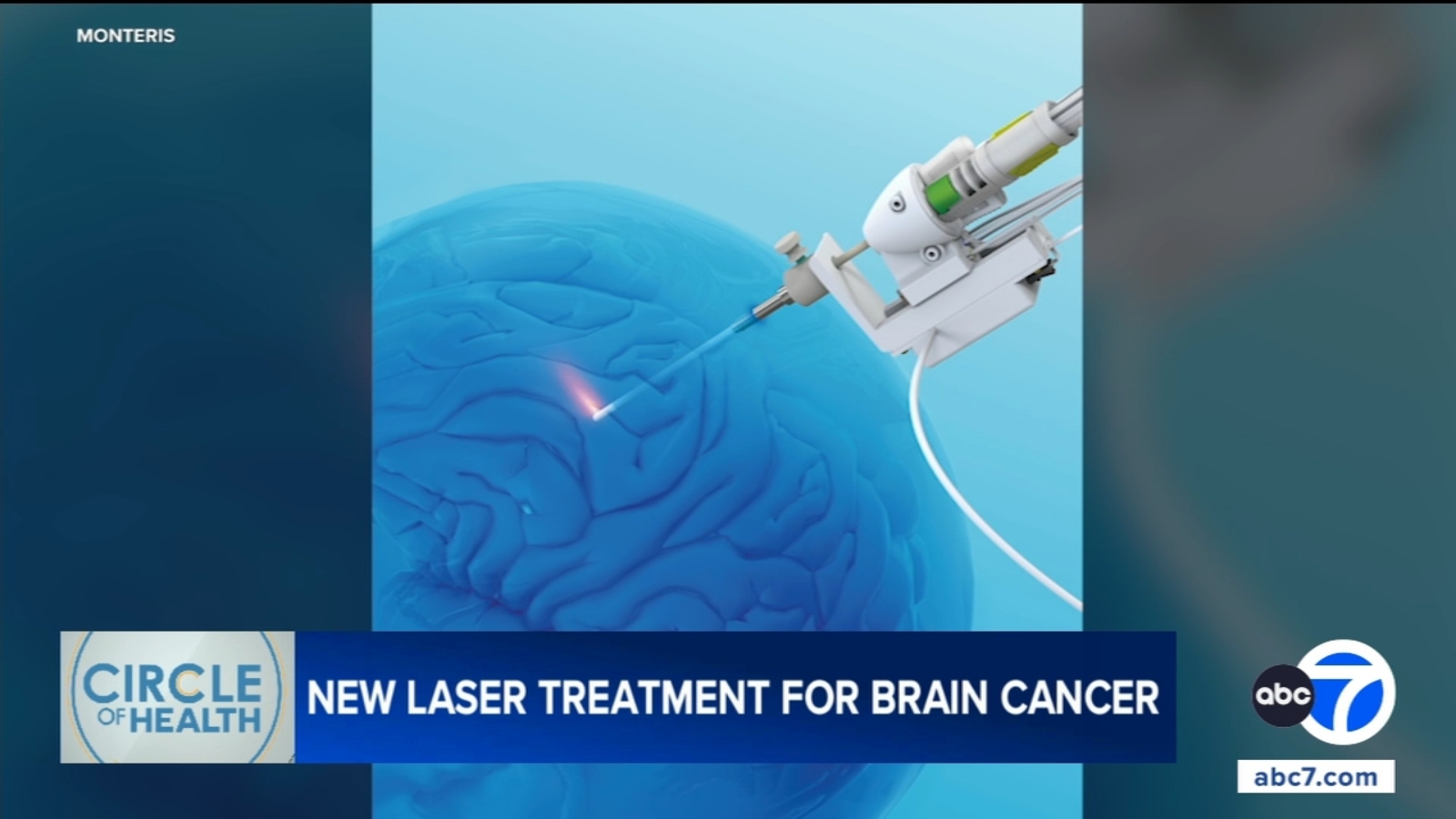
Doctors credit part of Anderson’s survival to laser interstitial thermal therapy, or LITT, a minimally invasive procedure used to destroy tumor tissue with MRI-guided laser energy.
“I’ve been lucky. That’s all I can say, I’ve been lucky,” said Anderson, who was diagnosed in 2019 after experiencing severe symptoms.
“I couldn’t walk good. I couldn’t talk. I didn’t remember how to brush my teeth,” he said.
An MRI revealed stage 4 glioblastoma. According to Ho, survival without treatment is generally four to five months.
“With treatment, with surgery, with radiation, with chemotherapy, that has been extended up to about 12-to-15 months of lifespan,” Ho said.
Doctors at Providence St. Jude Medical Center initially removed Anderson’s tumor through surgery. However, Ho said recurrence remains a challenge for patients with malignant brain tumors.
“Unfortunately, malignant tumors are not curable, and they end up having recurrence,” Ho said.
When Anderson’s tumor returned in 2022, physicians chose to treat it with LITT. The procedure uses MRI-guided laser energy delivered through a small incision to destroy abnormal tissue.
“That accuracy is super precise. So we are able to target a very small area in the brain that we think is abnormal,” Ho said.
While LITT has often been used to treat epilepsy, advances in thermography and navigation technology have expanded its use in delicate brain procedures, including treatment aimed at controlling glioblastoma.
“As of this time, we don’t use LID as a primary form of treatment, mostly adjuvant treatment, but more and more data is being accumulated showing that it is a very safe way to do things,” Ho said
Studies are underway to determine whether LITT could eventually be used as a primary therapy for glioblastoma. Patients typically return home the day after the procedure and resume normal activities. Anderson underwent a second LITT procedure a year ago. Today, his scans appear clear, allowing him more time with his grandson.
“I do what I can do to stay alive. Whatever it takes,” Anderson said.
© 2026 Television,