




 Weather
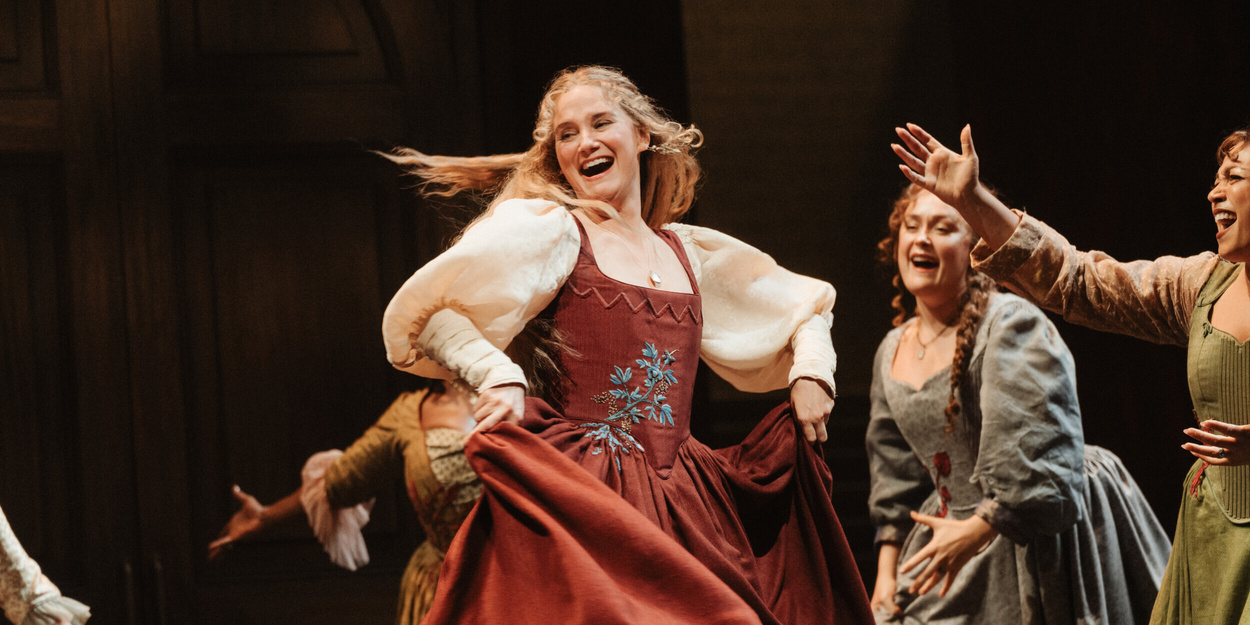
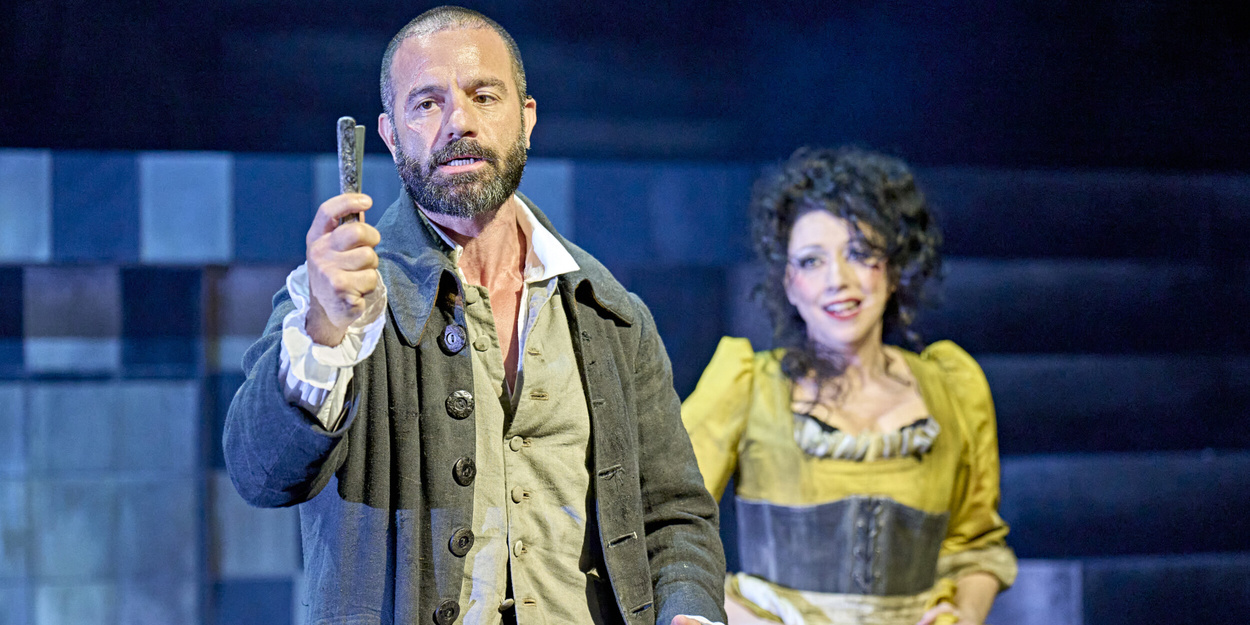
Perelman Performing Arts Center’s world premiere production of Giulia: The Poison Queen of Palermo just opened! The production, which will now conclude performances on Sunday August 2, features book, music and lyrics by Jennifer Nettles, direction by Mary Zimmerman, and choreography by Austin Mccormick. Giulia: The Poison Queen of Palermo is produced by special arrangement with Adam Zotovich.
The company, which features Nettles in the title role (Giulia), includes Matthew Amira (Carlo), Quentin Earl Darrington (Cardinale), Emily Fink (Maria), Bre Jackson (La Capitana), Andrew Kober (Pietro), Aubrey Matalon (Renata), Christopher M. Ramirez (Governatore), Didi Romero (Duchessa), Jessica Rush (Standby for Giulia and Duchessa), Jamila Sabares-Klemm (Ensemble), Naomi Serrano (Vitoria), Sam Simahk (Father Paolo) and Maya Sistruck (Ensemble). Kim Onah and Kaleb Wells serve as understudies.
What began as a single act of self-defense ripples through Palermo, creating a cascade of casualties and inspiring a secret sisterhood. But the path to safety is never safe. Can Giulia Tofana save them all without losing herself?
Let’s see what the critics have to say…
Roma Torre, New York Stage Review: Like Giulia, Nettles has created a rare alchemy here. And while you could say both are killers, obviously Nettles is slaying in the good sense. With Zimmerman’s expert direction, Giulia: The Poison Queen of Palermo has that magical stage chemistry that fuses disparate elements into a work of undeniable beauty. I would be very surprised if that alchemy doesn’t grow a set of legs that can take this bravura company all the way uptown to Broadway.
 Elisabeth Vincentelli, New York Times: But too often “Giulia” leans on generic images that could fit any number of setting. Flying as a metaphor for breaking free, for example, is a grating, sappy cliché that’s shoehorned anywhere, from “Defying Gravity” in “Wicked” to “Flying Away” in “Real Women Have Curves.” And here we go again with “Fly Away,” an aria in which Nettles’s Giulia passionately, angrily pushes away shame and regrets, only to find refuge in the safe embrace of airborne imagery. I expected more from a poisoner, even an altruistic one.
 Michael Sommers, New York Stage Review: Nettles has written for herself a demanding if rewarding role as a valiant soul whose desire to protect her loved ones and friends in dangerous times somehow warps into mass murder. If that critical storytelling point in Guilia remains hazy, Nettles and her glowing score override the question by the warmth of her personality and the agreeable music she offers. The confidence and ebullience of the production’s excellent 13-member ensemble succeed in making Giulia certainly play like a hit show, even though it obviously remains a work in progress.
Dan Rubins, Slant: Giulia shows flashes of the more tautly funny show that would be worthy of Zimmerman’s vision. If Nettles embraces what makes the show feel most shocking—its celebration of a community of women who take justice into their own hands with joyful, righteous bloodlust—it could become strikingly special. As Giulia says herself, let mama up the ante.
Robert Hofler, The Wrap: In a recent interview with The New York Times, Jennifer Nettles never once mentions the musical “Sweeney Todd.” Lots of interviewees at the Times don’t mention Hugh Wheeler and Stephen Sondheim’s great musical; then again, those people haven’t written a new stage musical about a serial killer. As subject matters go, serial killers are rare indeed for musicals. “American Psycho” and “A Gentleman’s Guide to Love and Murder” come to mind. Even the many killers in Sondheim’s “Assassins” are just one-shot wonders.
David Gordon, Theatremania: Nettles should probably take a few performances off, the way Lin-Manuel Miranda and Shaina Taub did when they starred in their own shows (Hamilton and Suffs, respectively), so she can experience Giulia herself and see what’s working and what’s not. Until she does, everyone’s efforts will be stymied, especially those of director Mary Zimmerman, whose staging often amounts to a series of opening and closing doors. The doors are a compelling device—Daniel Ostling’s deep burgundy set transforms fluidly without ever actually changing—as are Ana Kuzmaníc’s sumptuous costumes, which are embroidered with different poison flowers, but an attractive visual language isn’t the same as cohesive dramatic one. Right now, Giulia is an intriguing cocktail, but it could stand to be a little pickier about what goes into the potion.
Thom Geier, Culture Sauce:
Date: July 10, 2026
Author: Thom Geier
Jennifer Nettles, the Grammy-winning singer-songwriter best known for her work with the alt-country duo Sugarland, is a one-woman force of nature. She not only wrote the score and book for the messy but memorable musical Giulia: The Poison Queen of Palermo but also stars as the title character: a real-life serial killer from 17th-century Italy with a protofeminist vigilante streak as wide as the Mediterranean. Nettles, who’s appeared in Broadway shows like Chicago and Waitress, showcases her musical gifts both as a writer and performer to astonishing effect.
With her forthright bearing and flaxen hair hanging loose about her doll-like face, Nettles strikes and immediately sympathetic impression as Giulia Tofana, an apothecary in 17th-century Palermo who gained a reputation for dispensed vials of poison to women to kill men who abused or mistreated them. (Modern historians have only a sketchy understanding of Tofana, including her real surname and the exact date and manner of her death. Plus, she was one of many “black widows” operating at that time.)
In Nettles’s heavily fictionalized account, Giulia is a healer, cosmetics saleswoman, and confidante who hands out potions for women’s troubles — including abortifacients for unwanted pregnancies. But when her brutish new husband (Matthew Amira) makes physical advances on her teenage daughter, Vitoria (Naomi Serrano), she impulsively dispatches him with a dose of cyanide later dubbed Aqua Tofana. That spontaneous act of defense — which a sympathetic local priest (Sam Simahk) tacitly endorses because “You were only protecting your sheep” — soon leads to a widespread killing spree of other abusive husbands around town.
giuliia-2026
Christopher M Ramirez, Sam Simahk, Bre Jackson, Jennifer Nettles, and Quentin Earl Darrington in ‘Giulia: The Poison Queen of Palermo’ (Photo: Andy Henderson)
Nettles introduces two rival antagonists, the Cardinale (Quentin Earl Darrington) who secretly seeks out Giulia for an ointment after contracting syphilis and the district’s new Governatore (Christopher M. Ramirez), an ambitious creep who soon makes advances toward Vitoria. The two, not based on any specific historical figure, form an uneasy alliance to appease a community reeling from a long-standing drought and ultimately hatch a plan to scapegoat Giulia as a “witch.” Even by the standards of musical villains, though, the two are barely two-dimensional. Ramirez’s Governatore serves mostly as a comic foil, an awkward mix of animated Disney villain and bitchy queen who seldom flashes anything close to genuine menace to help drive the plot.
While the book and some of the lyrics can drift into cliché, Giulia really shines when the music kicks in. The score leans heavily on musical traditions — and not just Stephen Sondheim and Hugh Wheeler’s Sweeney Todd, which famously follows another murderous madman with ostensibly sympathetic motives (and a lower total body count). The songs carry echoes of everything from Beyoncé bangers to Fiddler on the Roof to (especially) Lin-Manuel Miranda’s Hamilton — which inspires both the rap-style banter in the often sung-through book scenes as well as multiple production numbers that blend spoken-word elements and sung refrains. (The boisterous Act 1 ensemble number “Cold” could benefit from dialing back all the direct references to its predecessors; it’s overripe with Hamiltonian phrases like “I could get it all done, one shot right here” and “Maybe I should wait for a while.”)
There’s an admirable eclecticism to the tunes, which boast some memorable hooks and witty turns of phrase. They’re also more musically challenging than you might initially guess. Many, particularly Nettles’s own soaring, radio-ready solo ballads, require a broad vocal range and a seamless blend of both lower registers and head voice. Naturally, she nails them with aplomb. But the ensemble numbers also benefit from remarkable harmonies, amplified by Austin McCormick’s poetic choreography. I wish that Nettles would dial back on the pastiche as well as the many on-the-nose name drops. Darrington sings the hell out of his Act 2 solo “The Wolf,” which culminates in a full-throated howl at the moon, but does every gospel-inflected number need to include the line “Can I get a witness?” (Also, the predatory Governatore seems like a stronger candidate to be branded as a wolf.)
giulia-jennifer-nettles
Jennifer Nettles (center) in ‘Giulia: The Poison Queen of Palermo’ (Photo: Andy Henderson)
Director Mary Zimmerman creates enchanting visuals, making the most of Ana Kuzmanić’s heavily embroidered period costumes. I especially appreciated the harlequin details on the bodice of the traveling player who occasionally serves as narrator (Bre Jackson, blessed with golden pipes). More problematic is Daniel Ostling’s set design, which efficiently renders multiple locations but also cuts off sight lines in many scenes. (Those seated on the far left of the auditorium are liable to miss action that occurs on a tall staircase situated upstage left — beside three arched entryways that open to reveal deep backdrops that may not always be visible to anyone seated too far from the center.)
The show is very much a work in progress. With tinkering to the plot and design, and overall narrative tightening, Giulia is poised to join the ranks of truly great new stage musicals. Nettles is an absolute star, but she leads a cast of noteworthy depth. Didi Romero makes a feast out of her solos as the deliciously campy and spoiled Duchessa who turns on Giulia for refusing to supply her with Aqua to off her husband (Andrew Kober) who subjects her to boredom rather than outright abuse. (Despite her growing body count, Giulia has some scruples.) The Duke’s worst offense appears to be that he snores — which makes him one of only two male characters (Simakh’s Padre Paolo is the other) who is not an outright monster. It’s the padre who reminds Giulia that there are decent men in the world, a point she concedes in a perfunctory spoken response that’s unlikely to mitigate concerns about the show’s inescapable anti-male bias: “Yes, there are. And they are none of my business.”
This is not a musical focused on a woman finding her perfect (male) match, or vice versa. Giulia’s business is focused on empowering women to confront the men who take advantage of them, a score-settling agenda that Nettles makes remarkably compelling. It’s unnerving how quickly we find ourselves rooting for this serial killer to mow down half of Palermo. Credit Nettles’s skills as an actress, toggling between impish and innocent while delivering some soaring and heartfelt vocals. She sends the audience out with the show’s hookiest number, a post-curtain-call barn-burner called “Higher” that summarizes the good will she has engendered for the last two and a half hours: “This is a moment you don’t want to forget,” she sings with goosebump-inducing intensity (before a chorus that tangentially repeats an old Duncan Sheik hit, “Barely Breathing”). Despite the show’s flaws, you can’t help but agree.
Austin Fimmano, New York Theatre Guide: Giulia: The Poison Queen of Palermo promises delicious, righteous darkness, like a feminist, Renaissance Sweeney Todd for the 21st century. The songs can’t quite deliver that darkness, though, and at their weakest feel trite and even derivative. But at their strongest, as Giulia and her women sing their woes to a Palermo skyline, there was a visceral emotion being stirred in my audience. And when it came to the finale, Giulia seamlessly stuck a landing that had everyone on my night on their feet, cheering for more.
Average Rating: 73.8%