




 Weather
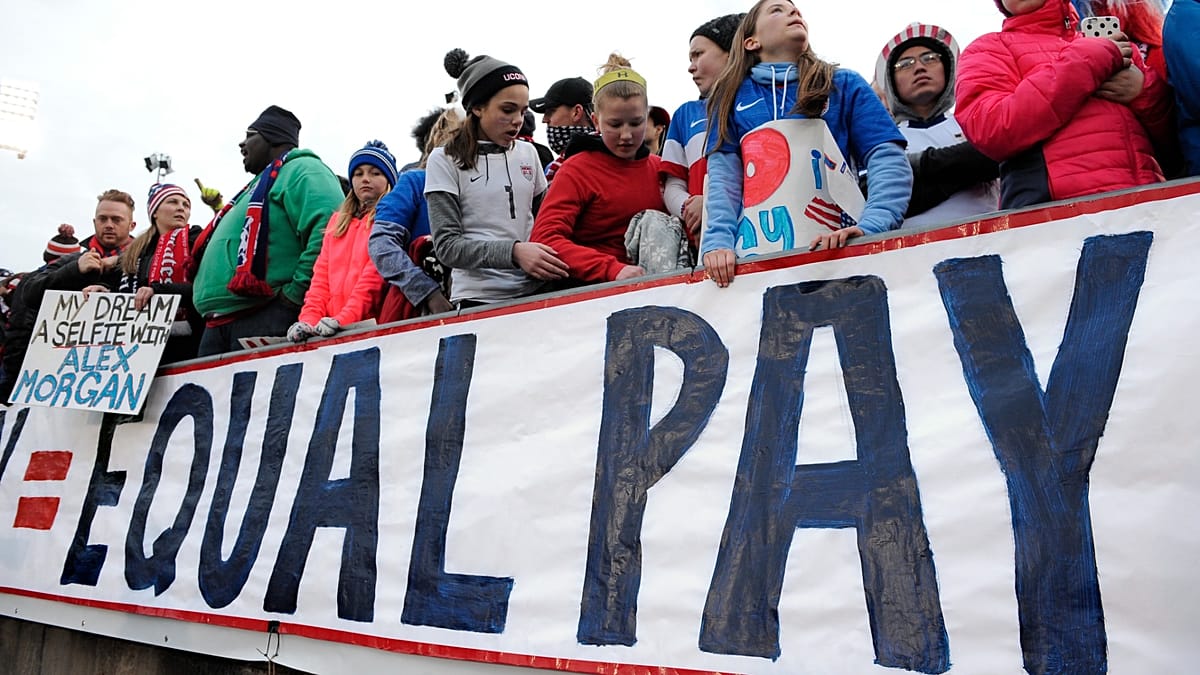
The EU Transparency Directive is Europe’s latest effort to guarantee equal pay for equal work between men and women using transparency and stronger enforcement. The Commission proposed it in 2023 under the Gender Equality Strategy 2020-2025 to close the ongoing gender pay gap.
ADVERTISEMENT

ADVERTISEMENT
The directive lifts the secrecy around salaries. In practice, postings and interviews must now include the pay range; workers can request average pay data for colleagues doing the same job broken down by gender. Employers can no longer ask candidates about their salary history.
By making pay visible, the directive empowers workers, particularly women, to see unjustified salary discrimination and face it rather than just suspect it.
Member states had until 7 June to transpose the directive into national law, but only Italy, Slovakia, Malta and Lithuania have implemented it on time. Most member states missed the deadline, delaying implementation.
Gender pay gaps remain
In the EU the principle of “equal pay for equal work” is legally mandated since 1958, but the gender pay gap remains. This is largely due to institutional secrecy: without transparency, pay discrimination remains invisible, and workers don’t realise they are being underpaid.
Women in the EU earn an average of 11.1 per cent less per hour than men. This means a woman effectively works for free for over a month every year, compared to a male colleague. And because women earn less during their working lives, the disparity compounds over time. The EU gender pension gap stands at 25 per cent, so older women face a greater risk of poverty. Progress is slow; the gap has closed by just 5.1 percentage points over a decade.
The European Commission identified systemic transparency barriers as the leading factor of the gender pay gap (not education, occupation, or working ours.) Eurostat found that the gap is higher in the private sector, where secrecy is more common. Private companies often use salary non-disclosure agreements, keeping workers in the dark.
“For years pay was set behind a veil. That veil didn’t just hide gaps, it reproduced them. Someone who was underpaid once carried that low salary from job to job, because every new employer asked, ‘what are you earning now?’, anchoring their offer to it. One worker’s disadvantage got locked in and passed from employer to employer across an entire career”, said MEP Gabriele Bischoff, from the German S&D group, shared with Euronews.
Women make up 66 percent of all EU part-time employees, and 91 percent of childcare-related career breaks are taken by women. So opaque pay structures allow companies to quietly stall salary progression for mothers returning to the workforce.
On the other hand, in female-dominated sectors like care and education (where women hold 76 percent of jobs) salaries are systemically undervalued. There is no data to prove “work of equal value” to that of male-dominated fields, because pay structures are hidden.
What changes for workers?
A key factor in the gender pay gap is the longstanding taboo around discussing salaries. Secrecy about how much your colleague sitting next to you earned is the norm. Europeans are used to applying to job vacancies without knowing the salary, only to discover after several rounds of interviews that it is far below their expectations.
The transparency directive changes how salary information is communicated, perceived, and discussed. The aim is to guarantee “equal pay for equal work” between workers, but especially between men and women. The lack of pay transparency allows women to suspect pay discrimination but not to fully prove it, keeping women from earning the same as men.
According to Bischoff, “information shifts power in other ways too: when a worker can request the average pay for their role broken down by sex, and when the burden of proof flips to the employer, having to justify a gap rather than the worker having to prove discrimination, that can trigger change.”
Job seekers don’t have to share their pay history and can no longer enter an interview without knowing the salary. Job postings must include the starting pay, or candidates must be informed of the salary before the interview. In brief, your pay is no longer a private matter between you and your employer.
Workers can ask to know about the criteria used to determine individual pay, average pay levels, and career progression for colleagues doing the same job, broken down by gender. Employees gain the formal right to understand the company’s pay structure to see whether the employer is discriminating against them.
“We have introduced stronger enforcement measures in the Directive. This includes fines, the level of which is set by Member States and must be effective, proportionate and dissuasive. Victims of pay discrimination must receive full compensation, and benefit from reversal of the burden of proof where an employer has breached their transparency obligations”, Eva Hrncirova, the Commission’s Spokesperson for Equality explained.
New obligations for employers
For employers and HR departments, the directive imposes immediate obligations for recruitment and internal administration. Job vacancies and titles must be gender-neutral, and recruitment must be conducted without gender discrimination. Employers must make information on progression criteria, individual pay, and average pay available; provide workers with a written response within two months; and inform them of their right to information annually.
“Investing in better pay-setting practices has clear benefits for employers. By elevating companies’ reputations, it helps to attract talent, lift performance through clearer career trajectories, and improve employee retention”, Hrncirova said.
Companies with at least 150 employees must report annually on the gender gap to the relevant national authority. If a company has an unjustified gender pay gap (not based on specific skills, qualifications, or experience) exceeding 5 per cent, it may be subject to examination. Companies must submit their first formal gender pay gap report by June 7, 2027, using salary data from 2026.
The Commission will help employers to comply with the directive through practical tools such as “an online step-by-step toolkit for gender-neutral job evaluation and classification”, Hrncirova explained.
This is not Brussels’ first try to solve pay transparency. In 2014, the Commission proposed non-binding recommendations to encourage member states to correct pay inequalities. These were like those in the current directive: clearer information on starting pay or pay levels, better access to pay information to identify discrimination, and regular audits and reporting for employers.
As only a limited number of member states introduced national measures in line with the recommendations, the Commission shifted to a more binding approach in March 2021 and proposed the transparency directive.
Implementation in Europe
To implement this directive, each EU member state must pass national legislation that legally forces companies to disclose salary bands to job applicants. It also bans employers from asking for past salary history, and grants workers the right to see the average pay levels of colleagues doing equal work.
Countries that don’t implement it will face penalties; Germany, for example, hasn’t yet published a finalised bill. The country, which has a 6 percent pay gap, is divided. Officials are pushing for the directive, but business lobbies claim the rules place an “unnecessary burden” on companies.
Austria, Spain, and Bulgaria – which have pay gaps of 19.2 percent, 9.3, and 12.5 respectively – also missed the deadline and haze zero public legislative drafts prepared.
Then there’s Sweden, which has a 10.2 percent gap and voted against the directive during EU council negotiations. After publishing a tentative draft proposal, the Swedish government completely reversed course. It announced that the EU’s rules were too structurally burdensome for its domestic collective-bargaining models, and withdrew entirely from the transposition process.
Slovakia and Lithuania managed to overhaul their national laws to meet the deadline. Slovakia has passed legislation on the pack and is enforcing aggressive annual reporting for local businesses. Italy and Malta achieved full compliance by immediately embedding the directive into their existing national gender certification frameworks. They also granted local job seekers an enforceable right to demand clear salary ranges before an interview even begins.
“The Commission’s priority remains the timely, correct implementation of the Directive that delivers real change for workers, and women in particular. We continue assisting Member States to achieve that”, Hrncirova told Euronews.
Read the full article here