





 Weather
Published on
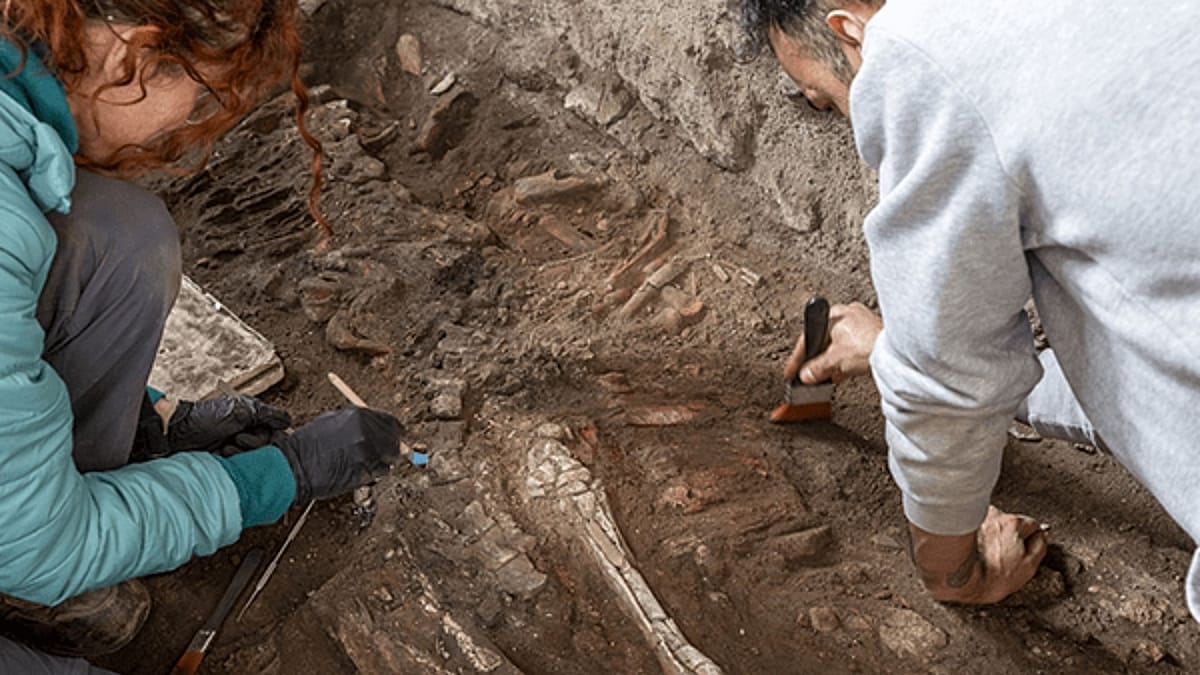
An equid skeleton has been uncovered during archaeological excavations in a bakery area of Pompeii’s House of the Chaste Lovers complex.
ADVERTISEMENT

ADVERTISEMENT
The Insula of the Chaste Lovers is one of the most important excavation sites in Pompeii because it preserves an entire production complex, including a bakery oven, storage rooms, workspaces and the owner’s residence.
The complex is named after the famous “Chaste Kiss” fresco discovered in a triclinium of the house and comprises a large bakery with adjoining stables, where other equids used to operate millstones and transport grain for bread production had previously been found.
“For a long time, Pompeii has primarily represented the beauty of its frescoes and the opportunity to study the material culture of antiquity,” said Gabriel Zuchtriegel, director of the Pompeii Archaeological Park.
“In reality, it is much more than that: it offers the possibility of learning about the human lives that were cut short by the eruption, as highlighted by the recent exhibition of the victims’ casts here in Pompeii, but also about the lives of animals.”
Researchers say the study could shed light on how animals reacted to the catastrophic event and help improve understanding of the eruption’s impact on Pompeii. According to the study, the discovery highlights the exceptional state of preservation at the site, enabling experts to reconstruct daily life, production activities and human-animal interactions in the ancient city.
The excavation marked the first stage of the investigation and was followed by initial studies of the recovered remains. Ongoing laboratory analyses are expected to provide further insights into the animal’s role within the bakery and the conditions it experienced during the eruption of Mount Vesuvius in AD 79.
The discovery was made through close cooperation between archaeologists and experts from the Applied Research Laboratory, including specialists in archaeozoology, archaeobotany and anthropology, as part of an interdisciplinary project.
Read the full article here