


 Weather
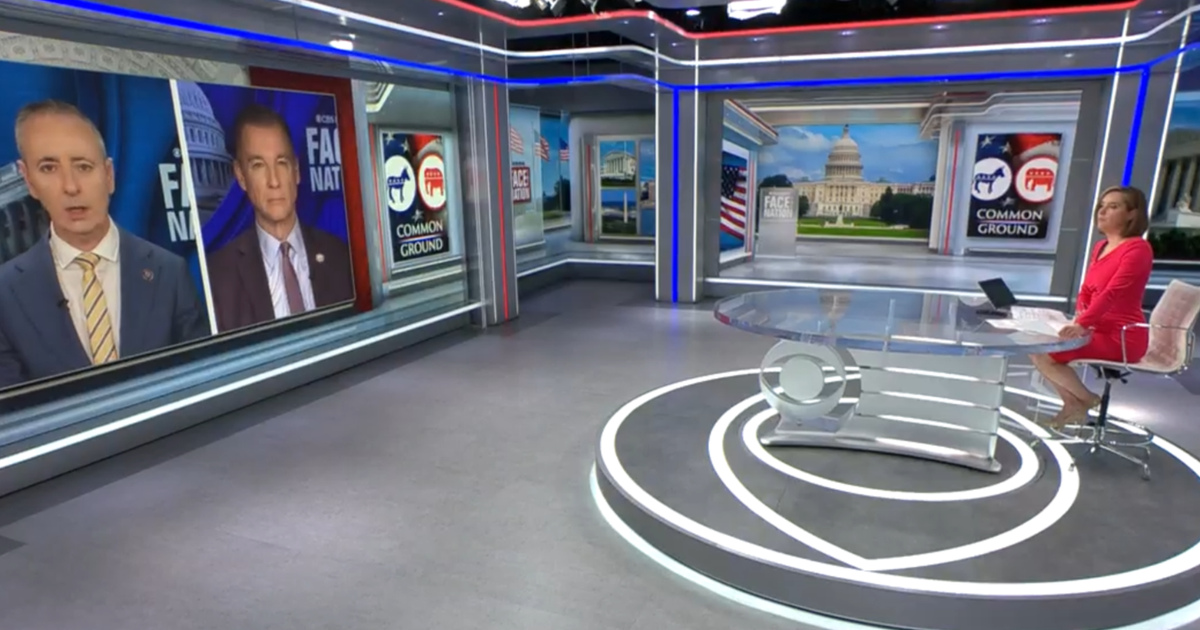
On this “Face the Nation with Margaret Brennan” broadcast, moderated by Margaret Brennan:
- U.S. Trade Representative Jamieson Greer
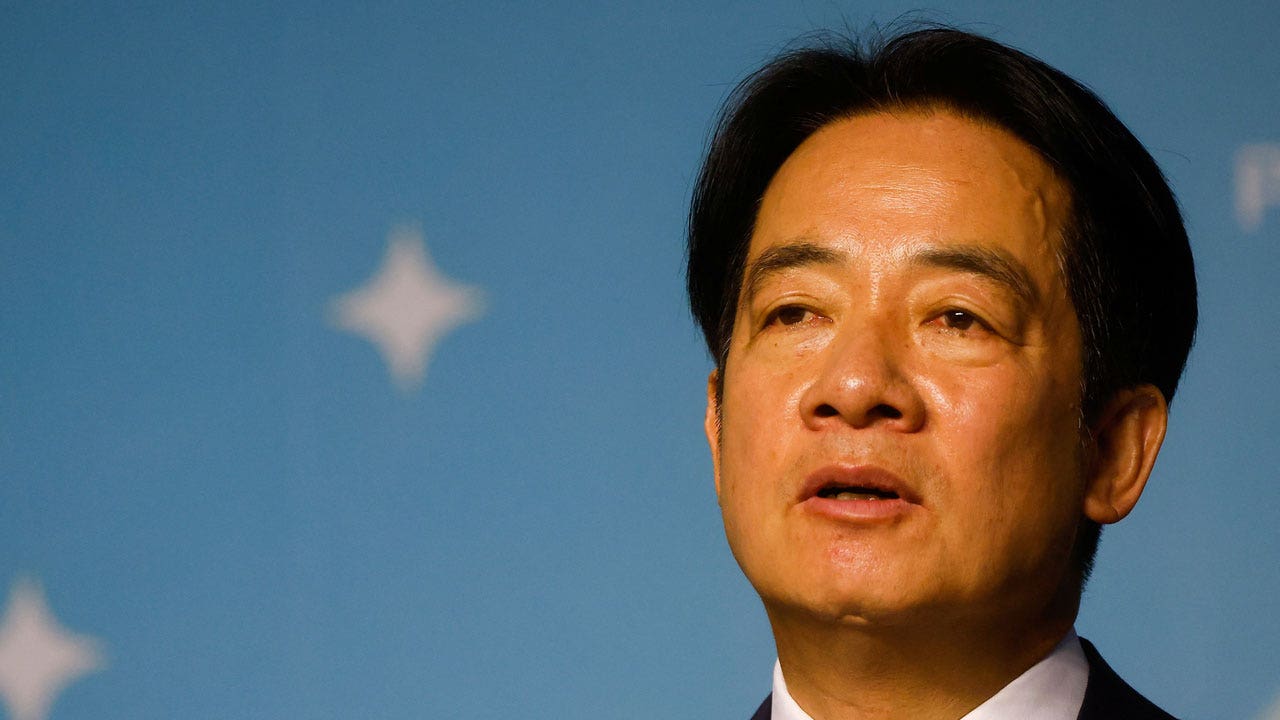
- Ambassador Alexander Yui, Taiwan’s Representative to the U.S.
- Anthony Salvanto, CBS News executive director of elections and surveys
- Reps. Brian Fitzpatrick, Republican of Pennsylvania, and Tom Suozzi, Democrat of New York
- Former Defense Secretary Robert Gates
Click here to browse full transcripts from 2026 of “Face the Nation with Margaret Brennan.”
MARGARET BRENNAN: I’m Margaret Brennan in Washington.
And this week on Face the Nation: Back in the U.S. following a whirlwind diplomatic mission to China, President Trump faces backlash here at home when it comes to inflation and the economy.
While the reviews for the president’s trip to China and details about the deliverables from the meeting of the world’s two biggest economic superpowers are still coming in, it’s Mr. Trump’s efforts on the domestic economy and inflation that are getting panned at home.
Asked about the extent to which Americans’ financial situations were motivating his Iran dealmaking, the response didn’t do much to reassure them:
(Begin VT)
DONALD TRUMP (President of the United States): Not even a little bit. I don’t think about Americans’ financial situation. I don’t think about anybody. I think about one thing. We cannot let Iran have a nuclear weapon.
(End VT)
MARGARET BRENNAN: Those remarks, plus new numbers showing the fastest increase in the inflation rate in three years, have Republicans increasingly concerned about the party’s chances in the midterm election.
We will hear from the president’s top trade representative, Jamieson Greer, plus Taiwan’s representative to the U.S., as well as the heads of the bipartisan Problem Solvers Caucus in the House, Pennsylvania Republican Brian Fitzpatrick and New York Democrat Tom Suozzi. Plus, former Defense Secretary Robert Gates will also be with us.
It’s all just ahead on Face the Nation.
Good morning, and welcome to Face the Nation.
President Trump’s grip on his party has tightened with Saturday’s defeat of Louisiana Senator Bill Cassidy in a three-way Republican primary. Cassidy voted to impeach Mr. Trump after the January 6 attack on the U.S. Capitol. And, as a doctor, Cassidy has been outspoken about some of the administration’s health policies.
In turn, Trump endorsed one of his opponents and has been openly critical of Cassidy. There will now be a run-off for a seat that is a safe Republican one. But this is a midterm year, when a president’s record is a top factor nationally.
Our CBS News poll out this morning says that seven in 10 Americans say they are frustrated or even angry with the administration’s approach to the economy. Two-thirds say Trump’s policies are making the economy worse, at least in the short term, and only 27 percent say they approve of his handling of inflation. That marks a new low for the president in our CBS News polling.
We begin this morning with a top member of the president’s economic team, United States Trade Representative Jamieson Greer.
Good morning to you, Ambassador.
AMBASSADOR JAMIESON GREER (U.S. Trade Representative): Good morning. Good to be here.
MARGARET BRENNAN: It isn’t just a matter of sentiment. Gas is at an average of $4.51 a gallon. Americans have spent $45 billion more on fuel since the war began versus a year ago.
The stock market is up, but lower-income Americans are pulling back on their spending. The New York Fed reports households earning less than $125,000 a year are fueling up their cars less often. How do you provide relief to the average American?
AMBASSADOR JAMIESON GREER: Well, we know that no one wants to see higher gas prices.
At the same time, the president is balancing foreign policy considerations. We know that, in addition to wanting to have low gas prices, we don’t want our children or grandchildren to inherit a world where Iran has a nuclear weapon.
So the president is focused on affordability in as many ways that he can – that he can. He’s bringing jobs back to America. We’re focused on getting wages up to offset any kind of increase in prices. And we’re seeing prices go down for staples like dairy, cheese, flour, et cetera.
So we’re very focused on this. The president’s focused on it. And we look forward to seeing those prices come down soon as the operations wrap up in the Gulf.
MARGARET BRENNAN: But we have no time frame for that at this point.
Let me ask you about what you were just working on in Asia. China said it agreed with the United States to establish a board of investment to consider Chinese investment here in the U.S. and to establish bilateral boards of trade to discuss tariffs.
Which products are going to be affected by that board? Are these items outside the current investigations that you are conducting?
AMBASSADOR JAMIESON GREER: So, when we think about the board of trade, we’re thinking about how to manage economic relations between the U.S. and China.
These are two economies that are quite different, and we’re focused on trade in nonsensitive goods. When you talk about sensitive goods, you know, the most high-tech stuff, you know, things that can be used for military uses, those are things that – those are national security issues.
So, we’re looking to discuss things like sales of agricultural goods to China, energy goods, Boeings, medical devices. When we talk about the kinds of things we want to be importing from China, there are a number of things. There can be consumer goods, maybe low-tech items.
And so we look at those types of areas where we should be trading. On the investment side, the board of investment is really about discussing key issues in U.S.-China investment policy. It’s not really an investment program, but it’s to try to almost be like a firefighter and put out issues when they arise between the two countries.
MARGARET BRENNAN: So, really, this just seems a message of stability, because you were already discussing a lot of these things on a bilateral basis, right? I mean, what’s new?
AMBASSADOR JAMIESON GREER: So we have never had a board of trade or a board of investment before. We’ve always had an ad hoc approach with China and the United States, which I think is actually challenging.
I think it’s more important to formalize these relations. The United States has a host of tariffs, import controls, export controls on China. China has a number of non-tariff barriers that have been in place for a long time, other challenges they impose to block our imports and things like that.
It’s much better to discuss these in a formalized way between our government and their government. In addition to this, we saw China over the past couple of days reduce a host of non-tariff barriers on agricultural products, such as beef and poultry, et cetera.
And so we’ve seen them already starting to do things to facilitate imports from the United States.
MARGARET BRENNAN: Well, I will come back to some of those in a moment.
But I want to ask you about tariffs. The president said to reporters he did not discuss tariffs with Xi Jinping at all. Are we in an indefinite trade truce, or were you – are you looking at bringing that tariff rate back to where it was before the Supreme Court ruling?
AMBASSADOR JAMIESON GREER: Well, the Chinese know – and that’s part of our deal – that the United States can elevate tariffs to the higher level that we had at the time of what we call the Busan deal in October, when President Xi and President Trump met.
Following the Supreme Court case in February, about 10 percentage points were knocked off the tariff rate for China. We believe, under our deal, that we are able to elevate that again. The president is exploring different tools that he has. I don’t want to prejudge a lot of the investigations that are happening.
The Chinese know, just like many other countries we’re dealing with, that we’re going to have a certain level of tariff to control our imports, but that we also expect market opening.
MARGARET BRENNAN: OK.
But the last time you were here after the Supreme Court decision, you said that, when some of these tariffs expire in July, that you would expect to roll out new tariffs after the end of these investigations under authority 301.
So, are you saying now that you no longer expect tariffs to come into place after July?
AMBASSADOR JAMIESON GREER: Well, I think I was careful to tell you, because my general counsel always tells me to say this, I can’t prejudge the outcomes of those investigations.
Those investigations, if they find on tariff barriers or unfair trading practices, they can authorize the president to take actions like tariffs, like fees on services, like quotas, things like that.
MARGARET BRENNAN: Yes.
AMBASSADOR JAMIESON GREER: So we’ll certainly be presenting the president with those options, if those – if those investigations show what we think they might show, which is that there’s a huge problem with overcapacity in China and other countries.
So we’ll – we’ll get back to you on the findings in those investigations when they conclude.
MARGARET BRENNAN: OK.
We did see China on Saturday release a statement confirming some of the deals with the U.S., but it was pretty vague. There was no mention of the promise to buy 750 Boeing planes that President Trump told reporters about if the first 200 go well.
China said there was a guarantee by the U.S. to supply aircraft engines, but it didn’t mention the 400 to 450 GE engines that the president announced. GE hasn’t commented either. So, how locked in are these agreements?
AMBASSADOR JAMIESON GREER: So, the 200 Boeings, those are locked in. There’s obviously a future to have more Boeings. The reality is, this is the first major purchase by China in almost 10 years of Boeings – or orders, rather.
So that’s – that’s going forward. And, like the president said. You know, when and if Boeing delivers, there’s – there’s a lot of upside there. With respect to some of the other details, we’re finalizing a fact sheet that we will hopefully get out very soon, so we can be clear about the double-digit increase in agricultural purchases we expect from the Chinese and some of the other things that happened and were agreed to during the visit.
MARGARET BRENNAN: OK.And I know GE is meeting with China today, but we haven’t seen anything from them on the aircraft engines.
On the ag products, the conservative “Wall Street Journal” editorial board questioned whether the summit achieved any of the stated wins because of how vague these things have been.
They said: “Mr. Trump boasted about fantastic Chinese purchases of U.S. soybeans and aircraft, but China didn’t confirm the sales. And, by our count, this is the second time China has bought the same American soybeans, or is it the third?”
They’re kind of arguing you’re playing a shell game here with, like, re- announcing past deals on past agreements to purchase over a period of time. Can you answer these conservative skeptics with any specifics?
AMBASSADOR JAMIESON GREER: So, first of all, we’ve had a deal in place with the Chinese since October that they would buy 25 million metric tons of soybeans each year for the rest of the president’s administration. So that deal is still in force.
What we expect with the new purchase agreements, where the specific number will be announced very soon, double-digit purchases of aggregate agricultural products. When I say aggregate, I mean everything else. That could be soybeans. That could be beef, that could be grains. That could be dairy products, all kinds of things.
So we have the existing soybean deal that they may be referring to. And then, over and on top of that, we have these agricultural products as well. And all of that will be facilitated by board of trade discussions with the Chinese.
MARGARET BRENNAN: So, still not nailed down, just an aggregate agreement?
So, how many concessions did the U.S. make? What were those concessions in order to get this?
AMBASSADOR JAMIESON GREER: Well, one thing, they’re – they’re balanced trades here, right? We’re trying to get to balance trade with the Chinese.
For a long time, it’s been out of whack. So, when you see something like what the Chinese said, which I can confirm, about a sale of Boeings, accompanied by a sale of aircraft and auto parts and spare auto parts, aircraft parts, and those kinds of things, the Chinese want to make sure that they have regular access to these kind of spare items, so they can continue to fly their fleets.
So that’s something we want to do. We are focused on mutually beneficial trade. So, when you’re talking about that kind of thing, what we should be exporting, what we should be importing, it becomes less a question of concessions, and more a question of, what’s mutually beneficial for both of us?
That’s why we’re so focused on nonsensitive trade, because that doesn’t – that doesn’t require concessions. That’s about working together, talking about what they need, what we want to sell, what we need from them.
So, we’re already seeing it, as they’ve reregistered beer facilities, where beef facilities expired. They’re taking poultry again.
MARGARET BRENNAN: Yes.
AMBASSADOR JAMIESON GREER: They’re working with us on biotech traits to make sure that those types of products that have genetic modification can go into China without any problem.
MARGARET BRENNAN: OK.
China still sells more to the U.S. than it buys, but that difference has decreased by about 31.5 percent. So, thank you, Ambassador.
We turn now to Ambassador Alexander Yui, Taiwan’s representative to the United States.
Ambassador, good to have you here in person.
AMBASSADOR ALEXANDER YUI (Taiwanese Representative to the United States): Thank you, Margaret.
MARGARET BRENNAN: There hasn’t – there hasn’t been a call between an American president and a leader of Taiwan since 1979. But President Trump indicated to reporters there might be one coming.
Is there a call planned with President Lai?
AMBASSADOR ALEXANDER YUI: Well, we’ll see.
But President Trump, when he was in Beijing for the last, well, two days, he mentioned that he heard a lot about Taiwan. You know, he heard a lot about Taiwan those two days in Beijing.
But the problem is, he heard only their side of the story. You know, he heard the Chinese story, or, as I would say in Spanish, el cuento chino.
I think he – if he has time, we would love to tell him our side of the story, the Taiwan story, which is one that – of resiliency, of a state staying up against the Chinese aggression.
This has been going on for 77 years. This is not something that just happened when the DPP, the current ruling party in Taiwan, came to power. This has been going on for 77 years…
MARGARET BRENNAN: Yes.
AMBASSADOR ALEXANDER YUI: … since the inception of 1949, when they became a people’s republic.
So this is not a recent thing, as if we are the ones creating problems. It is China, People’s Republic of China, creating all this problem. But the commu…
MARGARET BRENNAN: So no call scheduled yet? But…
AMBASSADOR ALEXANDER YUI: Well, the communication between Taiwan and U.S. is constant. It’s current. But I will leave it to the U.S. to announce anything if it happens.
MARGARET BRENNAN: Yes. It would be a big deal. He did speak to a past president as president-elect, but not since he came…
AMBASSADOR ALEXANDER YUI: Yes, with President Tsai, yes, when – in 2015, ’16, yes.
MARGARET BRENNAN: In – that’s right.
So, China refers to your president as a separatist, in part because Lai has talked about being a – quote – “practical worker for Taiwan independence.”
In an interview with FOX News, President Trump said he’s not looking to have somebody say “Let’s go be independent because the United States is backing us.”
Does Taiwan have any intention of declaring independence formally from China?
AMBASSADOR ALEXANDER YUI: Well, let me first say that President Trump and Secretary Rubio have been very categorical during their visit to Beijing, publicly stating that there’s no change in United States’ longstanding position on Taiwan, which we want to express our appreciation for upholding this position.
What is meant by Taiwan independence? My president just made a statement recently, just now. And it means that Taiwan is independent from the Chinese aggression from the PRC, actually. The formal name of my country is Republic of China, and we’re not subordinate to the People’s Republic of China in any way at all.
And that’s maintaining our sovereignty, our way of life, our democracy, our – our vibrant economy, our high-tech production.
MARGARET BRENNAN: Yes.
AMBASSADOR ALEXANDER YUI: And that is – that is what is meant by independence. We are sovereign, independent, away from the Chinese – People’s Republic of China’s attempt to swallow us as one of their own. They have never ruled or controlled Taiwan ever.
MARGARET BRENNAN: Yes.
AMBASSADOR ALEXANDER YUI: So, that’s – that’s – that is meant by independence.
MARGARET BRENNAN: Well, President Trump, though, said he wants Taiwan to cool it. He also wanted China to cool it.
That seems to indicate that perhaps he was listening to Xi Jinping’s version of events and might have been persuaded?
AMBASSADOR ALEXANDER YUI: Well, that’s why I – you know, if – we’d love to have given our part of the story…
MARGARET BRENNAN: Yes.
AMBASSADOR ALEXANDER YUI: … not just listen to cuento chinos.
(LAUGHTER)
AMBASSADOR ALEXANDER YUI: But – but I think that’s a statement of saying he wants status quo, the president wants status quo, President Trump, that he wants no change in the – in the Taiwan Straits, neither through economic or military coercion…
MARGARET BRENNAN: Yes.
AMBASSADOR ALEXANDER YUI: … and that the peace and stability of the Taiwan Straits is good for all parties concerned.
And that’s the position that Secretary Rubio mentioned during his interview, and that’s the one that we also long for. We have been a responsible member of – of Taiwan Straits. We want to strive for peace and stability.
You know, President Trump doesn’t want a war 9,500 miles away.
MARGARET BRENNAN: That’s what he said.
AMBASSADOR ALEXANDER YUI: We – we don’t want a war. We want peace and stability. We want to have our lives going on as – as usual.
But we’re not the ones creating all this trouble. And that’s why you know it’s like we – our house, there’s intruders trying to get into our house. We’re trying to beef up our security system. And then they complain, the intruder complains that, because we’re trying to improve our security system, it’s making his job harder.
MARGARET BRENNAN: Right.
(LAUGHTER)
MARGARET BRENNAN: No, I hear your point. And, on paper, President Trump’s administration has pledged near record amounts of defensive weapons and sales to Taiwan. But the deliveries haven’t really been happening.
And, in Beijing, President Trump told FOX he’s going to hold on to the latest weapons sale that Taiwan sought to purchase this year and use it as a negotiating chip with China.
What impact will that have on your ability to deter China if you don’t get those weapons?
AMBASSADOR ALEXANDER YUI: Well, exactly.
If we don’t – if we want to prevent a war from happening, I think it’s best that Taiwan is strong, able to defend itself, and, therefore, we should be able to acquire, to buy the arms that we need to have a stronger defense.
You know, we – we also abide – we believe in peace through strength.
MARGARET BRENNAN: Yes.
AMBASSADOR ALEXANDER YUI: So, actually, it makes more sense for United States to sell us the arms, so we can defend ourselves, and so you don’t have to send your army 9,500 miles away to defend us.
MARGARET BRENNAN: Well, the so-called six assurances that the United States gave to Taiwan back in the Reagan area included a pledge not to cut off arms sales to Taiwan and of no prior consultation with Beijing on such sales.
But this is what the president told reporters about his discussion with Xi. Take a listen.
(Begin VT)
DONALD TRUMP (President of the United States): So, what am I going to do, say I don’t want to talk to you about it because I have an agreement that was signed in 1982? No, we discussed arm sales to…
QUESTION: And what’s his request?
(CROSSTALK)
PRESIDENT DONALD TRUMP: We discussed the Taiwan – you know, the whole thing with the arms sales. It was in great detail, actually. And I will be making decisions.
(End VT)
MARGARET BRENNAN: In great detail.
Did that violate America’s commitment to Taiwan?
AMBASSADOR ALEXANDER YUI: Well, again, but President Trump has also been very clear in saying that he did not agree on anything that the Chinese side…
MARGARET BRENNAN: But he did say he’s going to hold onto those weapons and not give them…
(CROSSTALK)
AMBASSADOR ALEXANDER YUI: Yes, but he didn’t say he agreed to anything.
So, again, the United States government has been consistent throughout all administrations since 1979 in providing arms to Taiwan, according to the Taiwan Relations Act, which is selling arms commensurate to the threat that Taiwan receives.
And past administrations, including in President Trump’s first term, made considerable amounts of sales, including the F-16 Block 70s. And also, in his second administration, last year…
MARGARET BRENNAN: Yes.
AMBASSADOR ALEXANDER YUI: … he made two sales to Taiwan also, again, the last one also a very considerable amount of money on arms sales.
So, we believe, again, that having arms sales continue to Taiwan is in the interest of United States and Taiwan to keep peaceful and stable Taiwan Straits.
MARGARET BRENNAN: Well, we will try to ask the administration for updates on when those deliveries might happen.
But thank you very much, Ambassador.
Face the Nation will be back in a minute. Stay with us.
Face the Nation Transcripts More
(ANNOUNCEMENTS)
MARGARET BRENNAN: And now with more from our new CBS News poll, President Trump’s approval rating has now dropped to the lowest level of his second term at 37 percent.
And views of the economy have dropped to their lowest level in several years. Only 29 percent now say the economy is good.
Joining us now with more is our executive director of elections and surveys, Anthony Salvanto.
Anthony, good to have you here.
Gas is $4.51 and change per gallon. Is this pressure all due to gas prices?
ANTHONY SALVANTO: Gas prices aren’t helping.
It’s not the only thing. I always start with feelings, because they’re so closely connected to people’s finances. They tell us they feel stressed, they feel concerned about their personal finances. And feelings of economic security are down from a year ago.
Now, gas prices are increasingly, they tell us, weighing, being a financial hardship on them. Overall, though, they continue to tell us they don’t think their income is keeping pace with inflation. And that’s something we have been seeing now for years coming out of the pandemic.
So, contextually, yes, it’s part of something larger. The other part of this, though, is uncertainty, which is a top way that people describe the overall economy. And the way that relates to gas prices is, take, for example, just the situation in Iran and the Strait of Hormuz.
People tell us, day to day, they don’t feel like they have a clear understanding, they’re getting a clear understanding of what’s going on there. And, of course, that is impacting gas prices. That’s part of what I mean by uncertainty.
But the other part of the big picture here, you pull back, you look at the job market, people aren’t confident that, if they had to find another job, they could. They even think – you hear so much about A.I. in the news.
MARGARET BRENNAN: Structural changes.
ANTHONY SALVANTO: Big structural changes. They think A.I. is going to start taking jobs.
And what it leads to when you look at opportunity, even generational opportunity, there’s a lower number who think that their opportunities are going to be better than their parents were.
MARGARET BRENNAN: How big a risk is the inflation problem or at least the price of living, right? Is it going to hurt Republicans?
ANTHONY SALVANTO: So the administration, of course, urges patience, right, once the war is resolved, et cetera.
MARGARET BRENNAN: Right.
ANTHONY SALVANTO: Well, so I tested, what do you think the president’s policies are doing to the economy in the short term and the long term?
In the short term, you get big numbers who say they’re making the economy worse. So that’s what’s right in front of folks. But there also isn’t that much more optimism about what happens for the long term. Part of all this uncertainty is that neither of the parties, not the Democrats, not the Republicans, are net positive on being seen as having policies that help cost of living.
MARGARET BRENNAN: Yes.
ANTHONY SALVANTO: So you look at the public, and, yes, OK, Democrats have a little bit of an edge there, but it’s still net negative. And so people are going in the midterms maybe not feeling like there’s help out there.
MARGARET BRENNAN: Anthony Salvanto, always good to talk to you.
ANTHONY SALVANTO: Thanks.
MARGARET BRENNAN: We will be right back.
(ANNOUNCEMENTS)
MARGARET BRENNAN: We will be right back with a lot more Face the Nation with Pennsylvania Congressman Brian Fitzpatrick and New York Democrat Tom Suozzi. They’re standing by, so stay with us.
(ANNOUNCEMENTS)
MARGARET BRENNAN: Welcome back to “FACE THE NATION.”
And the co-chairs of the bipartisan House Problem Solvers Caucus, Republican Brian Fitzpatrick joins us from Langhorne, Pennsylvania, Democrat Tom Suozzi from Queens, New York.
Good morning to you both, gentlemen.
REPRESENTATIVE BRIAN FITZPATRICK (R-PA): Good morning, Margaret.
REPRESENTATIVE TOM SUOZZI (D-NY): Good morning.
MARGARET BRENNAN: I want to start with you, Congressman Fitzpatrick.
You know, CBS estimates that the net impact of all this redistricting is that Republicans are going to get roughly nine seats or get them nine seats closer, I should say, to keeping control of the House. I mean, presumably, that’s the outcome the president was looking for here. Why are you concerned that, you know, driving towards the majority through these methods is actually a negative for your party?
REPRESENTATIVE BRIAN FITZPATRICK: It’s a terrible thing for our country, Margaret. Gerrymandering is one of the most, if not the most corrosive things to our democracy that I can imagine. Tom and I completely agree with it. Our entire bipartisan Problem Solvers Caucus agrees to it. We met this past week to start taking measurable steps to fight back. Because, you know, part of the challenge, Margaret, is, you know, much like how elections are conducted, these district lines, it’s largely a function of state government and state legislative action. The only jurisdictional hook we have on the federal system is funding.
So, particularly the Help America Vote Act, the so-called HAVA funding that passed after the Bush v Gore hanging chad election, you know, we can tie that money, it’s billions of dollars that gets sent to the states to carry out their elections. We can tie that funding to certain reforms.
And one of the things that has to happen, only seven states, by the way, do this in America, is that independent citizen commissions with computer generated line drawing assisting them to make sure that we have more balanced districts in this country.
MARGARET BRENNAN: Well, I understand the effort and the intent. But, Congressman Suozzi, your party – your party’s leaders also gerrymandering. And your group, as we just heard from Congressman Fitzpatrick, you’re supporting efforts to stop it but it looks like your members are going to be directly impacted themselves. About 45 members of your caucus may face redistricting.
You’ve said it’s going to kill the country. I mean how does it actually kill the ability to reach across the aisle, like you gentlemen are doing?
REPRESENTATIVE TOM SUOZZI: What happens is, when you create these safe seats through gerrymandering is that the only elections that matter are not the general elections but the primary. So, everybody panders on their base. The Republicans talk to their base, the Democrats talk to their base, instead of talking to all of their constituents about what they care about. And there’s a lot of pandering that goes on.
So, you know, we’re in this battle right now, this race to the bottom, and we’re going to fight fire with fire. The Democrats are going to fight the Republicans. The Republicans are going to fight the Democrats.
It’s bad for America. It’s bad for America to have all these safe seats where no politician is incentivized to listen to people and to reach across the aisle.
MARGARET BRENNAN: So, I misspoke, it’s 45 members in your caucus, more than a dozen of them may be directly impacted. But, sill, I take your broader point here that it’s damaging to the ability to work across aisle.
But I want to ask you, Congressman Fitzpatrick, from the Republican perspective, we just saw what happened overnight down in Louisiana where Senator Bill Cassidy lost in the three-way primary.
The president himself, the leader of your party who wanted this redistricting, has also been directly involved in some of these primary races, picking candidates. He came out hard against Cassidy.
He’s also now focusing in on Congressman Thomas Massie of Kentucky, who has taken votes in opposition to the president, including for the release of the Epstein files.
I mean is the message here for Republicans that if you descent from the president, he’s going to take you down?
REPRESENTATIVE BRIAN FITZPATRICK: Well, it’s one of the many reasons, Margaret, why we made to open primaries up in all 50 states. Another cause that Tom and I are behind. Over half the states in the country have closed primaries, meaning that if you’re a registered independent, you are excluded from voting in 50 percent of elections.
And let’s just put this into context. You could be a 98-year-old World War II veteran who stormed beaches of Normandy, saved civilization, who register as independent, in the land of independence, which we’re celebrating 250 years of, and in half of the states in this country, including, unfortunately, our home state here in Pennsylvania, if you register independent, you’re told, you’re not welcome to vote in half of elections. That is insane.
And not only is it an injustice, Margaret, it has a terrible, corrosive effect on the floor of the House. Tom and I see it all the time. We call it the vote no, hope yes crowd. They go to the House floor wanting to support a policy, knowing that policy is the right thing to do. But because they live in a closed primary state and 18 percent of Americans, 18 percent of Americans vote in primary, they’re going to the House floor thinking about 18 percent of their electorate instead of 100 percent of their electorate. So, closed primaries, coupled with gerrymandering, your previous question, are really, really hurting our country. They’re causing gridlock on the House floor.
MARGARET BRENNAN: Yes. And it would seem, though, that you are really swimming against the tide here, both of you gentlemen.
I want to ask you, Congressman Suozzi, about your –
REPRESENTATIVE TOM SUOZZI: Yes, Margaret, can I just make one quick –
MARGARET BRENNAN: Yes, sure, I was going to ask you about your race, but go ahead.
REPRESENTATIVE TOM SUOZZI: But let me – let me just – let me just make a quick point.
I’m in a district that Donald Trump won by 19,000 votes.
MARGARET BRENNAN: Yes.
REPRESENTATIVE TOM SUOZZI: Brian’s in a – and I’m a Democrat. Brian’s in a district, as a Republican, that Kamala Harris won. For me to win my race, I have to listen to everybody. I need the large majority of Democrats to vote for me. I need the majority of independents to vote for me. I even need a few Republicans to listen – to vote for me. So, I’ve got to listen to everybody.
MARGARET BRENNAN: Uh-huh.
REPRESENTATIVE TOM SUOZZI: And that’s what’s good for America is when their elected officials have to listen to their people. When you do all this gerrymandering, and create all these safe seats, the politicians in the safe seats, most of the elected officials in Congress right now, only have to win their primary –
MARGARET BRENNAN: Right.
REPRESENTATIVE TOM SUOZZI: Because they’re guaranteed the Republicans are going to win the Republican seat, the Democrats are going to win the Democratic seat, and then they only listen to their base and they pander to their base. That’s contributing to the division of our country, along with social media, cable news, our foreign adversaries filling our social media feeds with a bunch of dreck (ph).
MARGARET BRENNAN: Not going to push back on you on those points here, sir.
But back to the question I was going to ask you in regards to your race, I know that when it comes to – people like you have to go out and persuade, you believe that Democrats can really make a case on the affordability argument. We’ve been talking about the polling that CBS has done showing how worrisome it is for the president’s party.
But it also shows neither Democrats nor Republicans own the message. It’s pretty evenly split. Thirty-five percent say Democrats would be better. It’s 31 percent who think Trump and Republicans would be. Thirty-four percent, neither or not sure.
No one’s really convinced that either of the parties have an answer here. So, how do you actually make that an edge?
REPRESENTATIVE TOM SUOZZI: Yes, there’s no question that this is a major problem. Affordability is the number one issue in America. Your polling just shows that. And we see prices are going up like crazy. Why? Because of the tariffs. Because of the war. Because of the new data centers. And because of all the debt. And we have to propose policies that Democrats and Republicans will work together.
You know, the tariff issue, the president is supposed to come to Congress. The war powers, the president’s supposed to come to Congress. Let’s work together to actually put solutions in place so we can get back to a place in America where everybody, whether you’re a left-wing progressive or a right-wing conservative, you believe that in return for working hard you make enough money so you can afford to buy a house, educate your kids, pay for health insurance and retire without being scared.
We’ve got to get back to those basic, fundamental messages. Enough with the finger-pointing and the culture wars. Let’s focus on the economics of people’s lives so we can rebuild the middle class and help those aspiring that are aspiring to the middle class.
MARGARET BRENNAN: But in some ways that polling, Congressman Fitzpatrick, says people want something different from what they’re hearing from both of the parties. They’re not hearing new ideas.
REPRESENTATIVE BRIAN FITZPATRICK: Yes.
MARGARET BRENNAN: Go ahead.
REPRESENTATIVE BRIAN FITZPATRICK: Yes. Over half of the people in this country live paycheck to paycheck. A lot of the things that are being discussed inside the state capitols across America, inside the U.S. Capitol, is not laser focused on that all day every day.
You know, yes, we have to focus on national security. Yes, we have to focus on foreign policy. We’ve got to do it all.
MARGARET BRENNAN: Yes.
REPRESENTATIVE BRIAN FITZPATRICK: But we cannot ignore the fact that half of Americans are stressing over their family budgets. And that’s got to drive the legislative agenda.
I believe that it was that reason that, you know, President Trump won in 2024. I think that’s why Zohran Mamdani won in 2025. And I think both parties, Margaret, are failing to get that message that we have to focus, like a laser, on the economy, on these family budgets and identify the silos, what’s causing high energy costs, what’s causing high childcare costs, what’s causing high healthcare costs? Tom and I stepped forward, through a discharge petition, and passed the, through the House, the premium tax credit extension. We’re trying to do our part to cross the aisle, to work in the center, to focus on the issues that people really care about, which is the kitchen table issues.
MARGARET BRENNAN: Well, to that point, President Trump told my colleague, Nancy Cordes, that he endorsed a federal gas tax holiday. I believe that still would have to go before Congress. Would both of you gentlemen vote for that? Suspending it?
REPRESENTATIVE TOM SUOZZI: I think, you know, we have to consider, it’s a short-term fix. It’s going to affect the –
REPRESENTATIVE BRIAN FITZPATRICK: Is that for Tom or for me?
REPRESENTATIVE TOM SUOZZI: Yes, it’s a short term fix. We’ve really got to get to – the president’s got to come to Congress to discuss the war and how to – how to move forward to get out of – out of the war and to affect the gas prices. That’s the real issue here. The tariffs are what are really affecting people’s prices.
Come to Congress. Work with Democrats and Republicans. Let’s try and move our country forward.
MARGARET BRENNAN: Congress – Congress –
REPRESENTATIVE BRIAN FITZPATRICK: And, Margaret, my answer –
MARGARET BRENNAN: Yes, go ahead.
REPRESENTATIVE BRIAN FITZPATRICK: My answer – yes, my answer to that question, so, we work with a lot with the labor unions. They’ve expressed some concerns about this federal gas tax holiday, that it might raid the highway transit fund, which they rely on heavily for all the local infrastructure and national infrastructure projects for that matter. So, I think the devil is in the detail.
MARGARET BRENNAN: Yes.
REPRESENTATIVE BRIAN FITZPATRICK: When we say federal gas tax holiday, where is that money coming from? That’s really going to be the driving question.
Yes, we want to do everything possible to lower gas prices, but we don’t want to rob Peter to pay Paul.
MARGARET BRENNAN: Yes.
REPRESENTATIVE BRIAN FITZPATRICK: So, we have to – we have to look at the details here.
MARGARET BRENNAN: Quickly before I let you go, Congressman Fitzpatrick, you’re a big supporter of Ukraine. You did get some additional – support for additional assistance when it comes to the Huse. This is like a vote on authorizing new security aid and imposing new sanctions on Russia.
Even after the House votes, we’re hearing in the Senate from Leader Thune, he’s got no time to take it up. What do you do next?
REPRESENTATIVE BRIAN FITZPATRICK: We’re going to do everything we can, Margaret, to make sure they find time to take it up because our – the heroes that are on the front lines of the Ukrainian military, in Kharkiv and everywhere else along the eastern coast of Ukraine, need our help. They need the morale boost.
I have been there on the front lines several times. I have pledged my unequivocal support for them.
MARGARET BRENNAN: Yes.
REPRESENTATIVE BRIAN FITZPATRICK: We reached 218 signatures, as you know, this week on a massive, massive discharge petition that is far greater than even just Russia sanctions.
MARGARET BRENNAN: Yes.
REPRESENTATIVE BRIAN FITZPATRICK: That’s a big piece of it, but it’s an overall aid package to Ukraine.
MARGARET BRENNAN: Yes.
REPRESENTATIVE BRIAN FITZPATRICK: So, my message to our Ukrainian friends, help is on the way.
MARGARET BRENNAN: OK.
All right, gentlemen, thank you for speaking to us in this bipartisan setting. Appreciate it.
We’ll be right back.
(ANNOUNCEMENTS)
MARGARET BRENNAN: On Friday we traveled to William and Marry in Williamsburg, Virginia, to speak with the former Defense Secretary Robert Gates. And we began with that warning from President Xi that the issue of Taiwan could lead to an extremely dangerous situation if not managed carefully.
(BEGIN VT)
MARGARET BRENNAN: The U.S. still officially has this stance of strategic ambiguity. But do you think the tone needs to shift a little bit from the United States given how strong the Chinese rhetoric is now?
ROBERT GATES (Former Defense Secretary): I think the Chinese rhetoric has often been strong. In the past when it comes to Taiwan, whenever we have made an arms sales to Taiwan in the past, the Bush administration, the Obama administration and so on, the Chinese rhetoric gets very, very strong. And so, I think – I think Xi was reiterating the Chinese position on that.
I think it would be a mistake to take the carefully worded position of the United States with respect to Taiwan. Any change at all, the nuance is – this is one of those things where the experts parse these things down to the tense of the verb and so on.
MARGARET BRENNAN: Yes.
ROBERT GATES: So, I think – I think keeping things – the U.S. position as it has been was important. And I think everything I’ve read so far indicates that the president did that.
MARGARET BRENNAN: So, leave it open to question whether the U.S. would militarily come to defense of Taiwan if China were to move on it.
ROBERT GATES: Yes.
MARGARET BRENNAN: That needs to be an open question.
Well, on paper, the president made significant pledges to Taiwan in terms of promised arms sales. Not delivered on yet. There’s another 14 billion in proposed weapons sales that the Trump administration has delayed approving. Do you think the president should green light that?
ROBERT GATES: I think he should. I think we should go forward with what – with what we’ve agreed with Taiwan. One of the concerns that I have is, even with respects to previous arms sales, there is a huge backlog –
MARGARET BRENNAN: Right.
ROBERT GATES: Of weapons that we have sold to Taiwan that we have not been able to deliver because we don’t have the supplies. And so, if you’re offering another 14 billion, is that just going to be added to the backlog or is there a way forward in terms of actually getting these weapons to the Taiwanese?
I think one of the – an important thing that has happened in recent years is getting the Taiwanese to focus on purchasing the kinds of weapons that would be necessary to defend themselves against a Chinese amphibious invasion. And the Taiwanese legislature has just finally reached an agreement to fund –
MARGARET BRENNAN: Right.
ROBERT GATE: The purchase of these weapons. So, I think – I think we should go forward with it. It is in our own way our counter to President Xi’s strong statement. Yes, you have your position. We have ours.
MARGARET BRENNAN: Secretary Rubio did tell another network, though, that his belief is that China’s preference is to have Taiwan willingly join the People’s Republic. Do you expect that to be the more likely scenario that there is sort of a slow strangulation of Taiwanese democracy by the communist party?
ROBERT GATES: I think chances of a Chinese invasion of Taiwan are pretty low, particularly over the next several years. And partly because Xi has other options open to him that include – that involve far less risk. So, they have surrounded Taiwan with ships and in the air. They have shown their ability to close off maritime and air access to the island. They could create a blockade or a quarantine around Taiwan any time they want. What the Taiwan call an anaconda strategy. And it would strangle Taiwan over time.
I don’t think they want to go in and attack Taiwan. They don’t want to destroy the very chip factories they want to take over. So – and then there’s cyber. There are all kinds of pressures.
MARGARET BRENNAN: Yes.
ROBERT GATES: There isn’t one single Chinese general or admiral today that has one day of combat experience. The last time these guys fought was 1979 and the north Vietnamese – the Vietnamese gave them a bloody nose. He’s fired – Xi has fired all these generals. He’s – there are now no generals left on the central military commission that kind of oversees the whole thing.
MARGARET BRENNAN: Let me ask you about what’s happening in the Middle East. The last time we spoke, last spring, we were just weeks away from that U.S.-Israeli strike on the three nuclear sites in Iran. You said at that time, it was May, when you were defense secretary, you were concerned that a strike on the nuclear program would just buy time, a year or two, but it would not solve the problem. Do you still believe that?
ROBERT GATES: I think the only way that we are likely to get the enriched uranium out of Iran and bring about an end to the nuclear aspirations is through a negotiation.
MARGARET BRENNAN: Is it possible for the president of the United States to walk away and leave this for the Israelis to settle?
ROBERT GATES: No, I don’t think he can walk away. And, no, I don’t think Israelis can settle it. I don’t think, as powerful as they are, they don’t have the kind of power the United States has. And I think the president seems to have been very consistent and very clear, that under no circumstances can Iran every have a nuclear bomb. Well, the only way you get to that objective is resolving this issue of the enriched uranium and any future plans for enrichment. I mean I think – I don’t think that the nuclear program in Iran poses an imminent threat. After all, we’ve bombed it twice.
MARGARET BRENNAN: But it is a big enough problem that it was clearly not going to be settled in four to six weeks, which was the time stamp that the American people were told to expect in terms of the duration of conflict.
ROBERT GATES: I think that there were some unrealistic expectations.
MARGARET BRENNAN: Have you heard a clearly articulated, sort of center of gravity of this operation, an end goal, a strategy?
ROBERT GATES: Well, I think some of the justifications have changed over time. But one thing – I think there have been a few things that have been consistent from the very beginning. One is to eliminate Iran’s ability to have a nuclear weapon. Another is to eliminate their military capabilities to attack their neighbors. A third is to eliminate the capability to support their surrogates, the Hezbollah, Hamas, Houthis, to sink their navy. I think those are all – those were – have all been articulated as objectives of this operation. And although the nuclear program has been dramatically damaged and setback a long time, I think those other things, a lot has been accomplished.
MARGARET BRENNAN: You were CIA director. You were a defense secretary. How do you assess Secretary Hegseth’s performance?
ROBERT GATES: I’m not into talking about my successors. But I will say, I want to point to something positive that I think is going on that goes back to something we were talking about earlier. I think – I think the leadership in the Pentagon, and especially the deputy secretary and the undersecretary involved in acquisition are doing some very important and overdue things in terms of shaking up the bureaucracy in the Pentagon.
MARGARET BRENNAN: But he’s got this focus on the warrior ethos. I’m sure you’ve heard a lot of what he has announced. He summoned the generals to D.C., told them he’s tired of seeing fat troops and fat generals. He wants to weigh them twice a year. He ordered a ruthless review of the judge advocate corps, the military lawyers. He fired most of the inspectors general saying he planned to overhaul the weaponized internal Pentagon watch dog. When talking about things you like, would you put any of these things on that list?
ROBERT GATES: No. I will say this, I mean I – I fired a fair number of generals and senior people myself. The way I handled it was a little differently in the respect that I felt that I needed to go in front of the press and explained why I had taken these actions.
MARGARET BRENNAN: Well, there’s not a full Pentagon press corps even present at the Pentagon these days for a news conference like that without getting special permission to be on the premises right now. He’s fired 16 military officials at least, including the Navy secretary, the Army chief of staff, General Randy George, during the Iran War. He pushed out the admiral at the helm of SOUTHCOM, the chief of naval operations, the Air Force vice chief of staff, the head of defensin intelligence.
Do you see those things as necessary disruption, that ultimately will have a positive impact, or does it concern you?
ROBERT GATES: Well, it concerns me, but I also have to acknowledge that I don’t know the rationale for those changes. I don’t know why those changes were made. And there may be perfectly justifiable reasons. But I’m – I just don’t know what they are.
MARGARET BRENNAN: And you think that that should be explained to the public and to the Congress?
ROBERT GATES: I think – I think that people, when you have a lot of changes like that, yes, I think you – I think there is an obligation to explain at a minimum to the Congress the rational.
MARGARET BRENNAN: The systems don’t seem to be operating that way right now.
ROBERT GATES: No.
(END VT)
MARGARET BRENNAN: Our full interview with Secretary Gates is available on our website, YouTube channel, and our podcast.
We’ll be right back.
(ANNOUNCEMENTS)
MARGARET BRENNAN: That’s it for us today. Thank you all for watching. For “FACE THE NATION,” I am Margaret Brennan.