





 Weather
Oil briefly surpassed $126 a barrel Thursday, its highest price in four years, as some traders worried about an escalation in the US-Iran war.
Brent crude, the global benchmark, surged overnight to touch $126.41 a barrel, before falling 1.5% to $116.3 a barrel, as trading volumes thinned. WTI crude, the US benchmark, was broadly flat at $106.7 a barrel.
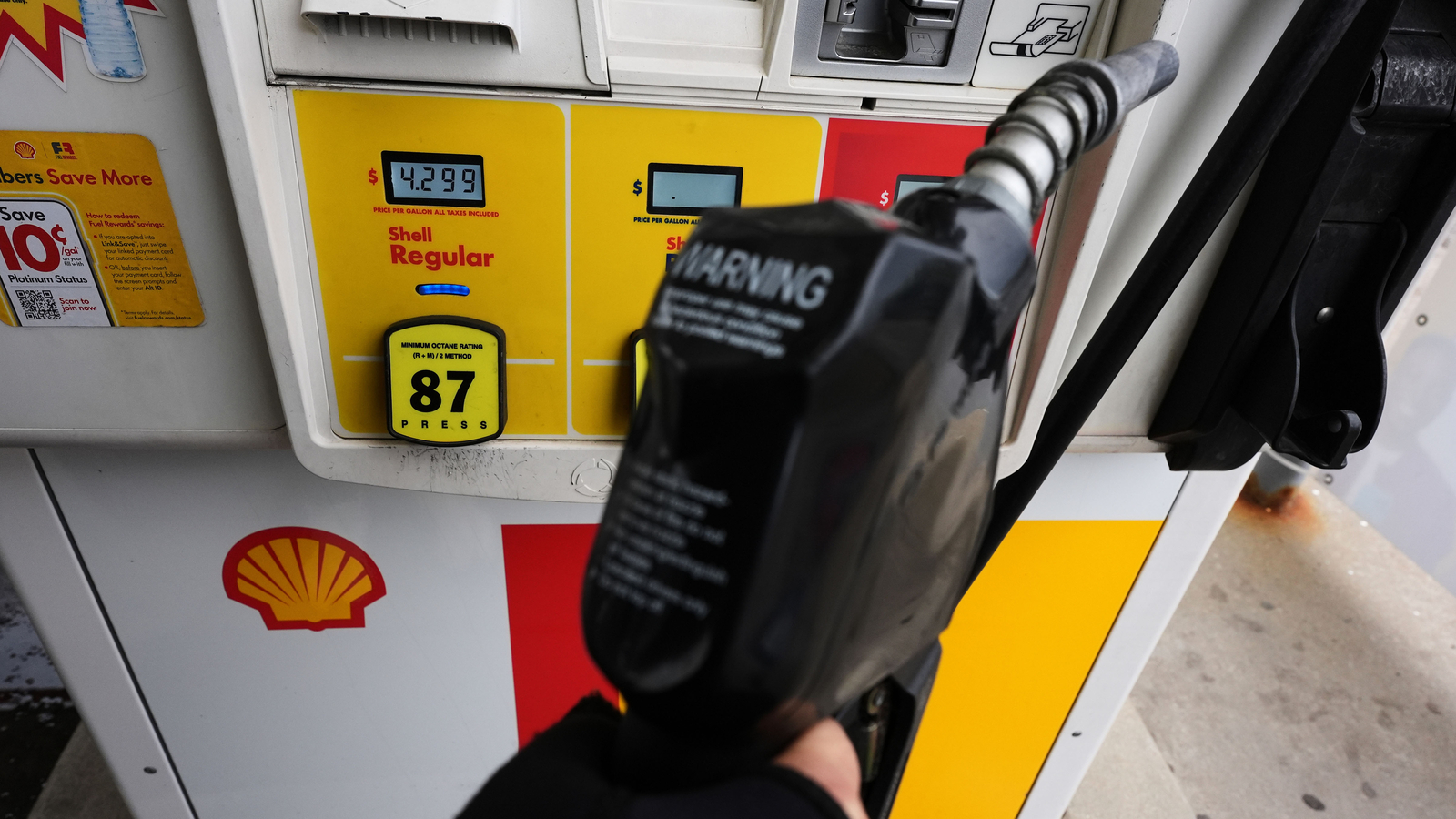
US average gasoline prices hit a four-year high of $4.30 a gallon on Thursday, according to the latest national average reading from the AAA.
“The main catalyst for the latest jump in oil prices was a report from Axios, suggesting that an escalation in the conflict was still being considered as an option,” Deutsche Bank analysts wrote in a note.
Thursday’s price spike was also driven by quirks in oil futures contracts, according to Neil Wilson, a strategist at investment bank Saxo. The widely quoted June futures contract expires today and so trading volume has shifted to the July contract, which was trading above $110 a barrel.
Global crude prices have risen for eight straight days, as face-to-face negotiations between the United States and Iran to end the war stalled, keeping the Strait of Hormuz – a critical oil and natural gas shipping channel – effectively shut.
“The oil market has moved from… hoping for resolution to fixating squarely on the physical scarcity and long-term threat to supply with the possible escalation of conflict now looming,” Wilson wrote in a note.
Last night, Trump said he wanted the US naval blockade of Iranian ports to continue, sources familiar with the talks with his senior advisers told CNN. US officials have begun laying the groundwork for such an extension, including a longer-term closure of the Strait of Hormuz.
Mohsen Rezaei, a top military adviser to Iran’s supreme leader, warned that if the US blockade continues, “Iran will respond,” according to state media.
The possibility of further military action in the Middle East has put traders on alert, said Janiv Shah, vice president of oil markets at Rystad Energy.
“Further escalation and any attacks on energy infrastructure could force (oil price) benchmarks to gain rapidly,” Shah said. Higher oil prices could accelerate a sustained decline in global oil demand, elements of which were already visible, he added.
Daily oil tanker transits through the Strait of Hormuz have plunged to single digits since the war began in late February, resulting in what the International Energy Agency called the “largest supply disruption in history.”
Consumers could see prices rise
A prolonged halt on Middle East energy exports spells trouble for the global economy, with some countries already suffering from fuel shortages, rising inflation and dampened consumer activity.
Economists have warned that if the disruption extends into the second half of the year, it could trigger a global recession.
As oil prices climb, consumers may face higher prices for products derived from petroleum such as plastic, synthetic rubber or textiles. The current market shortage is already squeezing supplies of items like medical gloves, instant noodles and cosmetics, particularly in Asia, which imports most of its energy and makes most of the world’s goods.
Oil prices have “nowhere to go but up,” until the permanent reopening of the strait comes into view, said Vandana Hari, founder of energy market analysis firm Vanda Insights.
“As of now, how and when that might happen is anybody’s guess,” she added.
This story has been updated with additional information.
The CNN Wire™ & © 2026 Cable News Network, Inc., a Warner Bros. Discovery Company. All rights reserved.