


 Weather
The set for This Is Not About Me initially resembles the bottom of a particularly untidy knitting drawer: strewn with red thread and abandoned crochet projects. The stage is thus set for a show all about unearthing our deepest memories, and making those memories into art.
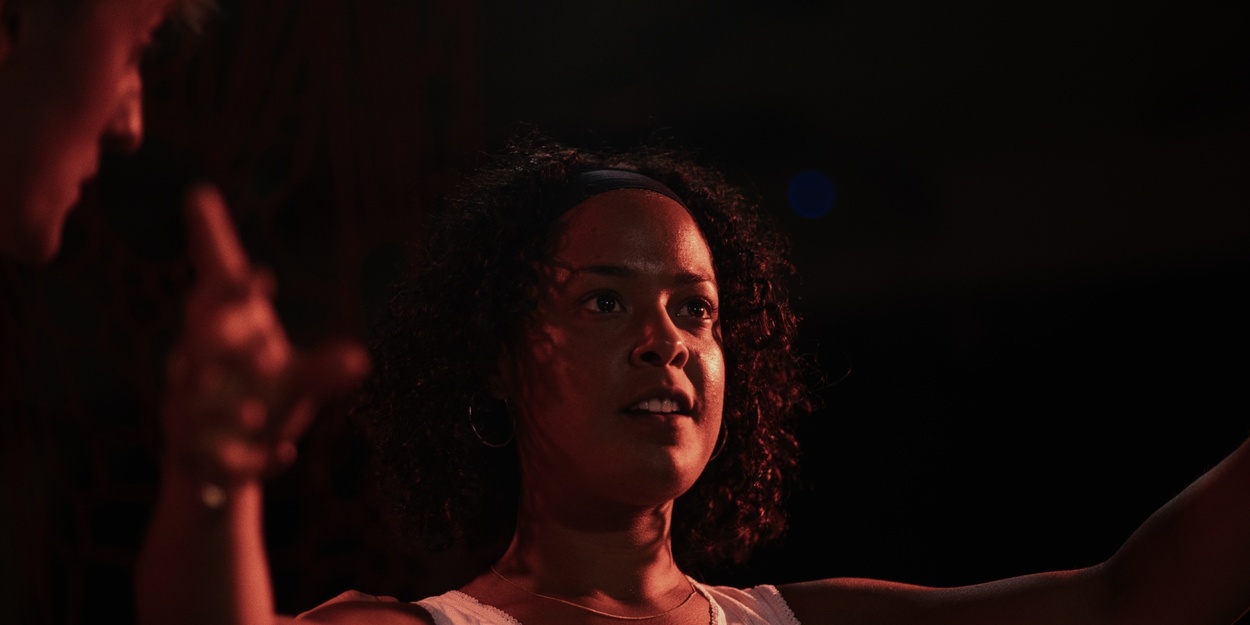
Over time, we come to realise that the thread is much like the truth: there to be picked at and unravelled. We first meet Grace (Amaia Naima Aguinaga) and her friend-slash-situationship of a decade Eli (Francis Nunnery) for an awkward meeting in a coffee shop. They’ve not spoken in months, and Grace has been writing a play about their relationship.
Eventually, the tale of how their friendship endured both parties dating other people and struggles with addiction and sexual violence, while always teetering on the edge of the sexual and romantic, will come out in the wash. All the while, the timeline is playfully non-linear, and keeps the audience guessing as to just how much of what we’re watching exists only in Grace’s script.
Writer Hannah Caplan has given herself much to do here, to explore the ins and outs of Grace and Eli’s relationship as well as why Grace is writing in the first place, and how Eli reacts to being written about. Much of the first half of the play is spent on assorted vignettes from early on in Eli and Grace’s relationship: these are sometimes too fleeting to establish a strong sense of character, and don’t always justify Eli’s rage about his portrayal or Grace’s defensiveness about her art. Without this foundation, some of their later scenes devolve into repeated, banal accusations that the other is lying.
These broader structural qualms don’t matter as much as they might otherwise, though, because Caplan and Clarke-Wood know that the devil is in the details. This is well-trodden ground, but it is made new by cleverly deployed theatrical devices that rarely feel gimmicky. Grace and Eli narrate the other’s character flaws with wooden dolls with the observational clarity of a creative writing exercise; later, some of their story will be ‘written’ by non-writer Eli, in clunky, self-aggrandising dialogue.
At the same time, at its core this is a play that keenly understands the curious intimacy between exes, how familiar banter can devolve quickly into barbs that know exactly where hurts the most. Aguinaga and Nunnery are at their strongest as actors when the script lets them breathe: one effective early scene has their monologues about how they met overlap, their different versions of events on full, cringing display.
Caplan is primarily a visual artist, and has also designed the set and projections for her debut play. Not every conceit works – the screen chronologically marking each scene (“Reintroduction: January 2024” and the like) takes away from the hazy, undefinitive sense of narrative structure established elsewhere in the show.
But far more often this is a show where the visuals are characters unto themselves: that red thread is always being stretched across the set or looped around actors’ bodies, and props are plucked out of the cobwebs draping the set. Sex scenes are performed with grotesque papier mache masks worn by the actors – the effect is vulnerable, as though Grace is running away from truth in her narrative just when it could be most revealing.
Much like the rest of the show, the ending to This Is Not About Me leaves the exact nature of the connection between Grace and Eli deliciously uncertain. There are no absolutes here about the ethics of the kind of autobiographical writing Grace is doing, but instead there is a testament to the messiness of observing any relationship with the gift of hindsight, whether one is a writer or not.
Read our guest blog from writer Hannah Caplan here.
This Is Not About Me plays at Soho Theatre until 18 April, then transfers to 59E59 Theaters in New York from 13 May – 7 June.
Reader Reviews
To post a comment, you must register and login.