


 Weather

The European Council is heading for a revamp.
ADVERTISEMENT

ADVERTISEMENT
Its longest-serving member, Viktor Orbán, is on his way out after a crushing defeat in a parliamentary election that has brought an abrupt end to his 16 years of uninterrupted, and at times unchecked, power. For the first time in a generation, Hungary will be led by another prime minister, Péter Magyar, from another party, Tisza.
The change of guard automatically shifts the power dynamics in the European Union, where Hungary, under Orbán’s tight grip, became synonymous with disruption and obstruction, infuriating leaders left, right and centre.
His notorious use of the veto, a legal tool conceived as a last resort that Orbán made customary, was particularly aggravating for other member states. His vetoes were variously described as “transactional”, “bad faith”, “unacceptable” and “blackmail”.
A senior diplomat once joked that Orbán’s vetoes were like Russian dolls because “you never know what comes next after this one”.
In recent weeks, the doll comparison morphed into “Trojan Horse” following bombshell revelations that Orbán’s foreign minister regularly briefed his Russian counterpart, Sergey Lavrov, about key EU decisions. For many, the situation was simply untenable.
The exasperation explains why leaders were so enthusiastic in congratulating Magyar.
“Hungary has returned to the very heart of Europe, where it has always belonged,” said Ursula von der Leyen, the president of the European Commission, who was demonised by Orbán’s failed campaign as an enemy of Hungary.
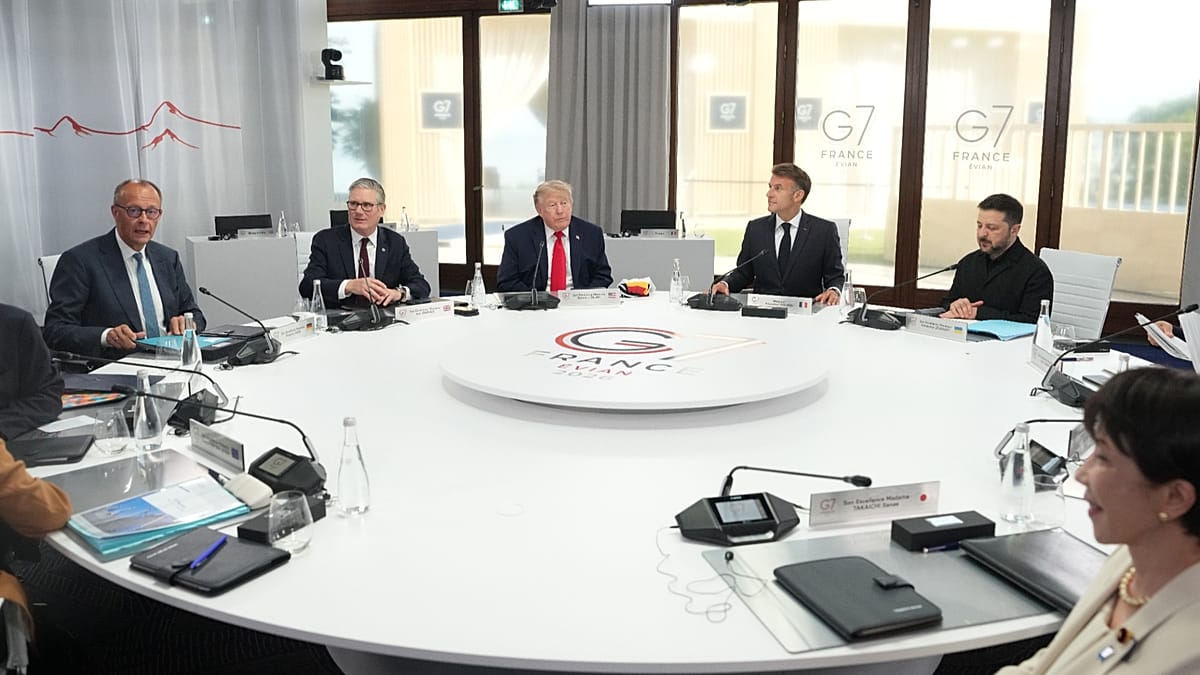
France’s Emmanuel Macron encouraged Magyar to “join forces for a strong, secure, and above all, united Europe”, while Spain’s Pedro Sánchez declared that European values had won. Germany’s Friedrich Merz was franker, admitting he was “very grateful and relieved” by the results and predicting that “things will be easier now”.
Despite having attended EU summits for 16 continuous years, Orbán was noticeably overlooked and received very little attention in the flood of messages.
Italy’s Giorgia Meloni and the Czech Republic’s Andrej Babiš, two like-minded colleagues, were among the few who explicitly paid tribute to the outgoing premier.
“I know that even from the opposition, he will continue to serve his nation,” Meloni said.
‘Cautious optimism’
Meanwhile, in Brussels, the main stage of Orbán’s vetoes, diplomats and officials are wondering what kind of Hungary will emerge after the history-making election.
For some, the future scenario is still hard to picture, given how much Orbán has reshaped the Hungarian state by dismantling checks and balances, undermining the rule of law, capturing the media landscape and deepening links with Moscow.
The fact that Magyar, a conservative, was previously a card-carrying member of Orbán’s Fidesz party until he broke ranks in 2024 to lead Tisza has raised some eyebrows.
Asked about their expectations for the winner, diplomats and officials, granted anonymity to speak freely, expressed diverging opinions.
One heralded a “significant shift” in both substance and style, with a new Hungary more practical and less contrarian. A second diplomat was much more measured, pointing to Magyar’s prior association with Fidesz, which might linger on. A third settled for “cautious optimism”, with special emphasis on the word “cautious”.
“Of course, there is a sense of relief to see a government that has actively sabotaged the EU for years go,” said an EU official.
Amid the assorted views, there is one overarching feeling of hope that, at the very least, Magyar will turn the page on Orbán’s veto-happy era and that collective deliberations will be spared from acrimonious, time-consuming blockages.
Magyar himself has promised that, under his stewardship, Hungary would adopt a “constructive position” that is “critical and willing to debate”.
In his first press conference after the election, Magyar addressed one of Orbán’s most contentious decisions: his veto on the €90 billion loan for Ukraine, which upended a delicate agreement reached by leaders at a make-or-break summit in December.
Magyar said the deal “was already made” in December and should not be revisited. He also confirmed that Hungary would retain the opt-out from the joint borrowing, negotiated by Orbán, because the country is in a “very difficult financial situation”.
The comments were well received inside the Commission, which has struggled to overcome Orbán’s veto and his demands regarding the Druzhba oil pipeline. A spokesperson said the loan should reach Kyiv “as soon as possible”.
Also still blocked are the 20th round of sanctions against Russia, the opening of accession clusters for Ukraine and €6.6 billion in military aid for Kyiv.
Back at the table
Beyond the vetoes, the prime friction point that EU leaders want to remove, the most pressing task for Magyar is to realign Hungary’s position in the political constellation and restore ties between Budapest and Brussels, currently at an all-time low.
His professed determination to be “at the table” is a 180-degree turn from Orbán, who gradually removed himself from the conversation until he became disruptor-in-chief from the sidelines. At a crucial summit in December 2023, Orbán was asked to leave the room to enable the necessary consensus – an unprecedented episode in the bloc.
This isolation is what Magyar seems most keen to avoid.
Party politics are certain to help him. While Orbán belongs to the far-right, Eurosceptic Patriots for Europe (PfE), Magyar stems from the European People’s Party (EPP), the centre-right family that dominates the European Council. That, in itself, is a major advantage for the newcomer to navigate the complex power dynamics.
His approach to Brussels could draw parallels with that of Polish Prime Minister Donald Tusk, who came to power in 2023 under the banner of improving Warsaw-Brussels ties and unblocking billions in EU funds. Magyar faces the exact task.
“My working assumption is that Magyar will take on a role similar to Tusk: drop the confrontative vetoes, especially on Ukraine, without significantly changing his positions on migration, climate policy or social issues,” says Nicolai von Ondarza, a senior researcher at the German Institute for International and Security Affairs (SWP).
“As the new government will have to focus on reforming the state and cleaning up the corruption structures created by Orbán, the outsized importance that Hungary had due to Orbán’s destructive behaviour is likely to be reduced.”
Hungary’s realignment at the table, from the fringe to the centre, will be closely followed by Slovak Prime Minister Robert Fico, who has been Orbán’s closest ally in the European Council and espoused similar positions on matters related to Ukraine and Russia.
Fico, like Orbán, has courted controversy by resorting to vetoes to extract concessions in unrelated files. Fico’s vetoes, however, are not exactly like Orbán’s. Although both are willing to filibuster, the Slovak prefers to maintain an open line of communication with other leaders in a bid to reach a compromise. Orbán, by contrast, seems content to maintain the deadlock, regardless of outside pressure.
How Fico behaves without Orbán by his side remains to be seen. Some diplomats believe he will remain disruptive. Others predict he will be inevitably weakened.
Either way, the prospect of a veto – an option at the disposal of any sitting leader, including Magyar – will continue to hang over the 27-member bloc as it confronts major challenges that demand fast, decisive action.
For Ursula von der Leyen, the post-Orbán era should be about “the lessons learned”.
“I think moving to qualified majority voting in foreign policy is an important way to avoid systemic blockages, as we’ve seen in the past,” she said in the wake of the election. “And we should use the momentum now, really, to move forward on that topic.”
Shona Murray contributed reporting.
Read the full article here