



 Weather

Travel to Europe could be changing significantly in the next few days.
ADVERTISEMENT

ADVERTISEMENT
The EU’s Entry/Exit System (EES), which started a phased rollout on 12 October last year in 29 European countries, will become fully operational as of 10 April 2026.
This will mean that passport stamps are replaced with digitally recorded entries and exits, along with refusals of entry for non-EU short stay travellers.
Biometric information such as facial images and fingerprints, along with personal data from the travel document being used will also be recorded.
This new system has been implemented to modernise EU border security and immigration systems, as well as to reduce crime and fraud and identify security risks.
Since the rollout, more than 24,000 people have been refused entry due to reasons like expired and fraudulent documents, or not being able to fully justify the reason for their visit, according to the European Commission. More than 600 people have also been identified as posing security risks to Europe.
Are you planning a holiday to Europe in the next few months? Here’s what you need to know.
Who does the EES apply to and who’s exempt?
The EES applies to non-EU/Schengen citizens going to Schengen or EU countries for short stays of up to 90 days in a 180-day period.
This includes UK citizens, as well as visa-exempttravellers, regardless of whether they are travelling for tourism or business. It also applies to people who own EU property but don’t have a residence permit.
However, Ireland and Cyprus are exempt from using EES, which means that they will continue with manual passport checks.
Some people are exempt from EES, too.
This includes citizens of EU and Schengen member states, as well as people with long-term visas or residence permits from these countries, including non-EU nationals.
Similarly, familymembers of EU nationals, who hold a residence card from one of these countries are exempt, along with local residents with valid Local Border Traffic Permits.
Train and plane crew members on international journeys are exempt too, along with armed forces personnel and their families on Partnership for Peace or NATO business.
There may also be some exemptions for day trips for cruises beginning and ending outside the Schengen area.
Nationals of Andorra, San Marino, Vatican City and Monaco will not have to go through the EES either.
Will there be delays at airports due to the EES?
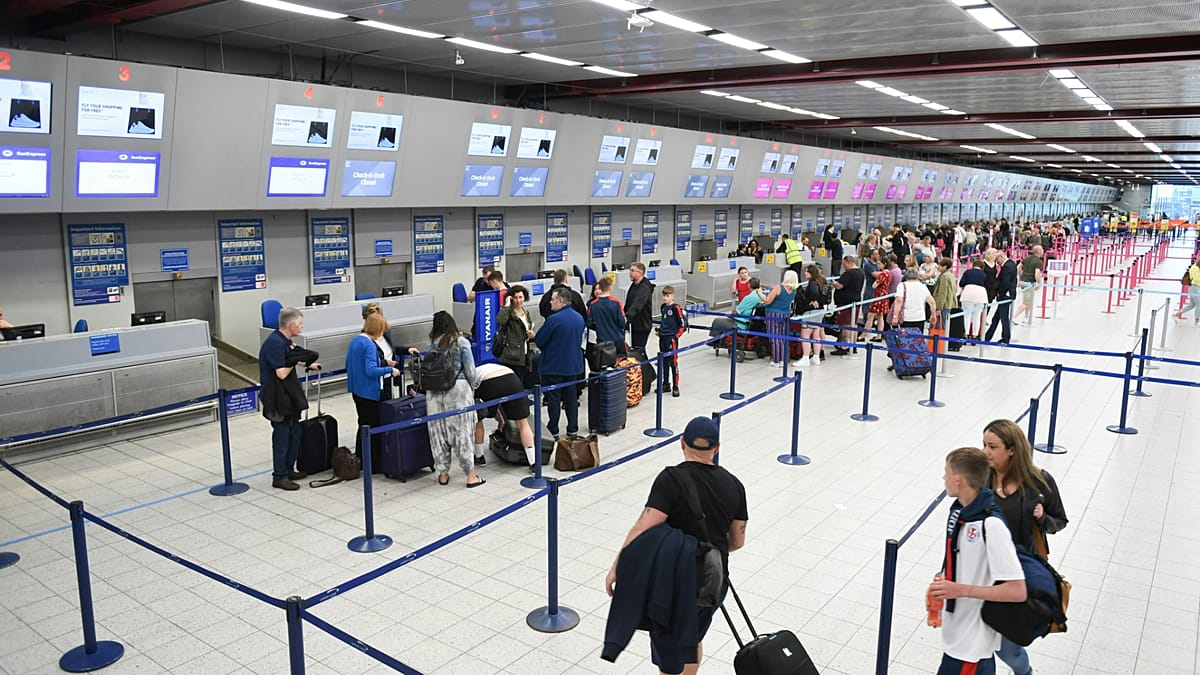
There are likely to be significant airport delays in the first few months of the EES being fully operational, despite the EU promising to allow some flexibility to account for excessive summer queues.
“Waiting times are now regularly reaching up to two hours at peak traffic times, with some airports reporting even longer queues,” said airport association ACI Europe and Airlines for Europe (A4E) in a joint statement.
One of the main reasons for more delays is that all third-country passengers have been required to be registered through EES since 31 March.
Previously, border control authorities were able to suspend the EES processes in full or partially during travel peak times. However, this will no longer be possible from 10 April onwards.
This means that travellers will most likely need to reach the airport around one and a half hours to two hours earlier than they usually would, to account for EES-specific delays after 10 April.
However, these delays are likely to ease in the medium-term, once the EES processes are smoother.
In the meantime, airport and airline associations are continuing to ask the European Commission to allow border controls the authority to partially or fully suspend EES when necessary for the whole of the 2026 summer season.
Do you need a biometric passport for the EES?
Biometric passportsare not strictly required for the EES. They are only needed to use self-service kiosks for quicker registration and entry.
Standard passport holders need to use manned booths for initial registrations and provide a photo and fingerprints.
This data will be stored for three years, making future checks significantly faster. Travellers who refuse to provide biometric data will automatically be refused entry.
Children under 12 don’t have to provide fingerprints, but still need to have a photo taken.
Do I need to register in advance for the EES?
You don’t have to register in advance for the EES, as registration happens at the border when you arrive at the EU.
The registration process depends on whether you have a biometric or standard passport, as detailed above.
However, there is another option for travellers who want a faster process.
The Travel to Europe mobile app, an official EU app specifically designed for the EES system, allows third-country travellers to pre-register biometric photos and passport data 72 hours before arrival, to quicken border checks.
However, it does not replace the required border control interview.
Currently, it is available only in some countries like Portugal and Sweden, with plans to expand the app across the EU.
The app can be downloaded from Google Play or the Apple App Store, with users having to fill out an entry questionnaire and take a selfie to confirm their identities.
Read the full article here