




 Weather
Alabama has scheduled a March execution date for a man sentenced to death for a fatal shooting during a 1991 robbery even though he didn’t pull the trigger.
Gov. Kay Ivey on Thursday set a March 12 execution using nitrogen gas for Charles “Sonny” Burton, 75. Burton was convicted as an accomplice in the shooting death of Doug Battle, a customer who was killed during an Aug. 16 robbery that year of an auto parts store in Talladega.
Burton did not shoot Battle and was not in the AutoZone store at the time of the fatal shooting. However, prosecutors depicted him as the ringleader of the robbery and sought a death sentence for him. Derrick DeBruce, the man who fired the gun also was sentenced to death but later had his sentence reduced to life imprisonment and died in prison.
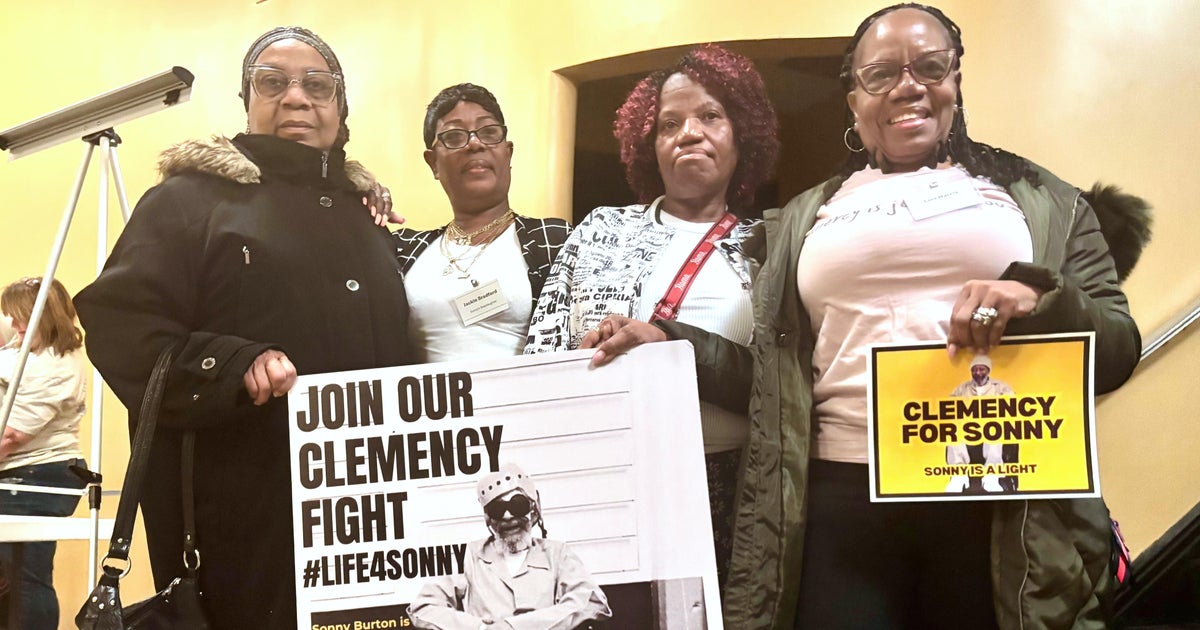
A cross-section of people, including one of the victim’s children and some jurors, had urged the governor to consider clemency for Burton. They argued it would be unfair to execute Burton when the triggerman ended up receiving a lesser sentence.
“We are very disappointed that Governor Ivey has opted to set an execution date for Mr. Burton. But we hope and pray that she, like Oklahoma Governor Stitt did in November, still changes her mind and stops this unjust execution of a man who has never taken a life,” Matt Schulz, Burton’s attorney, said.
In the letter notifying the prison commissioner of the date, Ivey wrote that she has no current plans to grant clemency but maintains the authority to “grant a reprieve or commutation, if necessary, at any time before the execution is carried out.”
Alabama Attorney General Steve Marshall’s office had opposed the clemency request. His office did not immediately respond to an email seeking comment.
“Burton was convicted of capital murder in April 1992 and the jury unanimously recommended the death penalty. That conviction and sentence have been upheld at every level,” a spokesperson for the office said in an earlier statement.
Schulz noted that in seeking to uphold a death sentence for DeBruce, the state had argued in a 2015 court filing that its would be “arguably unjust” to affirm a death sentence for Burton but not the person who killed Battle.
Kim Chandler / AP
Ivey has granted clemency once since taking office in 2017.
Jurors express doubts
Six of the eight living jurors from the 1992 trial do not object to commutation, according to the clemency petition. Three are requesting it, saying they never would have recommended a death sentence if the shooter was getting a lesser sentence.
“It’s absolutely not fair. You don’t execute someone who did not pull the trigger,” Priscilla Townsend, one of the jurors, said in a telephone interview.
Townsend said they recommended a death sentence after an extremely emotional trial. Townsend said she still believes in the death penalty “for the worst of the worst,” but she said that is not Burton.
In an essay published by AL.com last month, titled, “I sentenced a man to die in Alabama. I was wrong,” Townsend said she has spent decades reflecting on Burton’s trial and its outcome.
“Mr. Burton was not inside the AutoZone at the time of the murder. He was not the shooter, and yet the state sought and secured a death sentence against him anyway. At the time, I did not fully understand what that meant. I do now,” Townsend wrote.
She also recalled in the essay how Burton was painted as the “ring leader” by the prosecution, a description that, she said, “shaped everything” about how she and other jurors saw the trial.
“It shaped how the evidence was viewed, how responsibility was assigned, and how punishment was justified,” the essay read. “I believed it. The jury believed it. I no longer believe it was true.”
Twenty-seven states allow people to be executed for taking part in a felony that led to someone’s death, even if they did not directly kill anyone themselves, according to the American Civil Liberties Union.