




 Weather

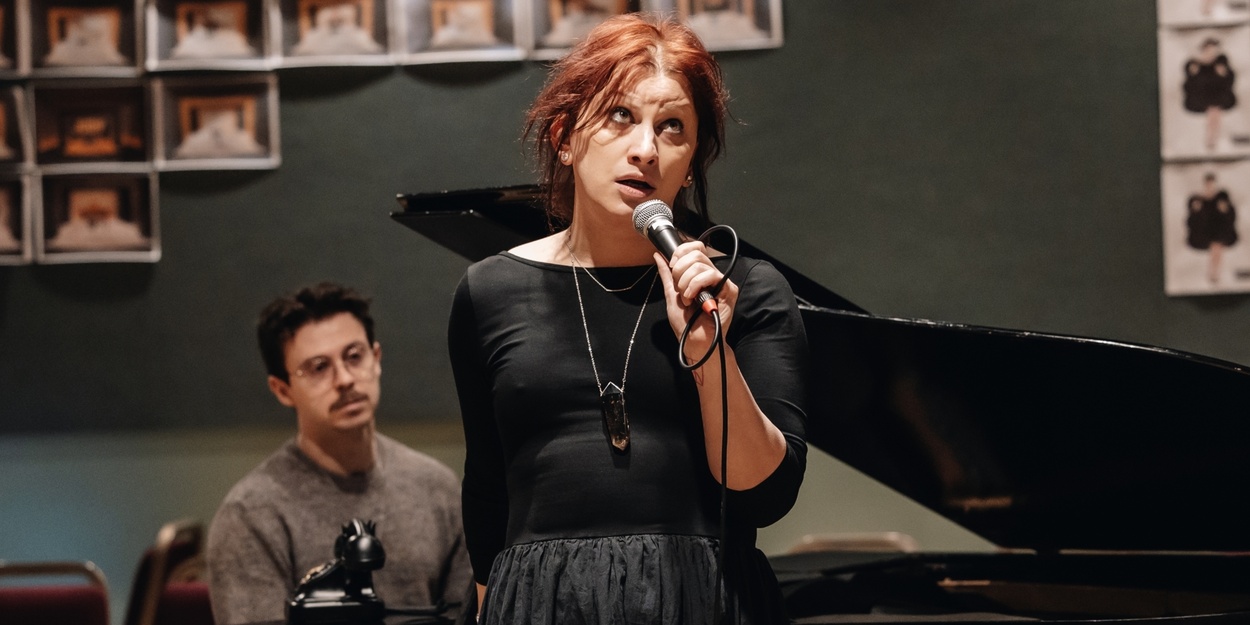
Andhy Mendez and Laura Faye Smith are warring activists in Miami New Drama’s English Only (Photos by Morgan Sophia Photography)
By Bill Hirschman
God must have a wry sense of humor.
The world premiere of the thought-insisting English Only bowed this weekend at Miami New Drama one day after Florida began requiring driving license tests be given in English only.
Nicholas Griffin’s script deserves honor for its scathingly honest depiction of the complex collision of cultures in the all too current search for the definition of “identity.”
Although set in Miami where an actual 1980 conflagration “inspired” this narrative, the question of what is an “American,” is applicable across this country, especially in this troubled time in which immigration is once again a blazing topic.
Specifically in this example, can someone be both a Cuban-American actively immersed in their heritage, and still be a full-fledged American? Or is complete assimilation a goal as part of a unified homogenous whole what it means to be truly being American?
As one activist says, “We are a salad, Manny. We’re all different. We all live with each other; we’re just not a melting pot.”
And as another says elsewhere, “Freedom isn’t just a word here. For my family, freedom was literal. I wasn’t free in Cuba. We landed. One step and we were free. America let us choose what to say and how to say it. I mean, you can’t have freedom of speech without freedom of language, right?”
Griffin, director Margot Bordelon and the Miami New Drama artists engage in this work playing through Feb. 22 at the Colony Theatre in Miami Beach.
For those like this critic who were unaware of this 1980 political movement, some crucial background:
In 1973, the Miami-Dade County commission made Spanish the county’s second official language and declared the municipality bilingual. But in 1980 at Castro’s command, a growing tide of Cubans were allowed to leave, even forcibly expelled, with numbers topping 125,000 people in what was termed the Mariel boatlift.
Existing Miamians, even earlier Cuban residents, charged it with the subsequent sharp uptick in crime and loss of jobs for current inhabitants including African-Americans. A citizen-organized petition drive led to a ballot issue which made English the official language of local government. This meant the county was required to conduct almost all government business in English only – and county funds couldn’t be spent translating documents and offering non-emergency services in Spanish or any other language. This was reversed 13 years later by the county commission.
The story focuses on Manny Diaz, a young lawyer for the Spanish American League Against Discrimination (SALAD), fighting a citizen-led group headed by restaurant hostess and part-time model Emmy Schafer leading a group to restore English as the only official language in the county. While some other characters are composites, these two are real people (check out the last paragraph in this review).
Crucially, while Emmy has a somewhat racist colleague, she is portrayed as sincere in her altruistic belief that the citizenry must be conjoined for the country to survive, for it to achieve its own vision.
But some of her supporters refer to the boatlift as “the invasion of illegal aliens.” Sound familiar?
Indeed, there was not unanimity in the Hispanic communities. As one of Manny’s colleagues notes, “I personally knocked on the doors of registered Cuban voters. And they’re not all with us. They feel the new Cubans aren’t like the old Cubans.”
Among the composites are inflammatory jock radio commentator Stan Rogers who reportedly is a combination of the legendary Neil Rogers and Stan Major.
In several spots like a televised debate, Griffin doesn’t hide that this is he himself delivering a polemic protest to us clothed in a theatrical guise. Obviously, this approach has been used countless times, and he and Bordelon do an adequate job keeping it from feeling like a lecture. What makes it feel less a position paper is the passion of the cast delivering as the characters whose lives and motivations are wrapped up in the DNA of the issues.

Rene Granado as one of the two radio hosts
Griffin’s construction and Bordelon’s staging are especially memorable by having Rogers and his opposite number at a separate Spanish-language radio station not only be played by the same adept actor with distinctly different personalities, but have them at the same desk at the same broadcast booth center stage, bouncing back and forth in the same scenic moment. The illustration of the deeply divided community could not be more deftly depicted.
The most unsettling aspect to this critic is having the Emmy be a Russian Jew who survived a concentration camp (which we assume is true). Perhaps this is indeed accurate, but it’s emotionally hard for an Anglo Jew like myself to countenance Emmy’s blindness of her own hypocrisy. But obviously, that’s the point.
The fine cast is primarily Miami New Drama returnees: Andhy Mendez as Manny Diaz, Laura Faye Smith as Emmy Shafer, Carmen Peláez as SALAD worker Lucy Alvarez, Linda Mugleston as Emmy’s colleague Barbara Simmons, and notably René Granado in five or six roles including his tour de force as the instantly changing radio commentators.
Griffin, a Miamian born in London, wrote the non-fiction book, The Year of Dangerous Days: Riots, Refugees, and Cocaine in Miami 1980, in 2020. He adapted it for Miami New Drama as the play Dangerous Days.
As usual, those behind the curtain deliver fine work including lighting designer Solomon Weisbard with Nathalie Sore and Shane Cassidy, sound designer and composer Salomon Lerner, costume designer Beth Goldenberg, wig designer Carol Raskin, projections engineer and mapper Steve Covey, scenic designers Justin and Christopher Swader. Plus production stage management by Amy Rauschwerger and Gunilla Alvarez Muñoz, assistant director Karina Batchelor-Gómez and dramaturg Jocelyn Clarke.
Among Miami New Drama’s priorities is to produce primarily new plays that reflect the Miami-Dade zeitgeist. So, appropriately in the audience opening night was, really, former mayor Manny Diaz himself.
English Only from Miami New Drama runs through Feb. 22 at the Colony Theatre, 1040 Lincoln Road, Miami Beach;6 p.m. Thursday-Saturday, 3 p.m. Sunday. Tickets $40-$90, at the box office or the website miaminewdrama.org. Running time 90 minutes no intermission.

Barbara (Linda Mugleston) lectures Manny