



 Weather
Good morning. I’m Mared Gwyn with the headlines and analysis from Brussels to start your week.
Our EU editor Maria Tadeo is on the ground in New Delhi this morning, where talks on the EU-India trade deal are entering the final stretch before an expected signature on Tuesday.
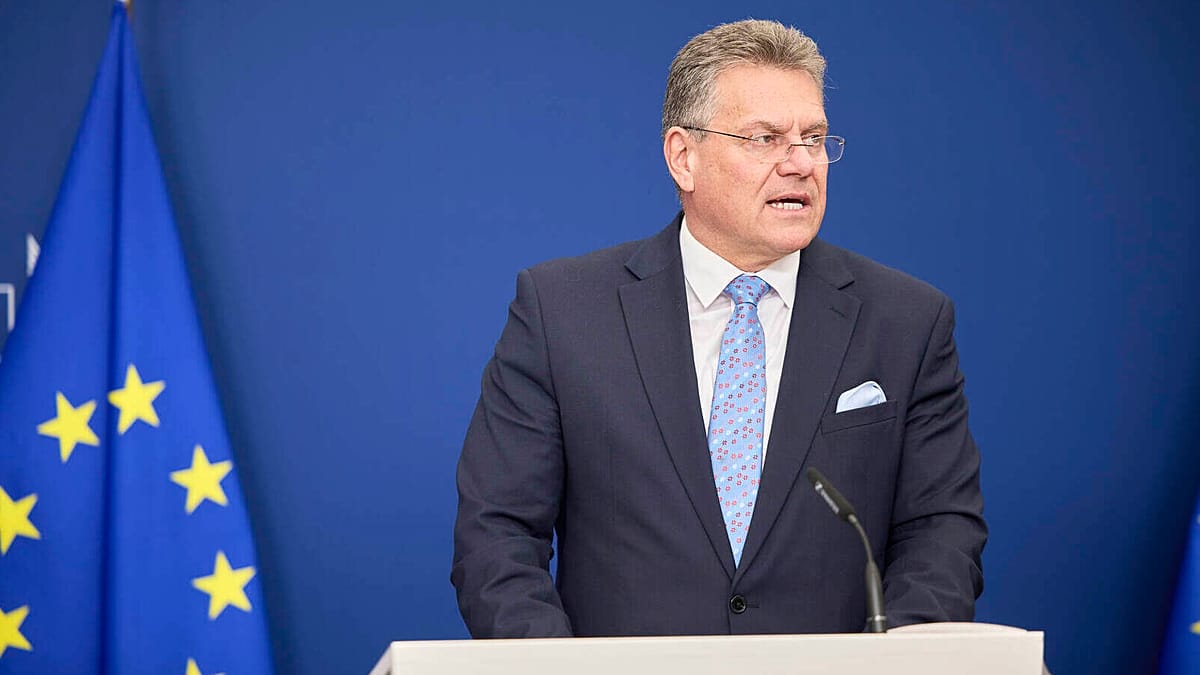
“We are checking the latest documents, we are exchanging the last numbers, and I believe that we are very, very close,” European Commissioner for Trade Maroš Šefčovič told Maria on Sunday. We lead below with more from that exclusive interview.
Meanwhile, Ukraine and Russia have agreed to continue US-brokered peace talks after what Ukrainian President Volodymyr Zelenskyy described as “constructive” two-day negotiations in Abu Dhabi over the weekend.
Despite the talks being undermined by Moscow’s largest air offensive on Ukraine this year, Zelenskyy said both sides could reconvene as early as this week.
Among the issues on the table in the negotiations is Ukraine’s future EU membership, with reports that Kyiv and Washington are pushing to include an ambitious deadline of as early as January 2027 for accession.
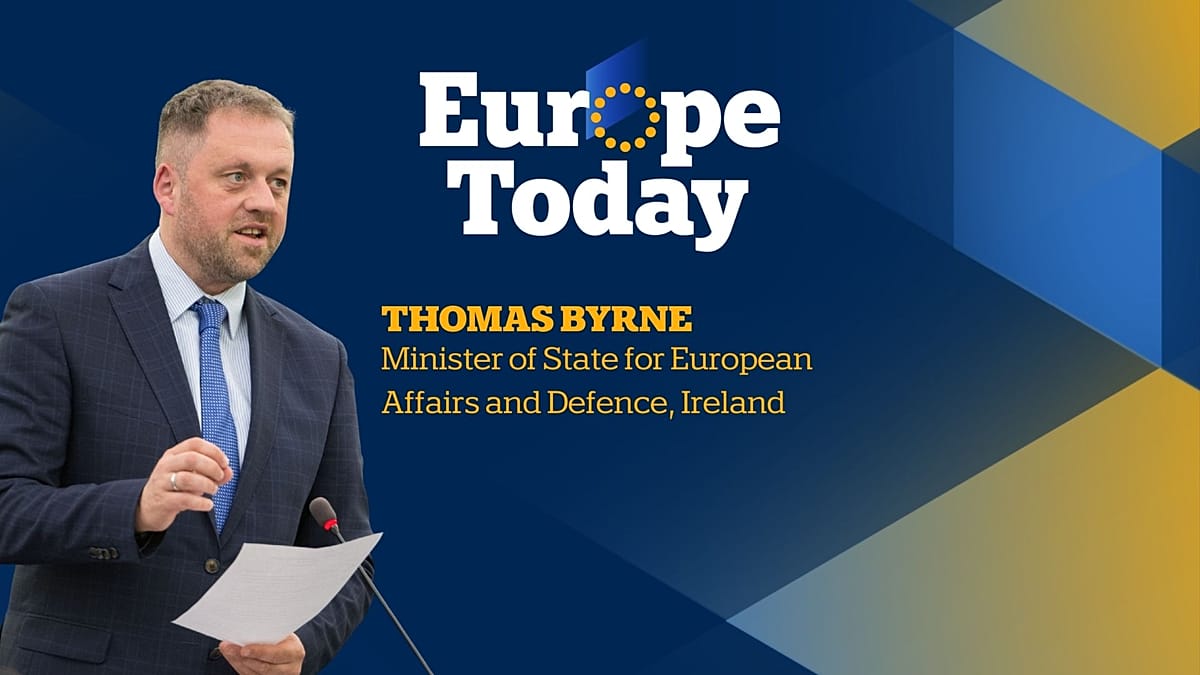
Speaking live on our flagship morning show earlier today, Ireland’s European affairs minister Thomas Byrne supported that ambition. “It’s extremely ambitious, but if it’s part of the peace deal, we’d certainly have to make it work,” Byrne said.
It would certainly be a “big job” for the Irish rotating presidency of the EU Council, which starts in July, Byrne added. “I’m certainly not giving a date (for accession),” he added, “but if the peace talks demand an earlier date then the EU will need to work towards that.”
Also later today: After a relentless few days of geopolitical upheaval last week, NATO Secretary-General Mark Rutte is due to appear before Members of the European Parliament (MEPs).
Rutte, a Trump whisperer, was instrumental in providing an off-ramp for the US President to climb down on his threats to use tariffs to force a sale of Greenland last week. But the exact nature of the “framework” agreement Trump claims to have struck with Rutte remains unclear.
MEPs sitting on the parliament’s international trade committee are also expected to decide today whether to resume implementation of the EU-US trade deal struck last summer, and temporarily frozen amid Trump’s unprecedented threats against Greenland and its European allies last week.
While EU leaders are piling pressure on lawmakers to unlock the deal, some are still sceptical of the feasibility of resuming business as usual. Our trade reporter Peggy Corlin has more below.
Exclusive: Šefčovič says EU poised to sign trade deal with India to ‘hedge’ against global instability
The European Union is on the cusp of signing a major trade agreement with India, the world’s fastest-growing major economy, opening up a market of 1.4 billion people to EU companies and further diversifying the bloc’s trade partners amid rising global trade tensions.
EU sources tell our editor Maria Tadeo, on the ground in Delhi, that the deal has entered its final stages of negotiations and is poised to be announced during a summit on Tuesday attended by a large European delegation including Commission President Ursula von der Leyen, Council President António Costa, European Commissioner for Trade Maroš Šefčovič and foreign policy chief Kaja Kallas.
The deal comes as the EU pushes to derisk from Trump’s America and open up new markets for trade. This will be the second major deal in less than a month following the signature of the trade agreement with the Latin American Mercosur bloc.
For India, the agreement will help to bolster its export market after the Trump administration hit the country with 50% tariffs, including a 25% penalty for buying Russian oil. Europe expects notable benefits for a range of sectors from cars to chemicals to wines and spirits.
In an exclusive interview with Maria on Sunday, Šefčovič touted the deal as the “largest ever” in terms of the size of the markets and a major opportunity to bolster both economies’ resilience amid global upheaval.
“In some sectors, India has (EU) tariffs going up to 150% and therefore a big part of the economy has been completely closed off to European exporters. Now we are (…) re-opening, the big benefit would be the opening of the economy, building up integrated global supply chains and hedging against global instability,” Commissioner Šefčovič told Maria.
“It’s high time, I mean, it was more than 10 years in the making,” Šefčovič explained, adding that the pact could serve as “insurance” against global trade turmoil.
Watch the exclusive interview.
EU lawmakers weigh unfreezing EU-US trade deal
Members of the European Parliament (MEPs) will decide later today whether to resume work on implementing the EU-US trade deal after President Donald Trump withdrew his tariff threats over Greenland, my colleague Peggy Corlin reports this morning.
As first reported by Euronews, the European Parliament had suspended the deal’s implementation last week in retaliation for Trump’s tariff threats.
Since Trump’s u-turn, several EU leaders have called for the agreement – which was sealed last summer between Trump and European Commission President Ursula von der Leyen – to be implemented.
Pressure has mounted in recent days after European Parliament President Roberta Metsola called last Thursday on the parliament to proceed with the deal’s implementation.
But lawmakers have struck a cautious tone.
German MEP Bernd Lange, who chairs the parliament’s international trade committee, struck a cautious tone following the announcement of an understanding between Washington and NATO Secretary General Mark Rutte over Greenland.
“Hardly any details are known yet about the proposed Greenland deal. But we need them in order to decide how to proceed with the implementation of the EU-US trade deal,” he said on X ahead of the summit.
MEP Kathleen Van Brempt, the socialist vice-chair of the parliament’s international trade committee, said on Friday there cannot be “business as usual.”
“There are still several hurdles to clear, both regarding the agreement itself and the broader challenges posed by Trump before we can move forward,” she said.
The European Commission, which negotiated the agreement, has signalled impatience to move ahead with its application.
“A deal is a deal,” von der Leyen said after a gathering of EU leaders last Thursday, adding that she expected the US to do its part on enforcement. “We want to deliver from our side.”
The EU-US trade deal was concluded in July 2025 after weeks of trade tensions. It would see the EU cut tariffs on US goods to 0%, while EU exports to the US would face 15% tariffs – a balance many lawmakers consider uneven.
More from our newsrooms
Macron calls for ban on social media for children under 15 to be in place by September. The French President wants to speed up the legal process to ensure that a ban can come into force by the start of the new school year in September. Serge Duchêne has more.
Clashes erupt during anti-government protest in Tirana. Opposition-led process broke out in the Albanian capital on Saturday, with demonstrators accusing Prime Minister Edi Rama and his allies of corruption. More.
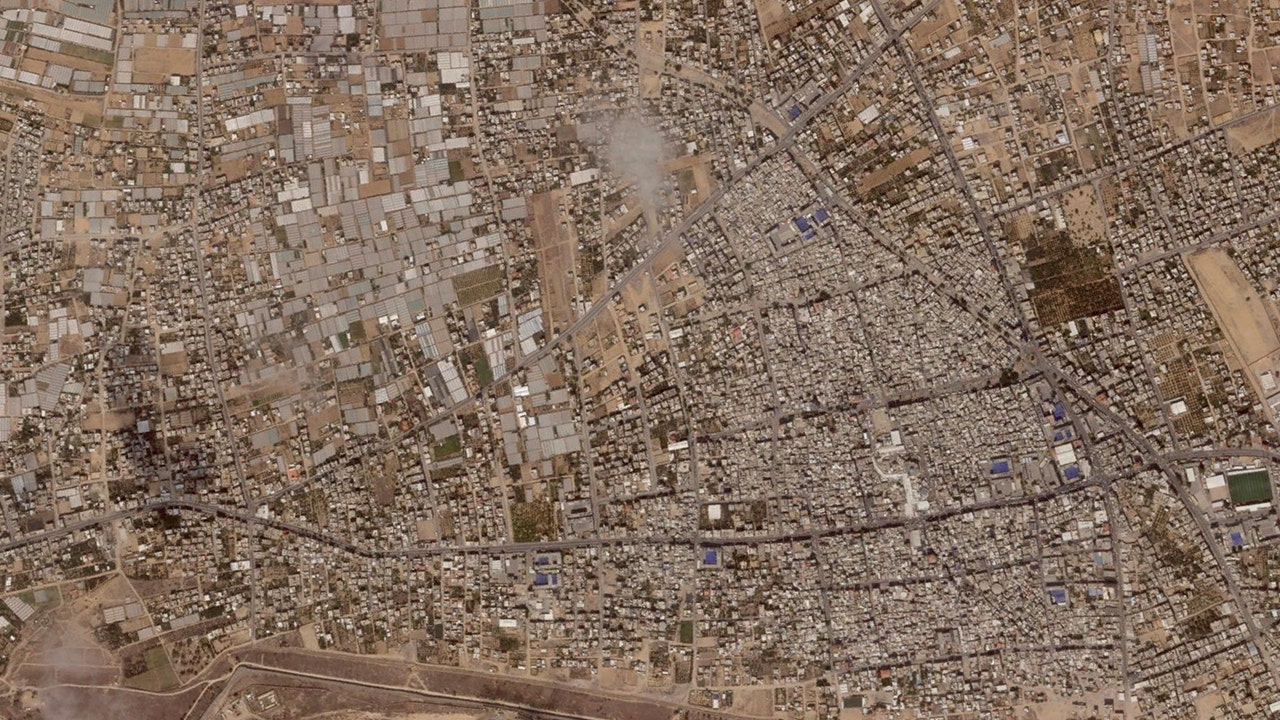
Israel agrees to partially reopen Gaza’s Rafah crossing if body of hostage is found. Israel said on Sunday it was conducting a “large-scale operation” to locate the last hostage in Gaza, and that it would subsequently allow a “limited reopening” of the Rafah crossing once it recovered the remains. Evelyn Dom has more.
We’re also keeping an eye on
- EU European affairs ministers, as well as agriculture and fisheries ministers, gather in Brussels
- EU holds intergovernmental conference with Montenegro
- NATO Secretary-General Mark Rutte addresses Members of the European Parliament (MEPs)
- European Energy Commissioner Dan Jørgensen, in Hamburg to agree deal on increasing offshore wind business ventures
That’s it for today. Maria Tade and Peggy Corlin contributed to this newsletter. Remember to sign up to receive Europe Today in your inbox every weekday morning at 08.30.
Read the full article here