









Published on
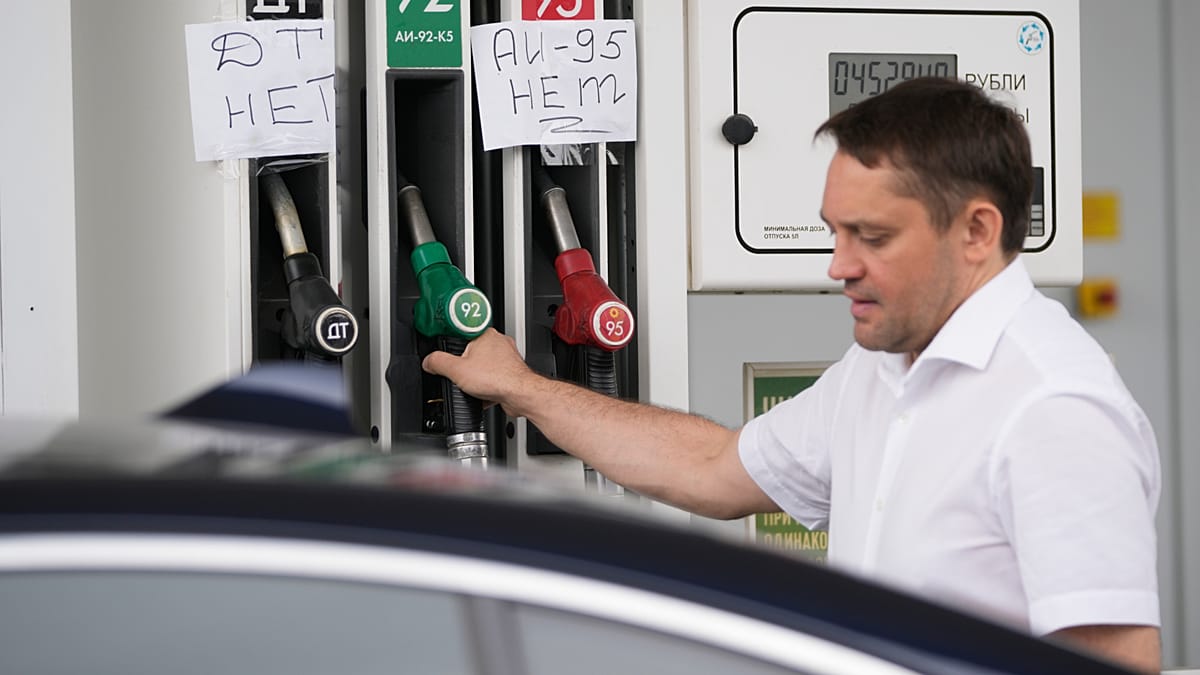
As the world waits for a new round of talks between Washington and Tehran, unlikely to take place imminently, oil prices spiked again on Thursday, hovering at more than $100 a barrel.
ADVERTISEMENT


ADVERTISEMENT
The standoff is choking off nearly all exports through the vital Strait of Hormuz, through which 20% of the world’s traded oil passes in peacetime.
In the year preceding the American-Israeli attack on Iran, prices at the pump had been drifting down across most of the EU, but the shock provoked by the blockade has sent them through the roof.
How much exactly have fuel prices in Europe increased?
The answer comes from Eurostat, which published price differences between February and March 2026.
Following the start of the military operation on 28 February, fuel rose by about 13.5% across the EU.
Prices shot up the most in Latvia and Sweden, both of which reported an overall fuel price increase of more than 20% from February to March.
Diesel drivers were the hardest hit, now spending nearly 19.1% more at the pump compared to 10.6% for petrol cars.
Petrol vs diesel: The worst and best countries to refuel
Czech and Swedish diesel drivers are having the hardest time in the EU, enduring spikes of around 27.6%, followed by Estonian (+26.8%),Latvian (+25.4%), Belgian (+25.2%) and Dutch diesel car owners. (+25.1%).
All other EU countries saw increases above 10% for diesel, except for Slovenia (+2.9%), Slovakia and Hungary (both +7.0%), which weren’t as hard hit.
When it comes to petrol, Belgian, Swedish, Austrian and Czech drivers are all spending around 15% more, while, again, Slovenia, Slovakia and Hungary stayed below 5%, this time joined by Italy.
Year-on-year: Are British consumers hit harder than in the EU?
In general, the bite was felt even harder across the Channel.
Compared with March 2025, UK diesel prices rose by 26%, while petrol grew by about 11%, according to the British Department for Energy Security data and RAC’s Fuel Watch, with a general fuel spike of nearly 19%.
Year-on-year, the worst-affected country in the EU was Germany, says Eurostat, where costs rose by 19.8%. Romania saw a similar spike with 19.6%.
There were just two exceptions in the EU: with -2.7%, Hungary (one of the bloc’s largest importers of Russian oil) and Slovenia (-5.9%), as the country has been capping fuel costs except on highways, Jože Damijan, international economics professor at the University of Ljubljana, told us.
How long can governments sustain capped prices?
Whether Slovenia will be able to keep prices capped, Damijan says, “depends on Platts oil spot prices (Mediterranean exchange), which are used in the gasoil pricing model. Under the regulatory framework, the model is updated once a week”.
“Of course, in the case of a prolonged Hornuz closure, higher Brent oil prices (a global pricing benchmark) would also push up Platts oil prices. In such a scenario, no model can sustain low prices”.
Next week, the EU is expected to lay out rules allowing member states to loosen state aid in an effort to ease pressure on consumers as the war drags on.
Read the full article here