









Published on •Updated
The European Commission kept its carbon border tax unchanged in a fertiliser plan announced on Tuesday meant to support struggling farmers, despite complaints that carbon pricing is also contributing prices amid ongoing conflict in the Middle East.
ADVERTISEMENT


ADVERTISEMENT
Fertiliser producers argue that the bloc’s carbon pricing rules at the border protect the European industry from cheaper imports produced under weaker environmental rules, since the rules oblige EU exporters to pay for the pollution linked to their production. But farmers fear they are indirectly paying the bill through higher fertiliser costs.
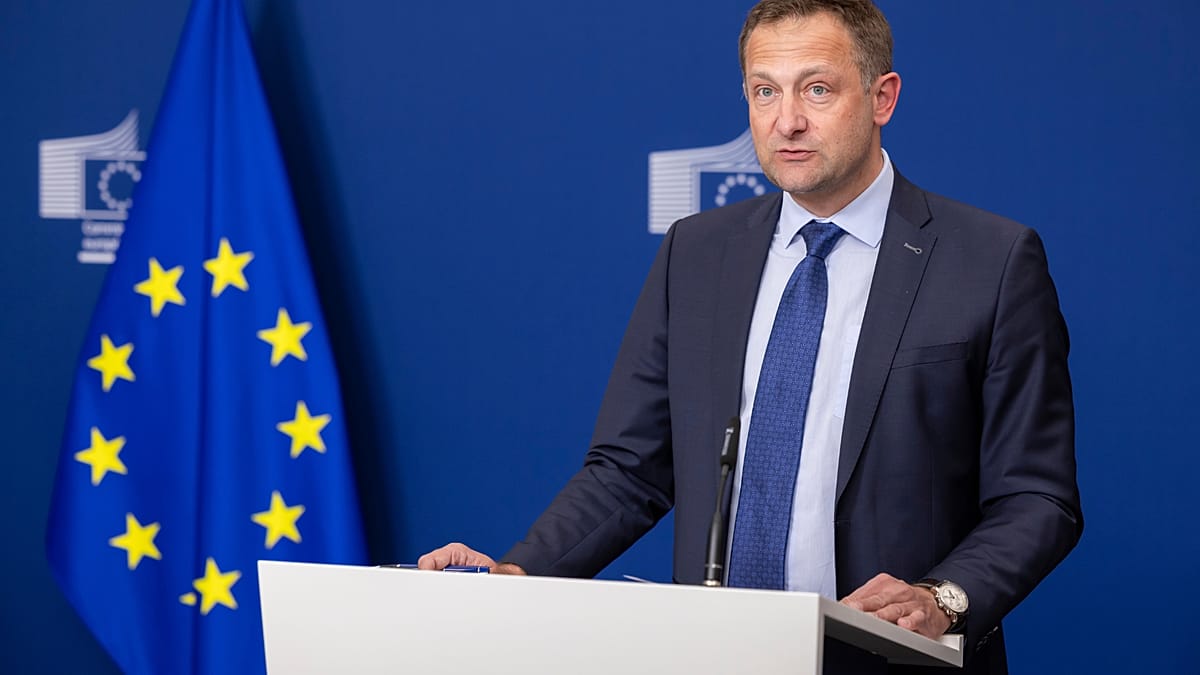
European Commissioner for Agriculture Christophe Hansen said that scrapping the bloc’s Carbon Border Adjustment Mechanism (CBAM), which would apply to roughly 45% of EU fertiliser imports, would be a “false good idea” citing competitiveness issues.
“We have a domestic industry for fertilisers in several member states which are under pressure because they’re dealing with a situation of unfair competition coming from third countries if CBAM is not in place,” Hansen told reporters.
With the new plan, the European Commission is seeking to defend the bloc’s flagship carbon border policy while acknowledging that climate costs are increasingly being passed through to farmers and food prices.
The EU executive argues that carbon pricing, such as revenues from the Emissions Trading System and CBAM, are essential to preventing industries moving to locations with less strict environmental rules and maintaining Europe’s climate leadership.
But the Commission also concedes that the fertiliser sector occupies a uniquely sensitive position because higher industrial costs ultimately cascade into farm economics and consumer food inflation.
The Commission is now promising a deeper investigation into how ETS and CBAM costs are passed through the supply chain — from fertiliser factories to farmers and ultimately supermarket prices.
Rather than abandoning carbon pricing, the EU appears ready to pair it with subsidies, state aid, market protections and strategic investment to shield politically sensitive sectors such as agriculture.
Irish MEP Billy Kelleher (Renew Europe) told lawmakers in Strasbourg on Tuesday that rising fertiliser prices are putting huge pressure on farmers and on cost of living through food inflation and backed the suspension of CBAM and “any policy measures that are putting burdens and costs” on fertiliser in the short-term.
“The goal is to have a concrete financial instrument before the summer, when the farmers need to decide which crops to plant for the next season,” Hansen said.
Leon de Graaf, from the coalition if Business for CBAM Coalition said that it was a “relief” to see the EU executive holding the line on CBAM instead of carving out fertilisers.
“Farmers’ concerns about input costs are real, but the answer is not to weaken the instrument that keeps European fertiliser producers and importers on an equal footing,” said De Graaf.
Hansen said that €200 million remains in the bloc’s agricultural major fund’s crisis reserve and expressed intentions to “at least double this amount” to support farmers.
In addition, the Commission will provide targeted “exceptional support” to the most affected farmers and more money will be mobilised under the EU budget “to reinforce agriculture research”.
However, the amount is still under discussion pending political talks between the EU co-legislators, the European Parliament and the Council, the Commissioner said.
Read the full article here