


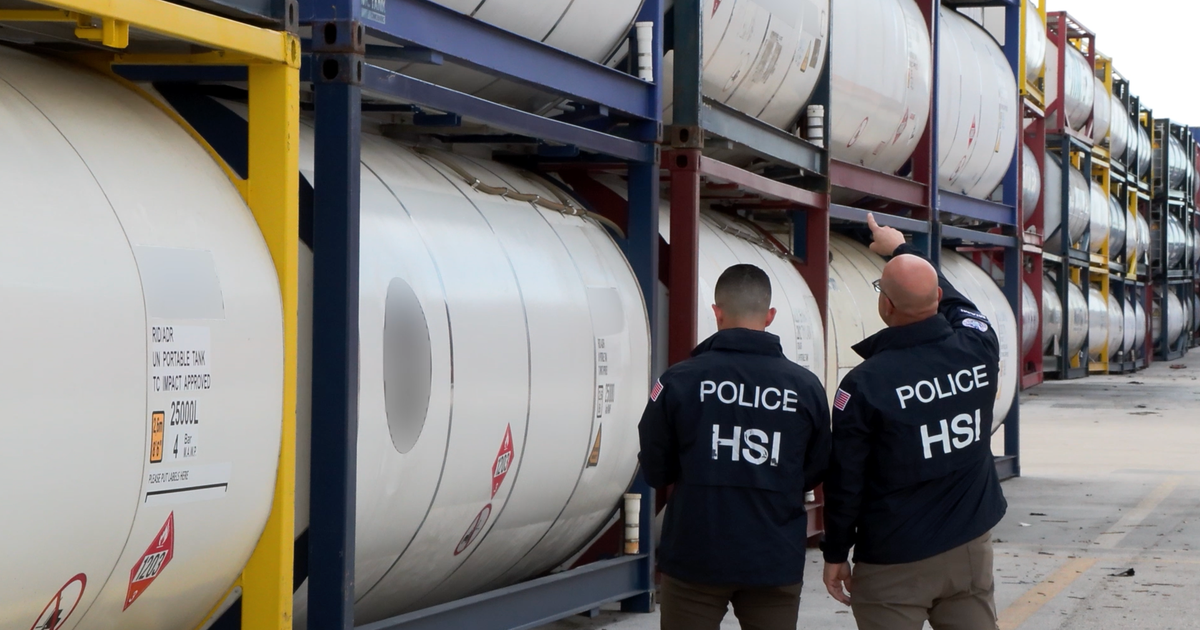







The U.S. has intercepted 90 Cuba-bound shipments of biodiesel — valued at nearly $3 million — widening a U.S.-imposed oil blockade led by the Department of Homeland Security aimed at choking off illegally trafficked fuel, routed to the sanctioned island’s crisis-hit energy sector.
Homeland Security Investigations, U.S. Customs and Border Protection and the Commerce Department’s Bureau of Industry and Security said the shipments were headed for ENETEC S.A., a Havana-based fuel wholesaler sanctioned by the U.S. Treasury’s Office of Foreign Assets Control back in July.
According to DHS, federal agencies first uncovered intelligence revealing that fuel exported from the United States was being sent to the sanctioned state-owned company weeks ago, in violation of recent U.S. export restrictions.
Then in early September, after parsing through trade and intelligence data, CBP officials discovered biodiesel shipments leaving from Port Everglades in Florida and the Port of Houston, en route to Havana, Homeland Security Investigations said.
While authorities seized 71 oil storage tanks at Port Everglades containing roughly 500,000 gallons of biodiesel, an additional 19 shipments containing about 120,000 gallons were captured at the Port of Houston, according to the agency.
HSI said the interdictions were carried out amid suspected violations of federal export laws, including the International Emergency Economic Powers Act, plus regulations governing exports subject to the Export Administration Regulations.
The agencies did not immediately identify the exporters involved nor indicate whether any individuals or companies had been charged in the ongoing investigation.
HSI Miami Special Agent in Charge Jose Figueroa vowed in a statement that the agency would work with partners to “continue to identify, disrupt and investigate efforts to evade U.S. sanctions, protect the integrity of U.S. export controls and deny the Cuban government access to resources obtained in violation of U.S. law.”
“U.S. Customs and Border Protection is steadfast in enforcing the laws of the United States across all domains, encompassing both incoming commerce and outbound shipments,” said Daniel Alonso, director of field operations.
The action tacks onto earlier efforts by the United States Coast Guard to disrupt Cuba-bound maritime fuel shipments. The service branch announced last week that it had intercepted the Grace, a roughly 300-foot cargo vessel, on Sept. 5 between Cuba and Mexico while carrying fuel. The Coast Guard also indicated it had seized another vessel, dubbed the Jaira Provider, earlier in the summer with over 200,000 gallons of fuel aboard.
Earlier this year, President Trump sought to cut off most energy shipments to Cuba by threatening tariffs on any country that sells or provides oil to the country.
Cuba has been plagued in recent years by chronic fuel shortages and an aging and testy power grid, combined with reduced oil supplies, in part because of the U.S. restrictions. In Havana, rolling blackouts have undercut water pumping, prompting shortages affecting roughly 3.5 million people, while also causing disruptions for hospitals, transportation and food storage on the island.
The Trump administration has pressed Cuba — which has been run for more than half a century by the Fidel Castro-founded Communist Party — to make sweeping economic and political changes, and has accused the regime of working with Russia, China and Iran.
Mr. Trump also hasn’t ruled out using military force on Cuba, though he told reporters last month he hopes to make a deal and doesn’t believe the military will be necessary. The U.S. Army Reserve was asked in late September to examine whether it can provide police forces and other support units to U.S. Southern Command as part of continued military planning around Cuba, CBS News has reported.
Cuban officials, meanwhile, accused the U.S. of “economic warfare” and “aggression” earlier this year.