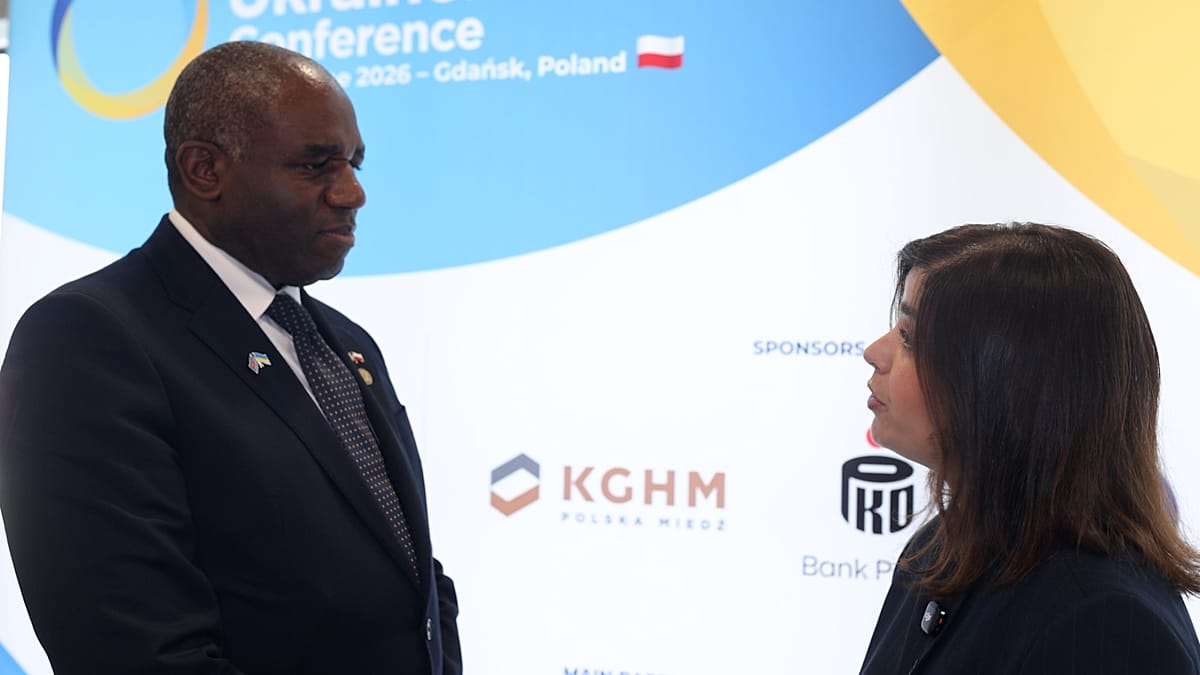











US President Donald Trump’s comments on NATO, and specifically his criticism of European allies, have raised questions regarding the country’s commitment to the alliance.
ADVERTISEMENT


ADVERTISEMENT
However, the Foreign Affairs Minister of North Macedonia, Timcho Mucunski, argued his presidency marks an all-time high for the defence coalition.
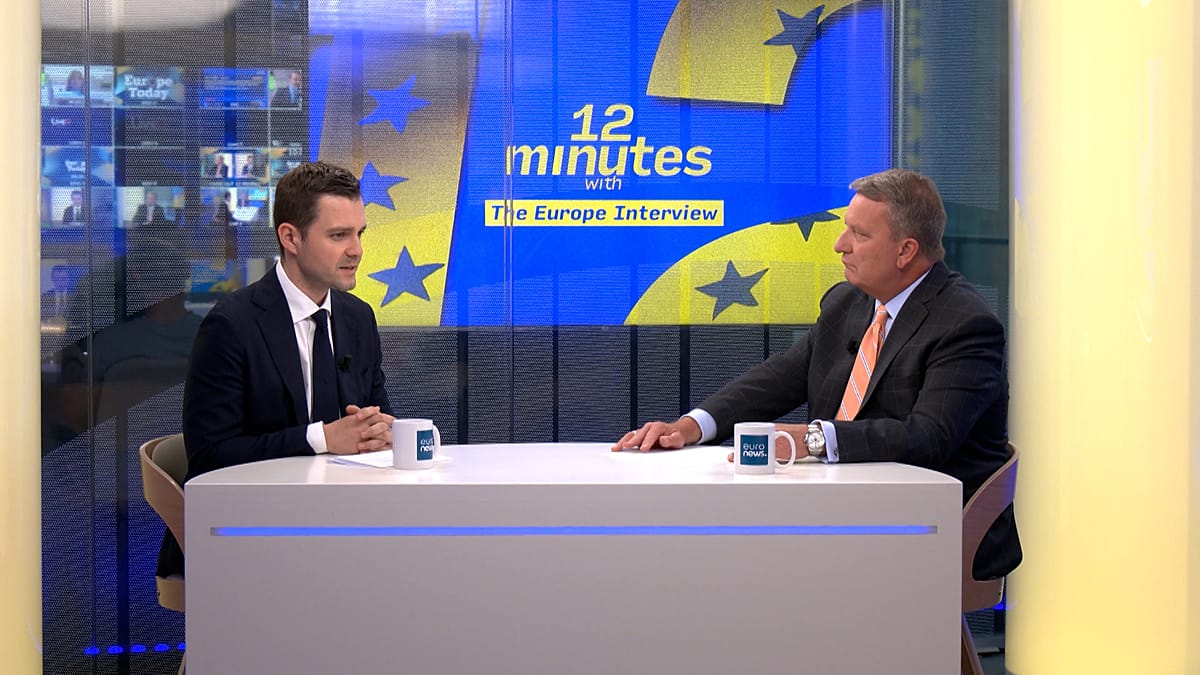
“My view is that, thanks to President Trump, [Secretary of State Marco] Rubio, and the entire foreign policy apparatus of the United States, NATO is stronger than it has ever been,” he said during an interview for Euronews’ programme 12 Minutes With.
He added that his was “undeniable” following last year’s summit in The Hague, where members pledged to increase defence spending to 5% of GDP by 2035.
“This is a very ambitious agenda, but also a very necessary agenda, considering not only the threat that we have from the Russian aggression against Ukraine, which is still ongoing, but threats in the Indo-Pacific, threats in the Middle East,” Mucunski said, adding that President Trump gave NATO “a wake-up call.”
“There will be disagreements between member states as there have been in the past. But if you look at the fundamentals, following the The Hague summit, through US leadership, we are at a point where the Alliance is stronger than it’s ever been.”
NATO members will be meeting again in July in Ankara. “Here, we will take stock of what we’ve achieved in the last year,” Mucunski said.
The minister’s comments on this matter are in stark contrast with the sentiment in many European capitals. Since starting his second tenure as US president, Trump’s relationship with allies across the Atlantic has been rocky at best.
He has called the alliance a “paper tiger”, has taunted his European partners, criticised their defence spending — he even said he would “encourage” Russia “to do whatever the hell they want” to NATO allies who don’t spend enough — and more recently threatened to suspend Spain and withdraw troops from Germany.
Still, for Mucunski, joining the alliance in 2020 has been positive for the country. “It has given North Macedonia the much-needed stability in a region that is extremely volatile,” he said, adding that NATO is “without a doubt the strongest collective security community that civilisation has known and will probably [ever] know.”
A long road to the EU
Another partnership which the country believes could provide it with stability in the face of foreign threats is the European Union. North Macedonia has made little progress on its path to join, despite being among the first of the Western Balkan countries to apply in 2004.
Now, Mucunski said, Bulgaria is the main roadblock on North Macedonia’s path to the EU. The stalemate revolves around identity and language recognition.
Sofia maintains a strict stance that North Macedonia must fulfil agreed-upon conditions— primarily constitutional changes to recognise its Bulgarian minority — before advancing in EU accession negotiations.
“I think, and I hope, that Bulgaria will recognise the possibilities that exist, that it will open dialogue with us,” Mucunski said.
Asked whether the delay in joining the EU could see North Macedonia drift towards countries like Russia or China, he noted that “hybrid threats thrive where frustration grows and where trust erodes.”
The foreign affairs chief said the region is seeing a “severe amount of malign influence” from Russia and China. “This is a reality that we all have to face, and we all have to live with.”
However, despite the stalled process, Mucunski stressed the country remains westward-looking.
“We are a country that prides itself on being pro-European, not just in rhetoric, but in the values that we implement within our society. So while the threat does exist, we have proven not only that we say we are resilient, but to actually be resilient in practise.”
A January 2026 poll by the Institute for Democracy Societas Civilis found that some 70% of citizens would vote in favour of EU membership.
“But the caveat is that many of these citizens who are pro-EU […] don’t believe that the door [to the EU] will actually open. And this is where we need, together with the member states, to prove that this is not the fact.”
Read the full article here