









By David del Valle
Published on
The European Commission warns that the prolonged conflict in the Middle East could make holidays more expensive because of the impact of oil and fuel on all modes of transport. Brussels insists: passengers have the right to clear information, reimbursement, re-routing and assistance.
ADVERTISEMENT


ADVERTISEMENT
The de facto closure of the Strait of Hormuz has drastically reduced energy exports by sea, according to the Commission. The result is a rise in fuel costs affecting airlines, road transport, trains, ships and tour operators. If the crisis is prolonged, travellers could face delays, cancellations, longer journeys and higher prices.
In this context, Brussels has published a guide to remind passengers of their rights and obligations for airlines, intermediaries and travel organisers.
Information is power
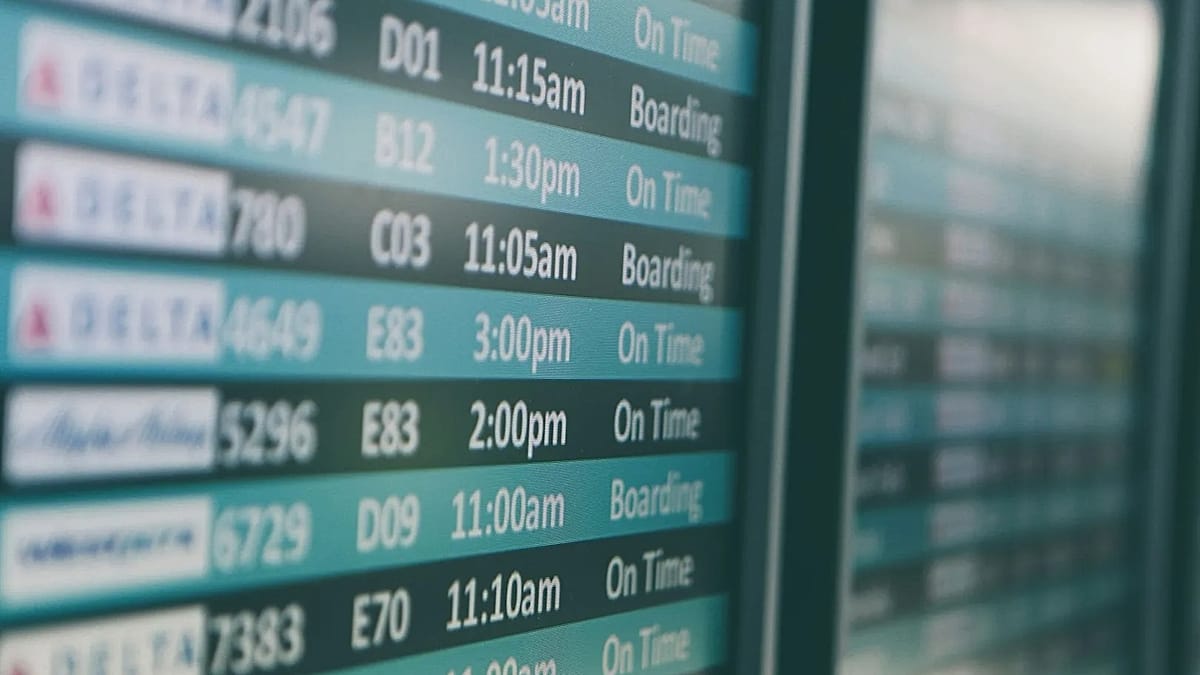
The first recommendation is clear: get information before you buy and keep all documentation. If a flight is cancelled, the passenger has the right to choose between reimbursement, re-routing or return to the point of departure, as well as assistance at the airport. If the cancellation occurs less than 14 days before departure, the airline must pay compensation unless it can prove extraordinary circumstances or has offered an alternative in good time.
The Commission qualifies a key point: a local fuel shortage that prevents a flight from operating can be considered an “extraordinary circumstance”. But an exceptional rise in fuel prices alone does not exempt the airline from its obligations.
Brussels also recalls that airlines cannot retroactively increase the price of a ticket already purchased on the grounds that fuel has become more expensive. The final price must be clear from the start of the booking process and include all foreseeable and unavoidable elements. Any optional extras should be transparently communicated and expressly accepted.
For package holidays – e.g. flight plus hotel – EU rules allow the organiser to increase the price if the contract provides for it and if the increase is directly related to the cost of fuel.
But there are limits: up to 8% does not require acceptance by the traveller; above that threshold, the customer can accept the increase or cancel without penalty. In addition, any increase must be communicated at least 20 days before departure, with justification and detailed calculation.
Europe, a safe haven
Eduardo Santander, CEO of the European Travel Commission, believes that Europe has an advantage in the face of global turbulence: “85% of tourism in Europe is European and that protects us a lot.”
In his opinion, this summer people will be travelling closer to home, within the continent, which could favour a rediscovery of European destinations. “Europe is like gold, a safe haven,” he says.
Santander recommends that travellers pay much more attention to the conditions of purchase. “We usually accept all the conditions without reading the terms carefully. You need to know if you can cancel, if you get your money back or not,” he warns. His main advice is to plan ahead and seek certainty: “Nobody goes on holiday to suffer.”
Value for money
Gloria Guevara, president and CEO of the World Travel & Tourism Council, also anticipates a more price-conscious and value-conscious traveller. According to Guevara, tourists will look more at value for money and choose destinations where they get the most bang for their buck. For destinations, the recommendation is to continue to generate attractive and valuable products.
Guevara believes that travellers may reduce the number of days they spend on holiday and that we will see more tourism within Europe and less travel to Asia. She also advises monitoring prices and checking that what is offered is really in line with what is paid for.
The European Commission insists that vouchers can only replace reimbursement if the passenger expressly accepts them. It also calls on airlines and intermediaries to avoid repeating the conflicts experienced during the Covid pandemic: insufficient information, difficulties in contacting companies and delays in refunds.
We will continue to travel this summer, but doing so smoothly will depend more than ever on planning. Comparing prices, reading the small print and knowing your rights is no longer just a recommendation; it is the difference between enjoying your holiday and being stuck with cancellations, extra costs and endless complaints.
Read the full article here