








By David del Valle
Published on
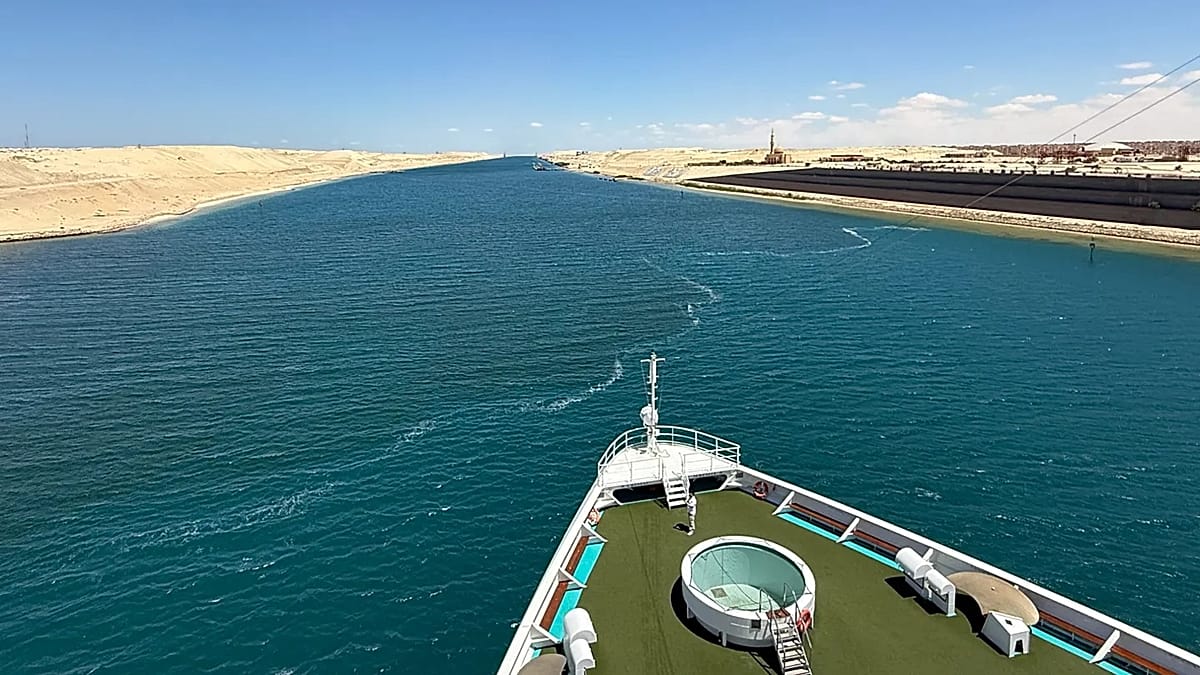
Situated 3,700 kilometres from the epicentre of the crisis in the Strait of Hormuz, another of the great strategic arteries of world trade has become the stage where global tourism seeks answers to uncertainty, on the eve of the peak season.
ADVERTISEMENT


ADVERTISEMENT
For three days, the World Travel & Tourism Council (WTTC) has brought together 300 public and private sector leaders on a luxury Suez Canal cruise ship to discuss leadership and global recovery in the face of what many are calling a perfect storm for the summer: fuel shortages, more expensive tickets, fewer flights and a connectivity crisis.
“The crisis (in the Middle East) is affecting the airline supply as there are fewer seats available,” acknowledges Gloria Guevara, president and CEO of WTTC, who is confident that the recovery in the Middle East will be quick, within two months, depending on when the conflict ends.
A blow to connectivity
The blockade of the Strait of Hormuz is hitting tourism where it hurts most: air connectivity. Shortages of paraffin and rising oil prices are tripling costs for airlines, for which fuel normally accounts for 30% of operating expenses.
The fear is that the impact will be passed on to the traveller, the weakest but most important link in the chain. In its latest transport report, the European Commission warns that “travellers could experience disruption, including delays, cancellations, longer journey times and higher prices”.
To avoid greater evils, Guevara urges governments to reduce taxes on airlines to avoid the bill being paid by users in the end. “If taxes are lowered, there will be no impact on travellers and mobility will be allowed without affecting supply,” she said.
In an interview with Euronews, Egypt’s Minister of Tourism Sherif Fathi argues that “the main challenge for international tourism is not the demand, but the supply of transport”.
He acknowledges that the energy crisis is already taking its toll on tourism in Egypt with a 16% drop in April due to a reduction in available flights and seats. “The impact is also being felt in maritime, rail and land transport globally with direct consequences for tourism, trade and prices,” he explains.
Europe keeps a watchful eye
The European Commission shares this diagnosis and is closely monitoring developments. “In Europe, they are very concerned about the situation,” confirms Eduardo Santander, CEO of the European Travel Commission (ETC). “If it worsens, the European Commission may force member states to share strategic reserves, as was done with vaccines during COVID.”
For this executive, the European country most exposed to the crisis is the United Kingdom, while Spain is safer thanks to its reserves. “This summer will be different,” he says. “People will be travelling closer and much more within Europe”.
Santander also believes that this situation can serve to boost an old aspiration of the sector: to deseasonalise tourism and extend the season beyond the summer months.
Despite the uncertainty, WTTC president and CEO Guevara remains optimistic. “We are now more accustomed to managing crises and dealing with these situations,” she said. The organisation recalls the importance of tourism, which represents almost 10% of the global economy, with 366 million jobs, one out of every nine jobs on the planet.
In the midst of so much uncertainty, this unprecedented floating summit in the waters of the Suez Canal has tried to send a message of confidence to an industry that for years has overcome crises, wars and pandemics, as many of the participants point out.
Behind the scenes, however, the industry is holding its breath. What happens in the Middle East in the coming weeks could redefine the map of world tourism and mark a turning point in the global economy.
Read the full article here