









The European Parliament will call for an increase of nearly €200 billion in the next common EU budget, setting the stage for heated political talks over resources.
ADVERTISEMENT


ADVERTISEMENT
MEPs are calling for an overall increase of around 10% and want to keep the repayment of Next Generation EU — the joint debt issued in 2020 to address the economic impact of COVID-19 — outside of the budget.
The Commission pitched €2 trillion in July last as a starting point for talks.
The parliament’s position is expected to clash with EU governments, which are reluctant to increase their contributions to the multiannual financial framework (MFF). This number is calculated without the repayment of the Next Generation EU, which MEPs ask to be off the budget.
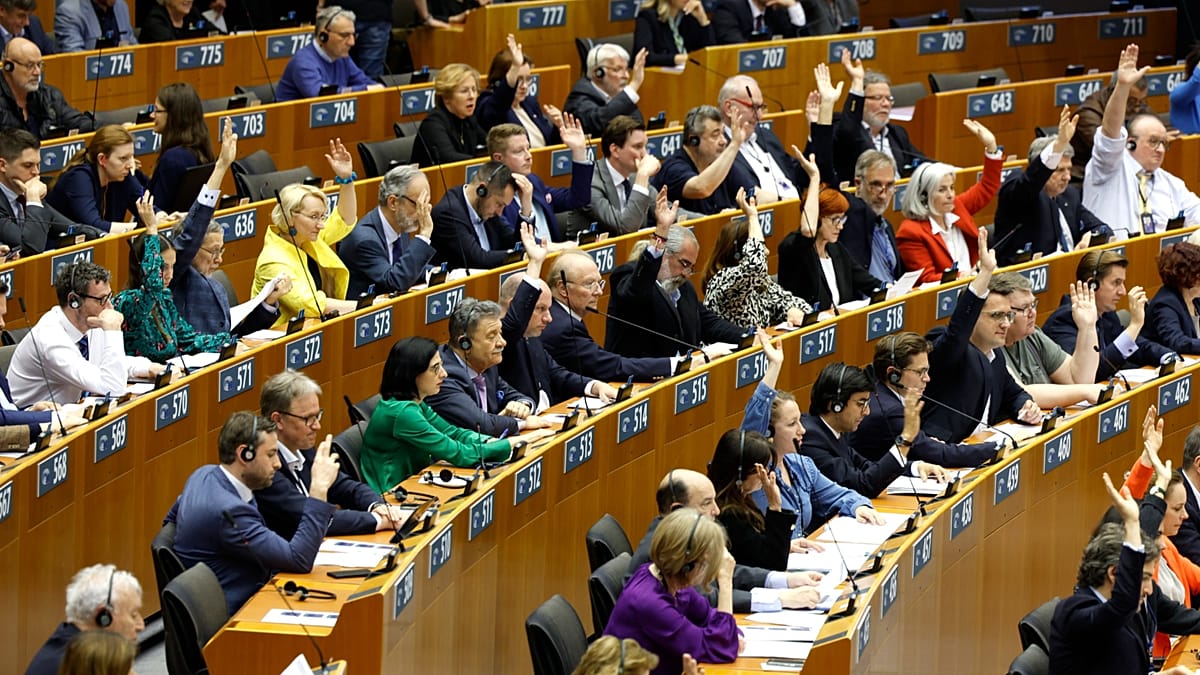
The Parliament adopted its position by a large majority, with 370 votes in favour, 201 against and 84 abstentions.
EU countries are now due to set out their own position before interinstitutional negotiations begin, which are expected to be difficult, as the EU’s long-term budget must be approved by both the European Parliament and the 27 member states.
“Never underestimate the Parliament,” said President Roberta Metsola when asked about negotiation tactics to persuade EU governments to increase spending.
Leaders of political groups also vowed to resist, saying the Parliament will not simply rubber-stamp the Council’s position.
“Who thinks that this [budget] could be agreed in the Council and then imposed through phone calls does not know this Parliament,” said Iratxe García Pérez, president of the Socialists and Democrats group.
The Parliament usually yields to pressure from member states on the budget. But this time, several internal sources told Euronews it expects a tougher stance.
It is not prepared to accept budget cuts, as the centrist majority is slimmer than in previous legislatures, when heads of government were able to impose their will.
“Now, a few defections would be enough to reject the budget, as there are many more far-right MEPs who aim to derail the deal,” a Parliament official said.
A key element in bridging the gap would likely be so-called own resources, a form of revenue collected directly by the EU rather than through member state contributions.
The Commission has proposed five new own resources which, together with changes to three existing ones, are expected to generate around €58.2 billion per year.
The new levies would apply to greenhouse gas emissions (ETS1), imports of goods linked to emissions outside the EU (CBAM), electronic waste (e-waste), large companies with annual net turnover of at least €100 million (CORE), and tobacco products (TEDOR).
“It does not really matter which of these will be approved. What matters is that it would allow EU countries to transfer more money to the EU without raising national contributions,” the source said.
In the Parliament’s proposal, the 10% increase would be evenly distributed across the budget’s three main priorities: national plans, competitiveness funds, and Horizon Europe as well as Global Europe.
The Competitiveness Fund would support measures to strengthen Europe’s position in the global economy.
Horizon Europe would focus on innovation, education and research, while Global Europe would cover EU external action, including security, funding for projects in third countries and humanitarian aid.
The European Parliament’s proposal does not introduce a fundamental overhaul of the budget’s structure, but it warns against several risks, including concerns linked to increased flexibility.
The creation of national plans to distribute EU funds is the main new element in the European Commission’s proposal, which the European Parliament does not support.
The Commission had proposed expanding programmes to cover a wider range of areas to allow greater flexibility in spending.
However, Parliament warned this could reduce transparency and clarity for beneficiaries and called for a stronger role in budget oversight.
Read the full article here