










The European Union’s economy should reach a 46 percent electrification target in transport, industry and buildings by 2040 in order to cut €260 billion per year in imported fossil fuel costs, the EU Commission said on Friday as it unveiled a set of proposals to ease the process.
ADVERTISEMENT


ADVERTISEMENT
The proposed measures include reforms to fees charged by energy network operators, energy taxation, and building efficiency.
Brussels is stepping up its electrification efforts as part of a scramble to find quick solutions to offset the loss of oil and gas from the Strait of Hormuz, which exposed the EU’s severe dependence on imported fossil fuels.
However, without incentives to reduce high electricity prices, the Commission’s plan to electrify the economy could be a hard sell.
Brussels has recognised that electricity remains more heavily taxed than gas in some EU countries. As previously noted by Commission President Ursula von der Leyen and Council President António Costa, this weakens incentives for households and businesses to switch to cleaner technologies such as heat pumps and electric vehicles.
To address this imbalance, the Commission is proposing a legal principle requiring member states to ensure that electricity is not taxed more heavily than gas, while leaving governments free to determine the structure of their national tax systems under the EU’s energy taxation rules.
“We are proposing a general principle that electricity should not be taxed higher than gas,” one senior Commissioner official told reporters.
Commission officials confirmed that the 46 percent target will serve as a reference for measuring the EU’s progress in replacing fossil fuels with clean electricity across transport, buildings and industry.
The EU executive stressed that the target will be supported by a broader analytical framework linked to the EU’s post-2030 climate and energy strategy, with further details expected later this year.
The EU’s electrification pace has progressed more slowly than anticipated, the Commission acknowledged – stagnant at 23 percent over the past decade – despite its importance for achieving the EU’s climate, competitiveness and energy security objectives. The remaining 77 percent of the economy is mostly run on fossil fuels.
Heat pumps and electric vehicles
Around half of the EU’s gas consumption comes from buildings, which have been identified as one of the sectors with the greatest potential for electrification.
“The electrification of energy consumption in buildings (…) is moving quite slowly, despite the multiple benefits,” the senior Commissioner official said.
The Commission plans to promote wider deployment of heat pumps in news buildings, improve transparency around installation costs, simplify permitting procedures and make better use of existing funding instruments to help households switch from gas heating to electric alternatives.
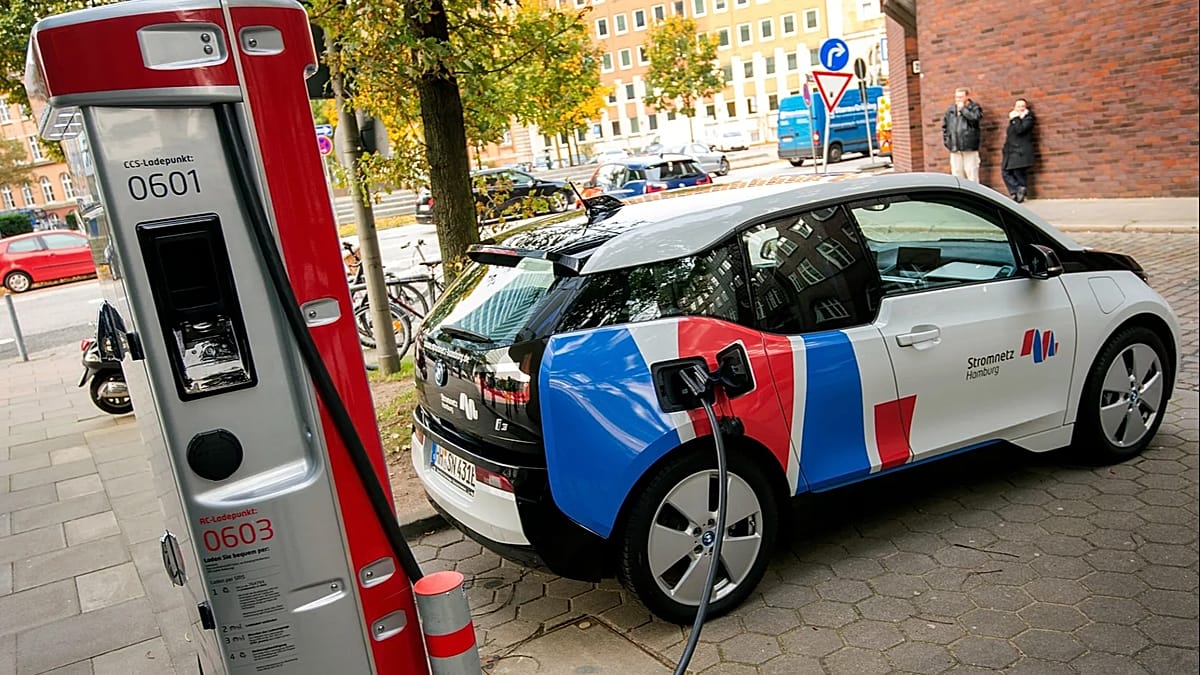
“An energy transition with electrification at the forefront could, for example, support the business case for manufacturing electric vehicles in the EU by stimulating the uptake of approximately 120 million battery EVs compared to 8 million battery EVs today, and of approximately 100 million heat pumps compared to 30 million heat pumps installed today,” reads the Commission’s electrification plan.
German MEP Christian Ehler, spokesperson on energy for the European People’s Party, said on Friday that the so-called Electrification Action Plan sends a positive signal for reducing Europe’s high electricity prices through “promising measures on network codes, grid charges and flexibility”.
“Electricity must become cheaper to realise a switch away from fossil fuels. The EU must do everything that makes sense within a market-based economy to achieve this goal,” he told reporters.
Phasing-out of fossil fuels
Thomas Lewis, an energy policy expert at the NGO Climate Action Network Europe, said the 46 percent electrification target signals an important direction for Europe’s energy transition, particularly the bloc’s intention to propose new rules to phase out fossil fuels by the end of the year.
However, Lewis warned that the plan’s impact “risks being counter-productive” if it is not accompanied by strong measures to phase out fossil fuels and binding post-2030 energy efficiency and renewable energy targets.
While supporting the proposal as overall positive, Lewis warned that fossil fuel subsidies continue to distort market prices and artificially lower the cost of fossil fuels.
“The removal of a KPI for 100 GW annual renewables deployment that was in the leak risks new electricity demand being met via fossil fuels,” Lewis said, noting that the official proposal falls short of clean power ambitions.
“Doubling down on the deployment of renewable energy and increasing energy savings is the quickest path towards delivering an affordable, secure and sustainable energy supply.”
Christian Kjaer, executive director of the Brussels-based non-profit organisation SuperGrid Europe, noted that tax policies throughout Europe have held back electrification for decades.
“It’s a bold move by the Commission to ask member states to reduce electricity taxes below gas taxes, and it’s in the nations’ own long-term interest,” Kjaer said, while adding that the 46 percent target would be “pointless” if used in isolation, or if it became a tool undermine the setting of 2040 targets on renewable energy and efficiency.
Read the full article here