








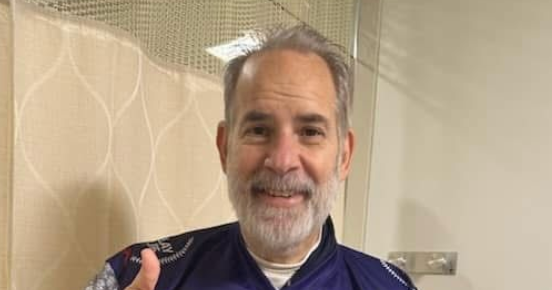
Joe Gillette’s morning commute hadn’t changed in years — until the three-lane highway became four lanes one day. He realized he was seeing double out of one eye. He thought it might be a side effect from a recent bout of COVID-19 and immediately booked an appointment with his doctor.
Gillette’s physician suggested he see an eye specialist and get his brain scanned. The eye specialist said Gillette had nerve damage in his right eye, which was causing the double vision. It seemed like an answer, but Gillette decided to get the other scan anyway. The New York resident had spent a decade volunteering with the American Cancer Society, and he understood how important a full workup could be.
On his 57th birthday, he underwent the test. Hours later, a notification popped up on his online patient portal while he was out with his wife.
“My wife was right next to me, and we’re reading it, it says ‘Cancer, tumor in the kidney, lung, brain and stomach,'” Gillette recalled. “It was the worst birthday present ever. I was devastated, to say the least.”
Gillette’s doctor confirmed that he had Stage IV kidney cancer. There were two tumors in his brain. Other scans showed tumors in his bones, lymph nodes, lungs and pancreas. A biopsy confirmed that all of the tumors were metastases from the kidney. Despite the severity of his condition, Gillette had had no symptoms until his vision doubled.
“If it wasn’t for COVID, I wouldn’t have caught it,” Gillette said. “I shudder to think what my condition would have been after waiting another six months.”
Courtesy of Joe Gillette
Aggressive treatment and weeks of recovery
Gillette’s condition was dire, said Dr. Martin Voss, his oncologist at Memorial Sloan Kettering Cancer Center in New York City. Less than 20% of Stage IV kidney cancer patients survive five years, according to the American Cancer Society. Voss started Gillette on a course of immunotherapy, followed by radiation and brain surgery. The procedure was complicated, and to recover, Gillette had to be placed in a 10-week medically induced coma. When Gillette woke up, he had no idea how much time had passed.
“I woke up, I tried to get out of bed to go to the men’s room, and the nurse came in, ‘What are you doing?'” Gillette recalled. “I’m like, ‘I have to go to the men’s room.’ She goes ‘You can’t go to the men’s room.’ I said, ‘I just did this afternoon!’ She says ‘You’ve been here for two and a half months.’ I was so shocked.”
After undergoing physical and occupational therapy and regaining his strength, Gillette received more radiation therapy, Voss said. The therapy proved effective, and Gillette’s tumors shrank. The radiotherapy was followed by two years of immunotherapy, which Gillette said he saw no major side effects from.
In April 2024, Gillette underwent another surgery to remove the original tumor in his kidney. He was worried about having another long recovery period, but everything went smoothly and he was discharged from the hospital three days later.
Courtesy of Joe Gillette 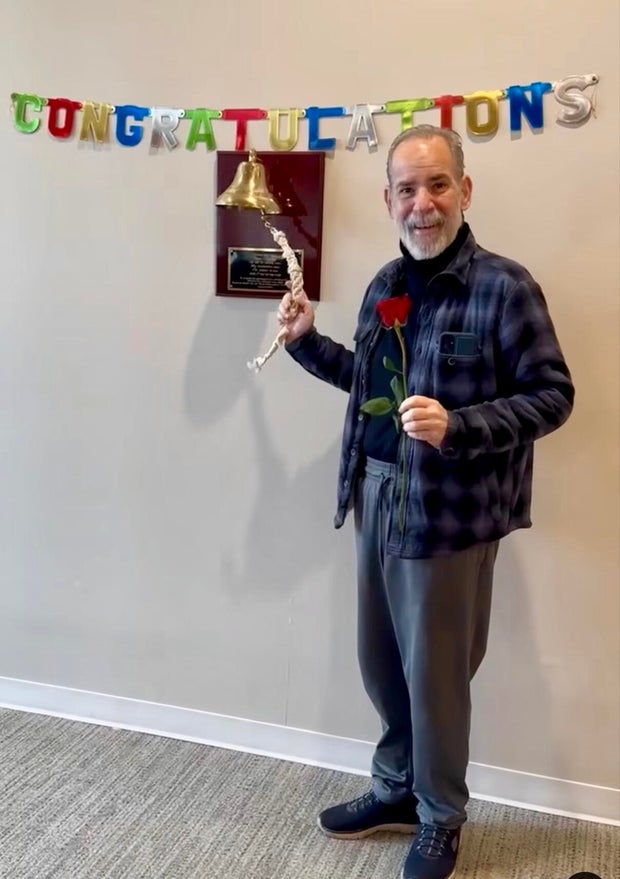

“I’m grateful every day”
Today, Gillette still takes a daily oral immunotherapy and sees his care team regularly. He meets with Voss every six to eight weeks. He has regular MRIs and endoscopies to monitor for any new disease. Voss and other doctors have spotted the occasional growth, Voss said, but targeted radiation and immunotherapy have kept the cancer in check.
“There’s a huge effort that we undertake to ascertain that we remain in good control of the situation, and that we understand any new developments and act upon them,” Voss said.
Dr. Alpa Patel, a senior vice president at the American Cancer Society and a friend of Gillette’s who was not involved in his care, said his case highlights the importance of innovative treatment options.
“He has responded to treatments that a decade ago didn’t exist,” Patel said. “The cancer is very much under control and being monitored really well, and they are able to minimize the effects to his overall quality of life as well.”
Gillette said that he still gets “nervous when it comes time for scans,” but he tries to focus on the present as much as possible. He has recovered fully from the long hospitalization after his brain surgery. The current immunotherapy does not leave him with any side effects, he said.
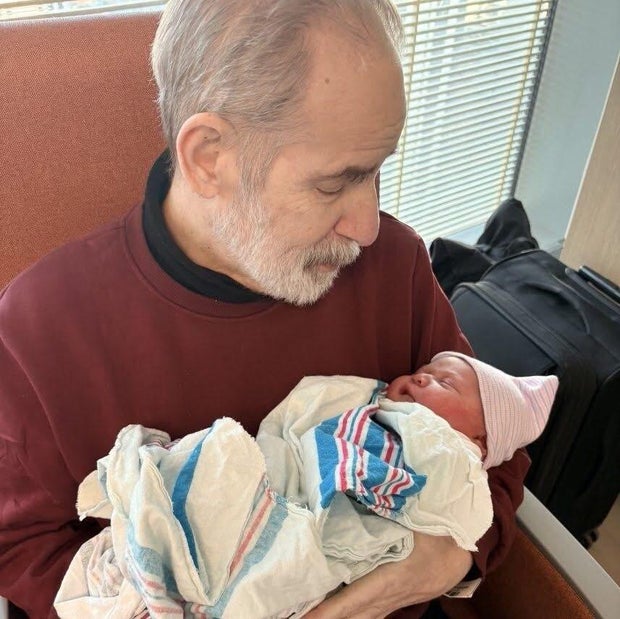
Lately, he’s focused on family milestones: His oldest child had a baby this spring, and another child is getting married soon. He also prioritizes connecting with other cancer survivors and continuing to volunteer with the American Cancer Society.
“I’m grateful every day, not for what happened to me, but to have had that support and gotten through it,” Gillette said. “I’m more than happy where I am. I’ll sign off (on treatment) and do this for the rest of my life, if it just keeps me around.”
Courtesy of Joe Gillette