









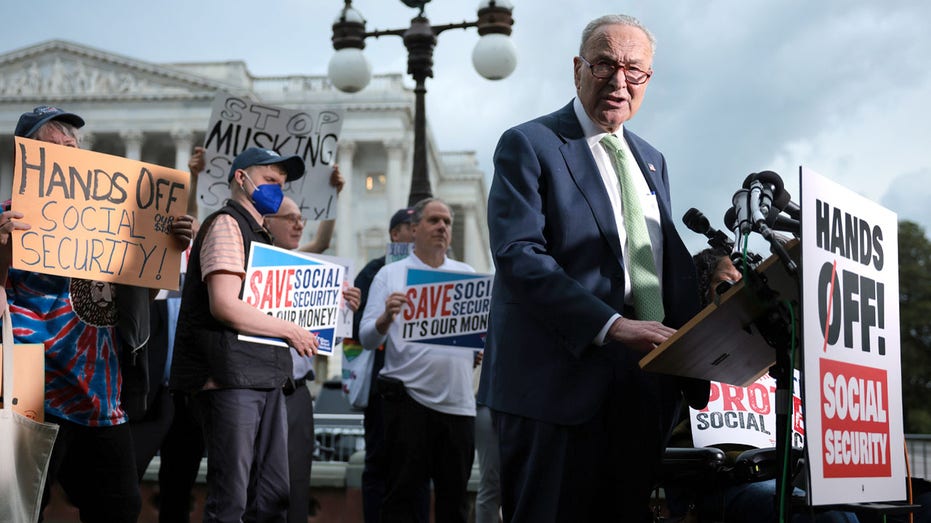
The results of the midterm elections will play a role in shaping the future of Social Security as the safety net program’s projected insolvency looms in 2032 and would require entitlement reforms to prevent automatic benefit cuts.
Social Security’s main trust funds are on a path to depletion as increased enrollment due to the aging American population and growth in benefits paid outpaces incoming payroll tax revenue. Current law requires that once the trust funds are tapped out, benefits must be automatically cut to match incoming payroll tax receipts, which is estimated to amount to a 22% cut in late 2032 based on the most recent projections.
Democrats won majorities in the House and Senate for the next two years that represent the end of President Donald Trump’s second term, and for the senators who were elected to full terms, they will still be in office when that insolvency date draws near if action isn’t taken during the remainder of Trump’s term.
Maya MacGuineas, president of the Committee for a Responsible Federal Budget (CRFB), told FOX Business that “Social Security was squarely on the ballot last night, whether Americans realized it or not. The retirement trust fund will become insolvent in 2032, which means each senator elected to a new six-year term will need to confront this issue before their term expires.”
HOW CONGRESS COULD ADDRESS SOCIAL SECURITY INSOLVENCY – AND THE HIDDEN COST
“If they don’t, beneficiaries across the board will face automatic benefit cuts under their watch. With the monthly cut being $500 – more than the average retired household spends each month on groceries – Washington should act soon to restore solvency and avoid a major affordability crisis less than six years away,” MacGuineas added.
Brett Loper, executive vice president of policy for the Peter G. Peterson Foundation, told FOX Business that the “urgency of the issue is increasing literally day by day,” and noted that Social Security’s solvency came up in a number of Senate campaigns and debates as candidates had to begin grappling with the issue.
“It was clearly enough of an issue in 2026 that there were questions consistently asked in the Senate races given the six-year term they’re elected to,” Loper said, adding that he was encouraged by how the discussion was handled in the campaign.
“Overwhelmingly, it was recognition that the program’s going insolvent and a commitment to addressing it,” Loper said. “From there, there’s sort of a range of ideas or qualifiers. Both on a bipartisan basis, there were members who were suggesting a commission would be a good way to approach it. In some cases, there was interest citing specific things that could be done.”
SOCIAL SECURITY CHIEF BISIGNANO SAYS PROGRAM WILL ‘BE AROUND FOR ANOTHER 90 YEARS’

While candidates weren’t expressing a willingness to immediately tackle the issue in 2027, Loper said the public’s awareness will continue to grow into the 2028 election cycle, which will see presidential candidates confronted with the question as “there’s no way they’re going to be able to duck the issue.”
“The issue gets harder and harder to solve mathematically the closer you get to the cliff. I don’t think anybody really wants to be sitting around trying to figure out in early 2032 with the cliff staring in front of them and seniors in near-revolt,” Loper said. “It’s not something they’re going to be able to avoid even if they wanted to avoid it because they’re focused on other things.”
Implementing reforms to Social Security sooner rather than waiting until it gets closer to the 2032 insolvency date and the 22% benefit cut would give policymakers “a greater ability to slowly phase-in changes to the program” and potentially address related issues affecting retirees, Loper said.
“Maybe there’s a broader landscape of issues we can address. Maybe we can bring in retirement more broadly and talk about it,” Loper explained. “It gives you more options and an ability to address this in a way that brings the public along, makes the dramatic nature of the changes much, much more manageable.
NEW BIPARTISAN PLAN SEEKS TO PREVENT SOCIAL SECURITY BENEFIT CUTS BEFORE TRUST FUND DEPLETION
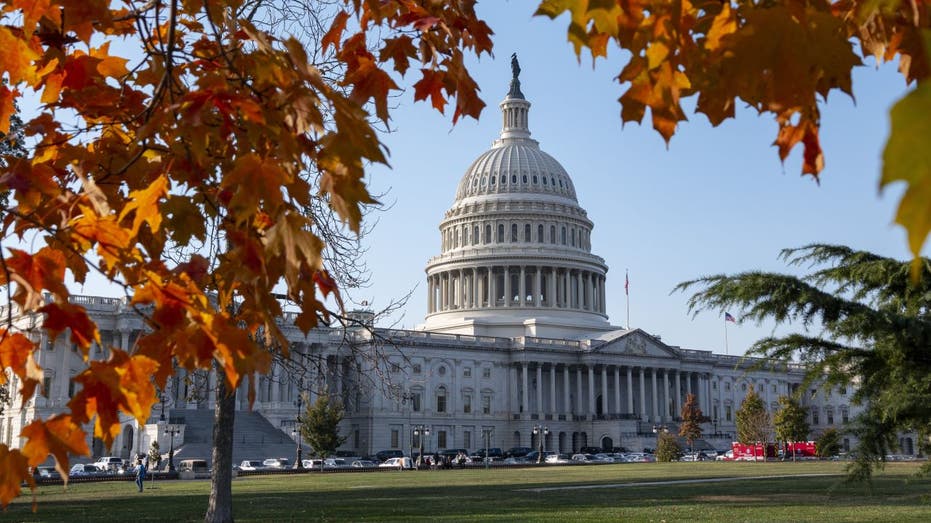
Congressional budget rules require that changes to Social Security be made subject to a 60-vote threshold in the Senate, which means that any reforms to the program would likely require bipartisan support.
Loper suggested that those dynamics could open the door to movement on the issue in the next two years, depending on how willing Trump and Democrats in Congress are willing to compromise on the issue. He said that a case could be made to Democrats that “you might get a better deal out of this president than you’ll ever get out of any other Republican, so why not try to explore this as a possibility?”
“If you’re Trump, I mean talk about legacy-building. If that’s the mode he’s in, what better than to be the guy who saves it for, say, another 50 years” like then-President Ronald Reagan and then-House Speaker Tip O’Neill did on a bipartisan basis in 1983, Loper said. He added that would also have the “the benefit of clearing the deck of a major issue that the next president’s going to have to deal with, so I think of those political incentives as maybe aligning.”
ONE TYPE OF SOCIAL SECURITY ADJUSTMENT COULD CUT THE 75-YEAR SHORTFALL IN HALF

“I realize there are a lot of reasons why they would have a hard time getting to an outcome in 2027 and 2028 just given how polarized our politics are,” Loper said.
“I could also make the case that even if they’re not able to solve it and get an O’Neill-Reagan type deal through Congress and signed by the end of Trump’s term, they still have the opportunity to make progress by doing, frankly, what Reagan did in ’81 and that is to get a commission in place.”
“Have the commission report back at the end of 2028, have it on the shelf and ready to go at the beginning of 2029… that might be a little bit easier for the next president to deal with if something like that’s available to them,” he explained.
Loper emphasized that Social Security reforms will have to be done on a bipartisan basis and that progress on the issue in the next two years would highlight that the “public is coming along and awareness is increasing.”
CLICK HERE TO DOWNLOAD THE FOX NEWS APP
“I think that there will be enough elected officials who start to recognize this and start to get out a little bit in front of it, and that’s what gives me hope that there’s this opportunity for some progress to be made in the next Congress – again, despite the polarized nature of our politics,” Loper said.