








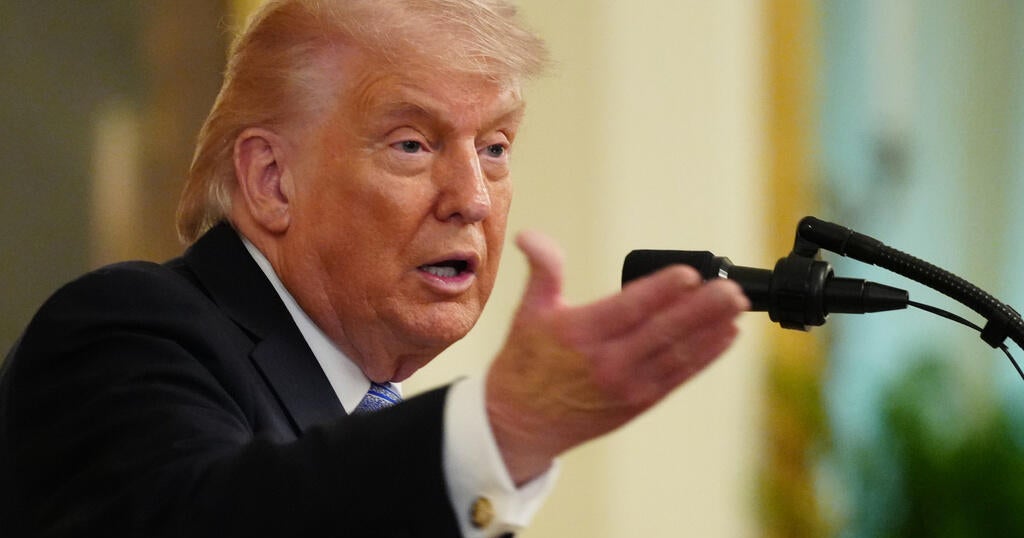
President Trump’s gambit to push out of office several of the Indiana Republicans who defied his redistricting efforts appeared to largely succeed on Tuesday.
Five of the Indiana state senators who voted against redrawing the state’s House maps last year lost their Republican primaries on Tuesday, ousted by Trump-endorsed primary challengers, The Associated Press projected. A sixth Trump-supported candidate also won the GOP primary in an open seat where a Republican who rejected redistricting decided not to run for reelection.
One senator survived a primary challenge backed by the president on Tuesday. One primary between an anti-redistricting Republican and a Trump endorsee did not have a projected winner as of late Tuesday, with the two candidates separated by a razor-thin margin.
The Statehouse revenge campaign served as a test of Mr. Trump’s influence over his party in a set of normally low-profile races where Oval Office intervention is virtually unheard of — and highlighted Mr. Trump’s intense interest in the nationwide redistricting scramble.
In the race to control the U.S. House, Mr. Trump pushed through a redistricting plan in Texas to favor Republicans in more seats. This led to an all-out battle among Democrats and Republicans in state governments across the country, including Indiana, where Mr. Trump won by 19 points in 2024.
The White House aggressively courted Indiana Republicans, and the state’s GOP Gov. Mike Braun endorsed a map that would have given the GOP an advantage in all nine of the state’s congressional districts, edging out two Democrats. The map passed the state House of Representatives.
But it faced opposition in the Senate, with state Senate President Rodric Bray saying it didn’t have the votes to pass, despite the Republicans having a 40-10 supermajority. The legislation failed in a floor vote, with 21 Republicans — including Bray — voting against it.
The holdouts offered a range of objections, both moral (some said they viewed it as a bad precedent) and practical (others warned that Republicans won’t necessarily win all nine House seats in a tough year). Bray told CNN on Tuesday the GOP caucus was “fairly evenly split” on the redistricting issue, but decided “it wasn’t the right way for Indiana to move forward.”
Ball State University professor Chad Kinsella told CBS News ahead of Tuesday’s primary, when discussing why the map didn’t pass the state Senate: “I think it’s Hoosiers don’t like gerrymandering.”
“Ultimately, I think that gerrymandering just doesn’t play well in Indiana,” Kinsella added. “I think those people were also concerned that they couldn’t go back home and that their constituents would be OK with that.”
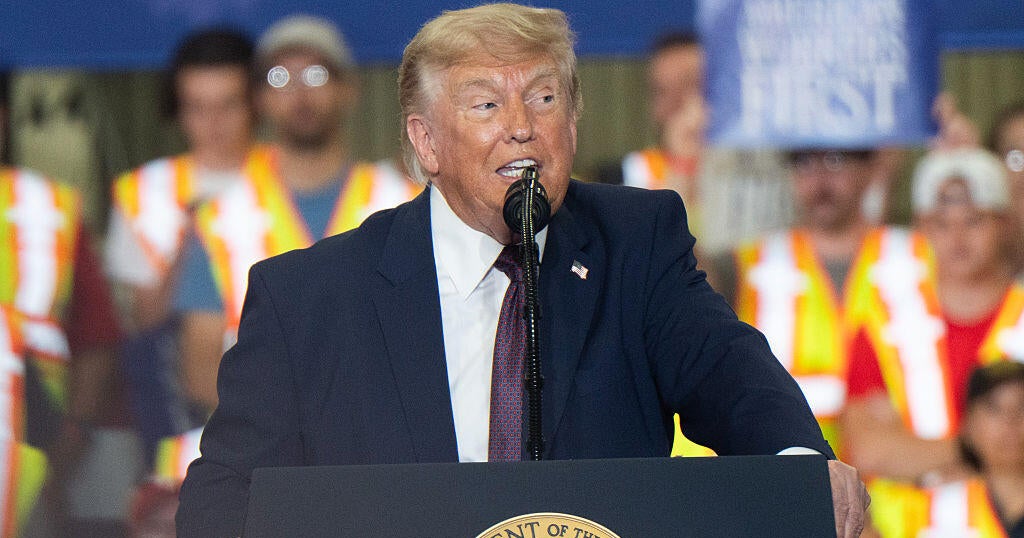
Mr. Trump lashed out at the Republicans who defied him — and vowed vengeance.
He backed candidates in eight contested races Tuesday, accusing the incumbents of betraying their voters in a set of Truth Social posts in which he called them “pathetic,” “incompetent” and RINOs, or “Republicans In Name Only.” He did not issue an endorsement in one seat where the incumbent backed redistricting, and he endorsed 11 incumbents who voted for the new map.
Along with the president’s endorsements came money from allied groups for the challengers, with Bray estimating on Tuesday that $9 million had come from out of state. In return, the Indiana Senate Republican Caucus has dumped more money into the race than was spent in all of 2022.
All told, tracking firm AdImpact tallied some $13.5 million in ad spending in the Indiana State Senate primaries this cycle, compared to just under $300,000 two years ago.
Even before the redistricting vote, some of the state senators who voted against redistricting reported being doxxed and harassed.
Mr. Trump also vowed in January: “We’re after you Bray, like no one has ever come after you before!” Indiana has staggered statewide elections, so Bray is not up for reelection until 2028, but his leadership position could be in jeopardy with the results of Tuesday’s election.
“It is what it is,” Bray told CNN Tuesday about Mr. Trump’s vow to come after him. Although a lot has changed in the redistricting wars since December, Bray said he has “no regrets” over the vote’s outcome.
“Indiana’s going to do things the way Indiana needs to do them,” Bray said.
Mr. Trump’s allies in Indiana applauded Tuesday’s results. Braun, the governor, called it a “historic night for Indiana,” and Republican Sen. Jim Banks wrote on X that he was “proud to have helped elect more conservative Republicans to the Indiana State Senate.”
One of the lawmakers to lose their primary on Tuesday was state Sen. Travis Holdman, a longtime incumbent who serves in GOP leadership as majority caucus chair.
In brief remarks after the election, Trump-endorsed challenger Blake Fiechter thanked Holdman for his 18 years of service. He promised that he’s “ready to turn the page” and represent everybody in the district, which covers a swath of eastern Indiana including the city of Bluffton and part of Fort Wayne.
Holdman stood by his vote on redistricting in an interview with the Indianapolis Star, and said he wasn’t bitter about the outcome. He said his takeaway from his loss was: “Revenge and retribution is not a Christian value.”