








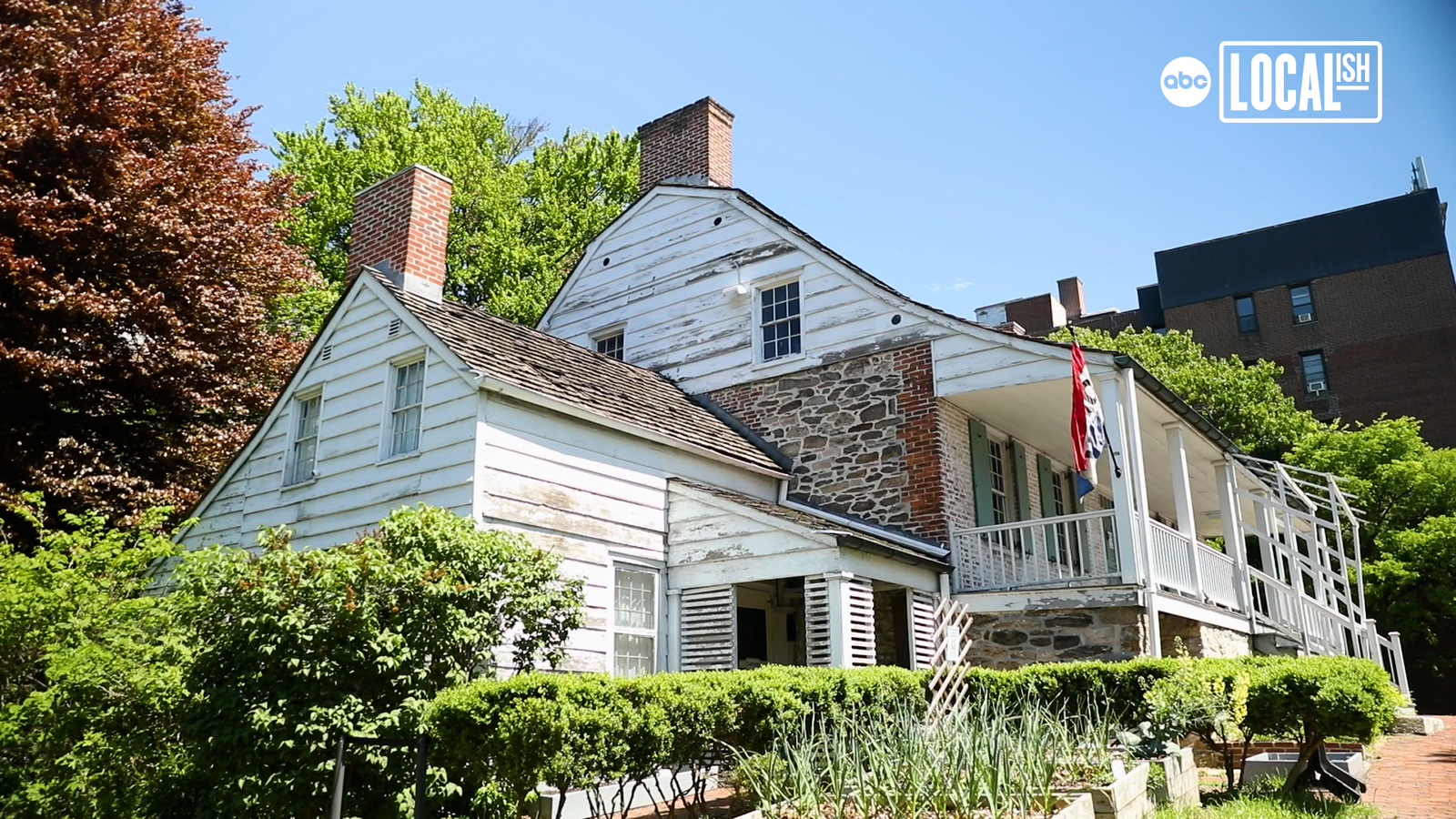
INWOOD, Manhattan — Tucked between apartment buildings, bodegas, and busy city streets in Manhattan’s northernmost neighborhood sits a piece of history that has survived nearly 250 years of change.
“We’re at the Dyckman Farmhouse Museum, the very last farmhouse on the island of Manhattan, here in the Inwood neighborhood,” said Melissa Kiewiet, the museum’s Executive Director. “It’s the oldest farmhouse on Manhattan Island, built in the 1700s.”
The farmhouse standing today was built after the Revolutionary War, but the Dyckman family’s roots in the area stretch back even further.
“The family, the Dyckman family, moved up here in the 1600s and were farmers,” Board Member Don Rice explained. “They farmed up here for about 100 years before the American Revolution.”
As British forces moved to capture New York in 1776, the quiet farmland surrounding what is now Inwood became strategically important.
“They really wanted to take Manhattan. They wanted to take all of the harbor,” Rice said. “New York Harbor was a very important harbor for commerce and all kinds of reasons.”
British forces gradually tightened their grip on the region, moving from Brooklyn northward and transforming upper Manhattan into a military stronghold.
“You can see an increasing pressure surrounding the island of Manhattan and forcing it to turn into the British stronghold,” Rice said.
The occupation created difficult choices for local families.
“The British who occupied this neighborhood needed a lot of food. They needed wood. They needed supplies, they needed meat,” Rice said. “So there was a moral dilemma that the Dyckmans had there.”
One of the family’s sons initially pledged loyalty to the British Crown in order to continue selling supplies to occupying forces, but later changed course and joined a militia to fight.
The area around today’s museum became deeply intertwined with one of the Revolution’s most significant battles: the Battle of Fort Washington.
Historians say soldiers marched directly through what is now the museum grounds as British troops advanced south toward the fort.
An eyewitness to that history may still exist on paper.
British artillery officer Thomas Davies sketched scenes from the battle in November 1776, capturing lines of soldiers moving through the landscape that would eventually become modern-day Inwood.
When the war ended, the Dyckman family returned home to devastation.
“The neighborhood was destroyed. Their orchards were gone,” Rice explained.
The family rebuilt – constructing the farmhouse that still stands.
Now surrounded by city life, the home remains an unexpected reminder of Manhattan’s rural roots and Revolutionary War history.