








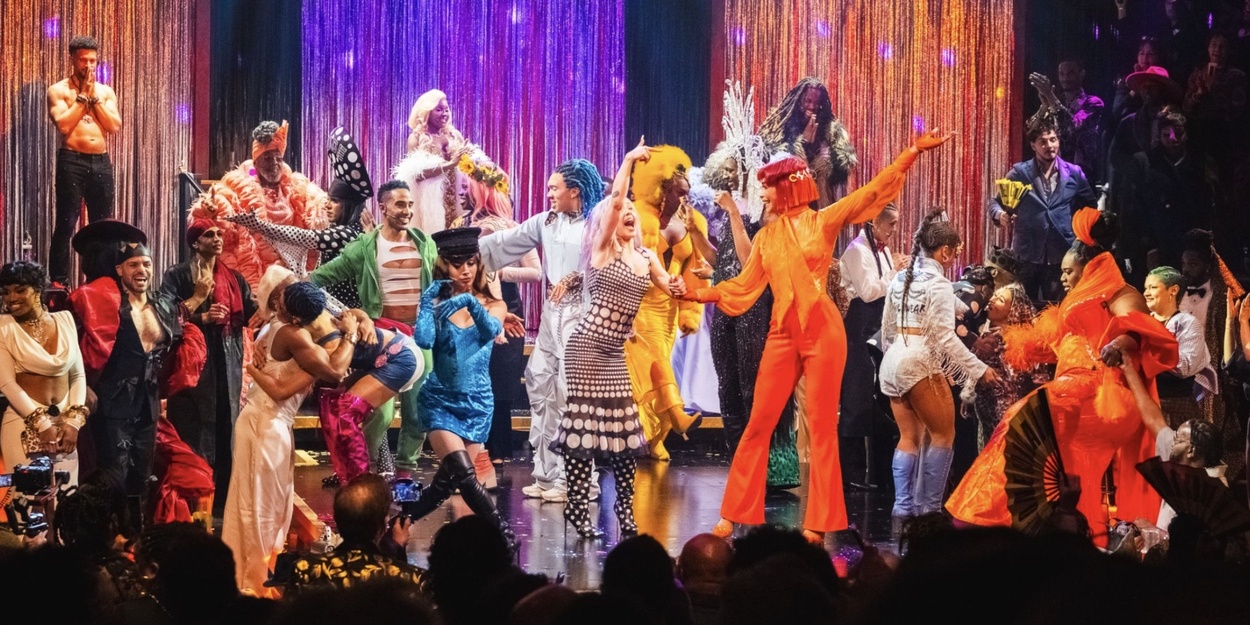
Art as Activism on Broadway is a recurring series exploring how theater can move beyond entertainment to serve as a catalyst for social change, advocacy, and cultural dialogue. At a time when stories are being challenged, erased, and reimagined in real time, these works ask not only what is being told onstage, but who gets to tell it, who gets to be seen, and what it means for audiences not only to bear witness but to be welcomed into the space.
I saw CATS: The Jellicle Ball on a Spring-ish Friday night, when the city seemed to exhale into an amber glow. The sky melted into a wash of orange and violet, like it was holding onto the day a moment longer. It felt like a quiet promise, a kind of magic hovering just beneath the surface. What I didn’t realize then was that what was unfolding outside was only a precursor to the magic waiting inside the Broadhurst Theatre.
Because what is happening inside this production is not just performance. It is resistance. It is homage. It is possibility.
For Cats Costume Designer and activist Qween Jean, there is no ambiguity: “This is political. This is necessary. This is a fist in the fight.”
There are shows that entertain, and then there are shows that expand you. CATS: The Jellicle Ball does not ask anyone to shrink to fit the frame of Broadway tradition. It widens the frame entirely. “We can do that in a trans body, a queer body, a Black body… we are here,” Qween Jean says. Her words are not metaphorical. They are embodied on that stage in a way that feels both overdue and entirely necessary in this moment. Watching the show, you understand what she means when she says, “I don’t think I’ve ever experienced queerness and joy and family solidarity and transformation in a Broadway show before.” Having seen hundreds of shows myself, I wholeheartedly agree.
That expansion is not accidental. It is intentional, and it exists in conversation with a long-standing gap in the industry. Qween Jean recalls seeing a clip of Donna Walker-Kuhne speaking candidly about Broadway’s ongoing struggle with community engagement. Too often, engagement begins and ends with a show’s run rather than building sustained relationships with the communities it hopes to reach. In that framing, engagement becomes temporary and community becomes conditional.
CATS: The Jellicle Ball disrupts that model.
That sense of expansion does not stop at the stage door. It extends into the community by design. Qween Jean points to the production’s partnerships with roughly fifteen organizations, including Black Trans Liberation, The Hetrick-Martin Institute, National Queer Theater, GLAAD|The Okra Project, PFLAG, and SAGE, among others, providing everything from food security and mutual aid to youth services and elder care. These are not symbolic affiliations. They are active relationships that ground the production in real community impact and ensure that the people reflected onstage are also supported offstage.
That kind of work is not new. It is rooted in lineage. To speak of activism in any capacity is to speak of those who came before, who carved out space where there was none and built entire worlds out of necessity. Ballroom culture itself was shaped by visionaries like Crystal LaBeija, Pepper LaBeija, Dorian Corey, and Paris Dupree, artists who created refuge, language, and legacy for generations to come.
Qween Jean speaks directly to that responsibility, honoring “the matriarchs… the founding houses that created safety for the community, that created institutions so that our knowledge and our stories were protected.” CATS: The Jellicle Ball does not simply reference that history. It carries it. It understands that activism is not just forward movement, but remembrance. To build something that lasts, you must acknowledge those who made it possible to stand at all.
Director Zhailon Levingston offers a framework that sits at the core of this work: “Art is not a reflection of life, but a correction of life.” And CATS: The Jellicle Ball is a correction. It does not wait for the industry to catch up. It builds something new and invites you into it. “It creates its own world, its own rules, its own ways of being.”

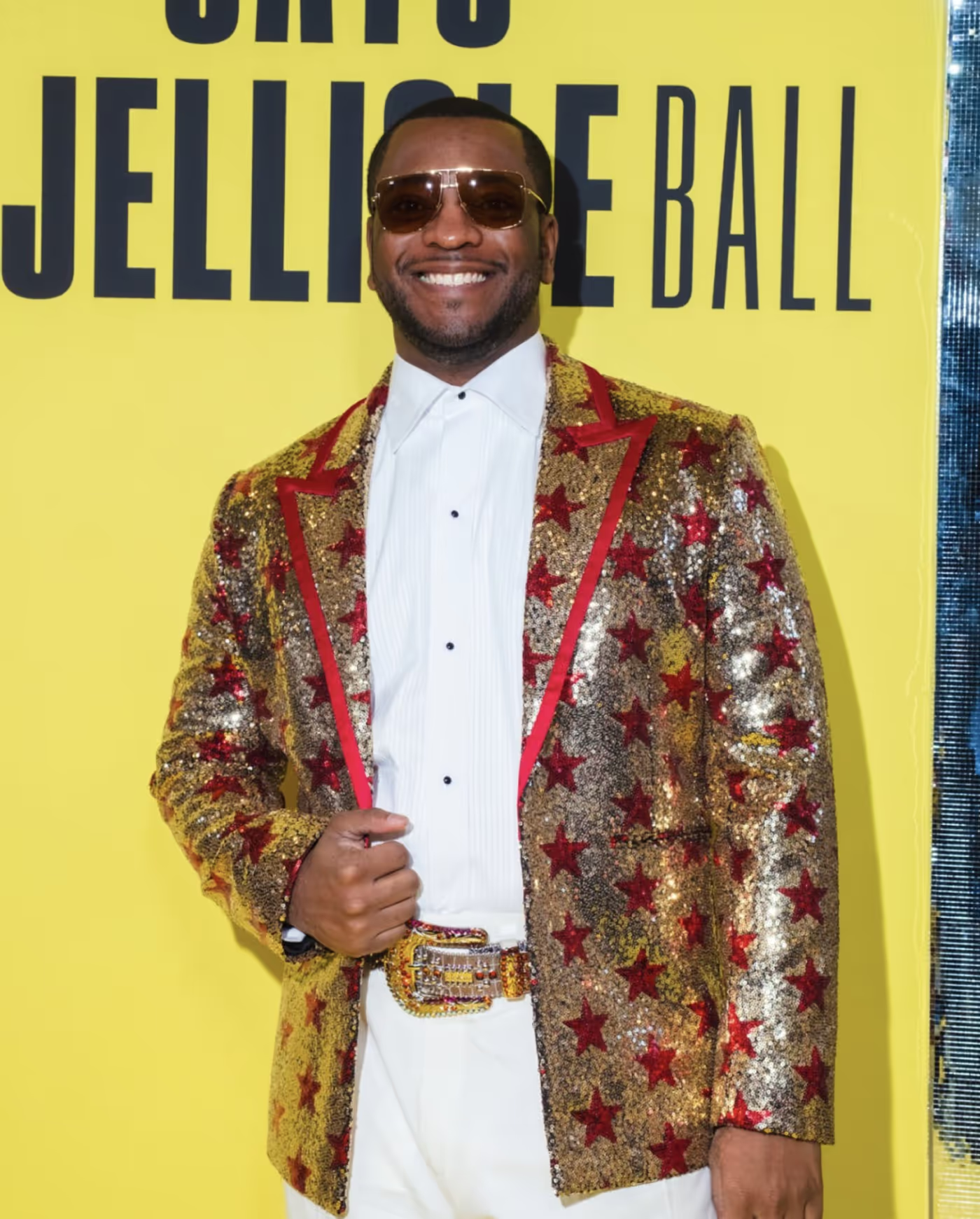
That correction began during the process. What makes this production activism is not only what is visible, but what had to be fought for behind the scenes. “What you see on stage would not be possible without the advocacy in the process,” Levingston shares. That advocacy is reflected in the deliberate choice to partner with Victor Vasquez and X Casting, a company committed to centering trans, queer, and artists of color rather than defaulting to traditional Broadway casting. It is a decision that signals a shift in power, one that values intention over convention and expands access for artists whose brilliance has long existed outside the industry’s standard gatekeeping systems.
It lives in the refusal to accept “we’ve never done this before” as an answer and in the daily negotiations, the quiet insistence, and the reimagining of what is possible and who gets to be part of it. “You need the people in the room who are going to call out the thing.” That means ensuring that those historically excluded are not only present, but empowered to shape the work so that ballroom is not simply aesthetic, but lived, protected, and true. “A lot of times, it was also making sure that there are Black women in the room… making sure that we have trans women in the room… making sure that ballroom isn’t just aesthetic, but deeply embedded into the creative process.”
What stayed with me most was the joy. I felt it during the show, leaving the theater, and it lingers even now. Qween Jean names it simply: “What we do is love. The sacrifices we’ve made are love.” I would argue that love is at the center of movements that serve marginalized communities. That love moves through the production like a current. It reaches the audience. It lingers. “It is a ripple of love that is reaching out into the community,” Qween reflects. And in a moment where so much of the world feels heavy and dark, that kind of joy is light. It is powerful. It is necessary.
If Broadway is a mirror, then this production is asking us to look closer and be honest about what we see. “We can never remain silent while people are punished for just existing,” Qween Jean says. The show does not let the audience off the hook. It reminds us that visibility without protection is not enough, that celebration without equity is incomplete. And still, it offers something more. “We can change this world when we come together and choose love.”
As I stepped back outside, the night had fully settled in. The city was louder now, sharper, but something in me had shifted. Zhailon Levingston speaks to the power of moments like this: “I think that moments are important. I think that people are inspired by moments. I’m a product of being inspired by something that, for someone, was considered a moment. And so what I hope is that however long this moment is, that we can attract enough people… that 13-year-old in Ohio who’s curious about whether or not there’s a place for them in the world. If it lasts long enough to inspire them, then its impact is boundless.”
The sunset that night felt like an invitation. The show felt like a reclamation. Somewhere between the two, I was reminded that joy, real, expansive, palpable joy, is not an escape from reality. It is a way through it.
“We are transforming culture. We are reimagining what this world could look like,” Qween Jean says.
This is what art as activism looks like on Broadway.
It is not just a moment.
It is a shift.