








Hello and good morning. Angela Skujins penning your Thursday dispatch, with some hot news.
ADVERTISEMENT


ADVERTISEMENT
We just heard that after marathon talks EU ambassadors early Thursday morning approved the EU’s 21st package of sanctions against Russia.
The previous hold out? As my colleague Jorge Liboreiro reports, maritime heavyweight Greece previously clung to its veto due to issues regarding a ban on Russian liquefied natural gas (LNG) and its transport. We expect further reporting from Jorge today regarding the play-by-play of how this deal finally got done.
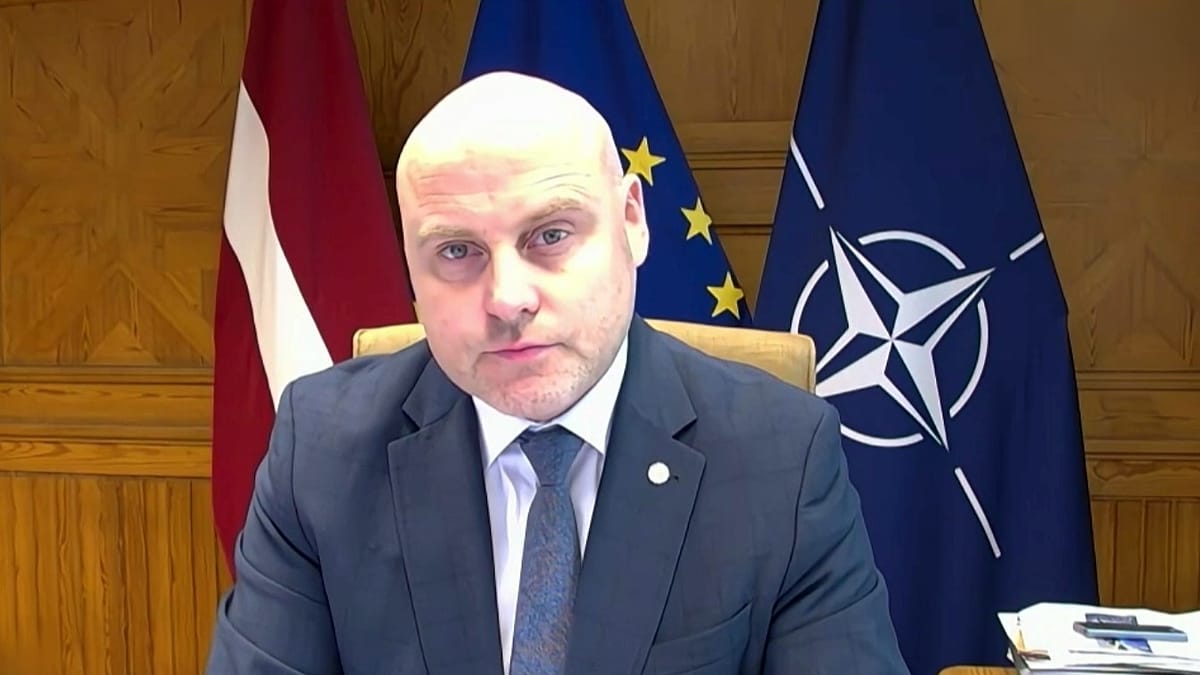
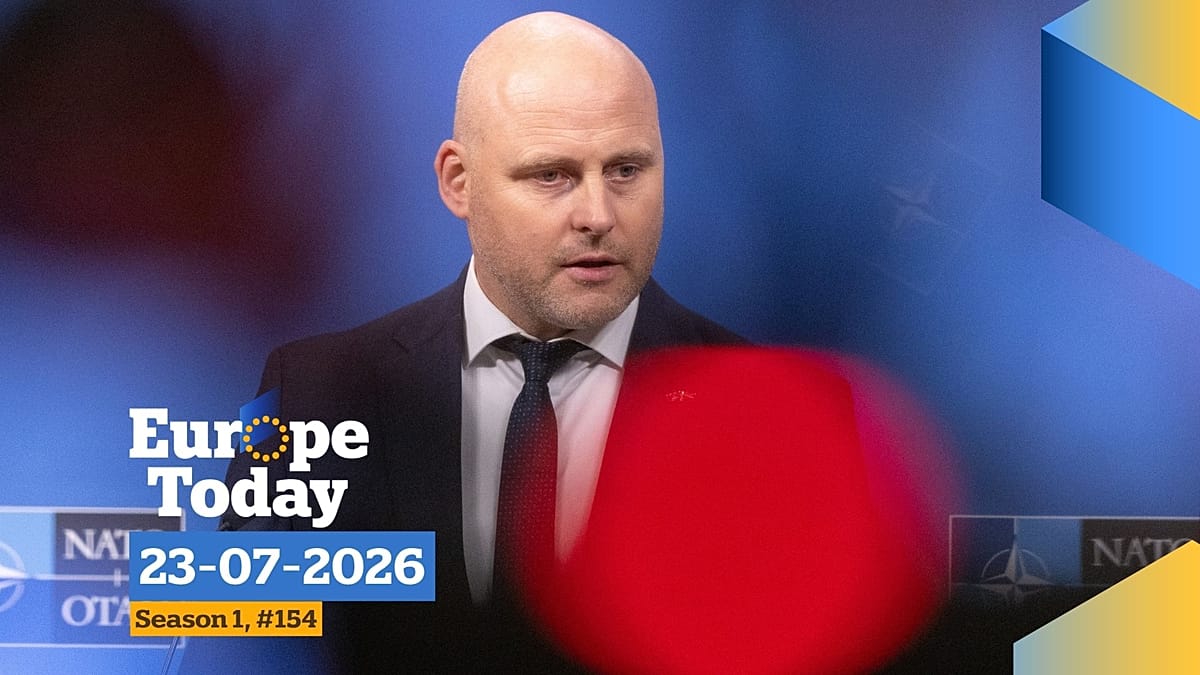
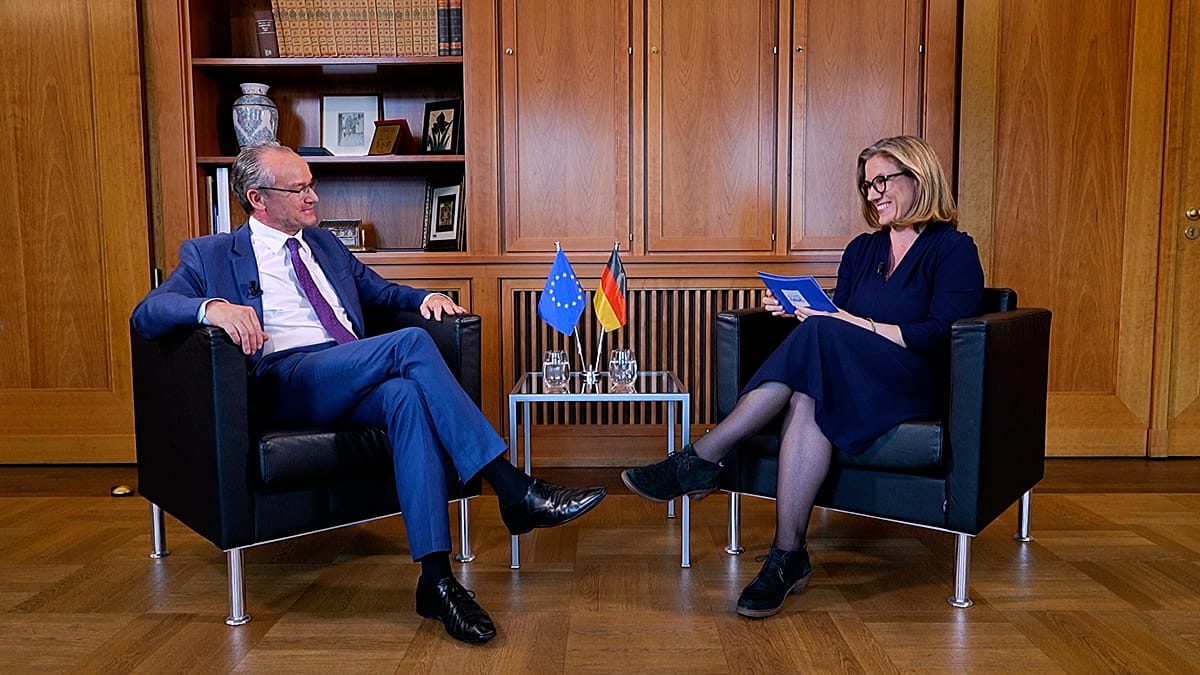
But before we go there, Latvian leader Andris Kulbergs said in exclusive comments on Euronews’ flagship morning news programme Europe Today that European politicians should ask themselves two major questions during the debate. Do they want Ukraine to win, or, “Do they want to earn money?”
“There’s a choice. It’s not both. So the sanctions has to be implemented,” he said. Watch.
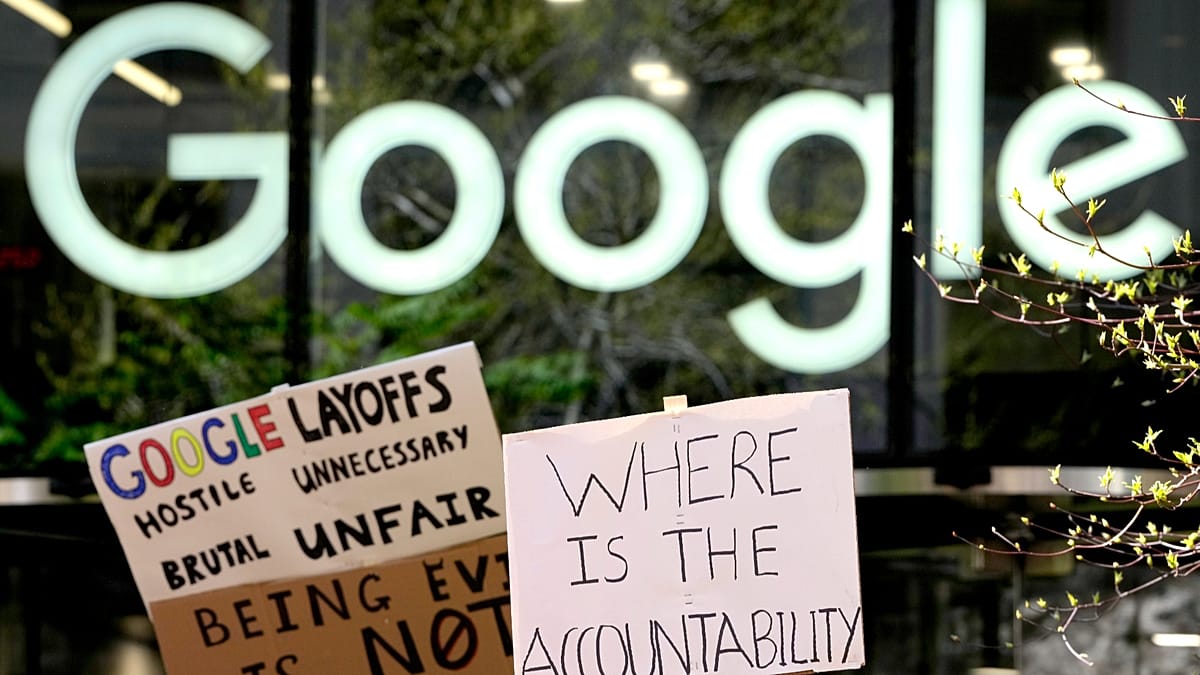
Back to Big Tech. As my colleague Luca Bertuzzi reports, the Commission’s potential fine for Google rumoured to be handed down today follows a two-year investigation into how the company promotes its own services in search results, and how it stops app developers from directing users to deals outside its app store and payment system.
Why today? German financial newspaper Handelsblatt spoke to two anonymous high-ranking EU officials, who pointed to Thursday on the calendar as it follows a meeting chaired by the European Commission President Ursula von der Leyen, where the fine would reportedly be rubber-stamped.
Pay the price. Fines for violating the Digital Markets Act (DMA) can reach up to 10% of a company’s total worldwide annual turnover. With Google’s parent company, Alphabet, reporting a record annual revenue of $402.8 billion (€353.08 billion) in 2025, the maximum penalty imposed by the European Commission could theoretically run into the tens of billions of dollars.
But Google isn’t the only party to potentially suffer. If the DMA fine for the American-based company comes to fruition, the EU risks attracting the ire of US President Donald Trump.
American retaliation? Washington has previously accused Brussels of unfairly targeting American companies through its digital policies. For example, in January, the Republican leader threatened to impose 100% tariffs on any European country that imposed a tax on digital services on US companies.
Right now, Brussels is walking a tightrope of tense transatlantic relations. Outside of the battle over big tech, the US government is preparing fresh import duties on the bloc as the current ones are due to expire this week.
The EU executive is expected to bow to these fresh import levies after the current regime lapses, according to Peggy Corlin, but many are concerned there could be additional retaliation following the DMA dispute.
“Toxic” Putin. Ukrainian President Volodymyr Zelenskyy stated in his nightly address that his country’s frontline gains and mid-range strikes are creating a “toxic” atmosphere around Russian President Vladimir Putin. But does this stench waft from Moscow to Manila?
Russian state-run news agency TASS confirms that Russia’s Foreign Minister Sergey Lavrov is meeting with his American counterpart Marco Rubio on the sidelines of the ASEAN (Association of Southeast Asian Nations) Foreign Ministers meeting in the Philippine capital. The meeting is scheduled to take place during the morning of 23 July.
In Manila, Rubio said the US remains open to playing a role in ending the conflict, “if that opportunity presents itself”. He did admit, however, the efforts have “fallen off a little bit over the last few months”.
Washington’s attention has increasingly shifted to the Middle East following the conflict with Iran, particularly with news coming in overnight that the US announced a landmark nuclear deal with Saudi Arabia.
The framework allows the country in the future to produce enriched uranium, a key ingredient for nuclear fuel as well as nuclear bombs.
Fighting for peace. Kallas used her time speaking at the ASEAN forum in Manila to reiterate to partners, as well as observers, to “join the calls” that Russia should stop its full-scale invasion of Ukraine. Her team confirmed to Euronews yesterday that she had no scheduled meeting with Lavrov herself.
Some extra news: a major blow to proponents of migration crackdown**.** The European Commission on Thursday refused to register a controversial European Citizens’ Initiative spearheaded by far-right activists due to “discrimination grounded on race and ethnic origin”.
The document calls on the Commission to temporarily stop all “non-Western immigration channels” including study and family reunification visas. On top of this, irregular and regular migrants who have not integrated into European society should swiftly be returned to their country of origin, the document states.
EU set to bow to fresh US tariffs after current regime lapses
The European Union is preparing to accept new tariffs the United States is expected to impose in the coming days over forced labour, as long as they do not exceed the 15 percent cap agreed under the Turnberry agreement, the European Commission said.
As Peggy Corlin reports, the White House said in early June that it would impose fresh duties on its global trading partners, arguing that insufficient efforts to curb trade in goods produced using forced labour were harming US commercial interests.
The current US tariff regime expires on Friday, and US Trade Representative Jamieson Greer said on Tuesday that implementation of the forced labour duties was imminent.
European officials are closely monitoring the level of the new tariffs, as an EU-US trade agreement signed in July 2025 in Turnberry, Scotland, by US President Donald Trump and Commission President Ursula von der Leyen caps US duties on EU goods at 15 percent.
Read more of Peggy’s analysis to understand what’s at stake.
More from our newsrooms
Could Gianni Infantino really become UN Secretary General if Trump puts him forward?
US President Donald Trump can recommend the boss of FIFA, Gianni Infantino, to lead the United Nations, but not impose him over the other candidates — and the other permanent members of the Security Council would need to endorse him. Vincenzo Genovese explains.
Hungary’s prosecutor resigns under pressure in political win for Magyar
Hungary’s Prosecutor General, Gábor Bálint Nagy, has resigned amid mounting political pressure as Prime Minister Péter Magyar seeks to replace Orbán-era officials. The move follows allegations of political bias by lawyers for detained Ukrainian cash couriers in a cross-border cash seizure case. Sandor Zsiros and Rita Konya have the latest.
Energy and fertiliser crisis due to war will continue to drive up food inflation, UN says
Rising energy and fertiliser prices are likely to continue contributing to food inflation globally, the UN warned in its latest report. This in turn can drive up the cost of a healthy diet and threaten progress against global hunger. Read more about this story by Indrabati Lahiri.
We’re also keeping an eye on
- EU foreign policy chief Kaja Kallas continues her trip to Manila for the ASEAN summit, and will meet with Gilbert Teodoro, Secretary of National Defence of Philippines, as well as other leaders.
- The European Central Bank (ECB) holds its Governing Council meeting in Frankfurt, with President Christine Lagarde delivering a press conference at 2:45 pm.
- European Commissioner for Defence Andrius Kubilius to deliver a speech at the EU Defence Night in Washington, US.
That’s it for today. Luca Bertuzzi, Vincenzo Genovese and Jorge Liboreiro contributed to this newsletter.
Read the full article here