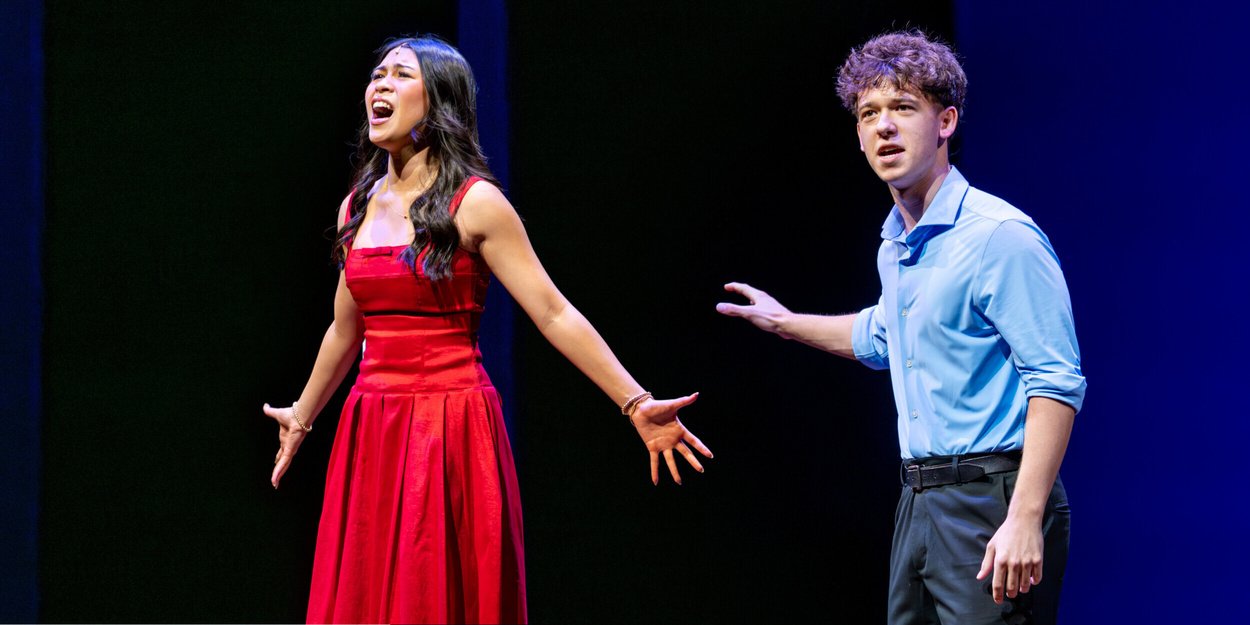












For “Tempress” Chasity Moore, stepping into CATS: The Jellicle Ball is not simply a performance. It is a culmination of lived experience, cultural legacy, and a long-awaited moment of visibility for a community that has too often been celebrated from a distance, rather than from within.
Before this production entered her life, Moore’s connection to CATS was minimal, shaped more by cultural osmosis than personal attachment. “My only relationship with CATS was when I was younger. I remember seeing the commercials all over. It was a phenomenon back then,” she recalls. “I only really knew Betty Buckley from ‘Memory.’ That was such a popular song. So that’s all I really knew.”
That initial uncertainty extended to the project itself. “When they brought it and the ballroom reimagining to me, I was like, ‘What is this going to be,’” she says with a smile.
Yet clarity came quickly. “After going to the workshop, talking it through, and realizing that CATS was basically about tribes and ballroom is really tribes itself—like the houses, the chosen family—it really started making sense,” she remembers.
Those connections allow her take on the piece to be more profound than just an artistic choice. “Because I have lived experience, it’s not just acting. There’s a part of it that’s myself,” Moore explains. And that lived experience is at the heart of her Grizabella, a character she reframes not as broken, but as enduring.
Photo by Xavier Duah.
In Moore’s hands, Grizabella becomes a vessel for the women who came before her, particularly those within ballroom culture whose stories were never fully seen. “For me, it’s me being able to speak to the women that I looked up to in ballroom,” she says. “I’m able to represent them in a way that they weren’t able to represent themselves. I’m able to carry them on my back and to be a voice for those women who were silenced.”
That sense of responsibility transforms Grizabella’s narrative entirely. Rather than a figure defined by regret, “my Grizabella is resilient,” she states plainly. She continues, grounding that resilience in both personal and cultural reality. “She has fallen by the wayside, but she’s resilient. She has been able to live in society. She has able to live in ballroom. And even because these things are coming against her, she knows that she has still survived.”
That survival is not abstract. It is rooted in lived truth. “The age limit for trans women is supposed to be 35 years old,” Moore says somberly. “And Grizabella’s way over that. And, I am way over that. So it’s resilient. It’s powerful.”
In this production, Grizabella’s presence is not passive. It is declarative. Moore describes her “walk,” both literally and metaphorically, as a message to anyone who has ever been made to feel like they do not belong. “She’s basically saying, if it wasn’t for me, there would be no you,” Moore explains.
Yet, Moore’s performance speaks to something broader. “Grizabella’s speaking to everyone who’s ever felt different, who’s ever felt othered,” she reveals. “You have to live in who you fully are.”
That philosophy extends into one of the musical’s most iconic moments. For Moore, “Memory” is not simply a song, it is an archive. “I always say there’s a lot of pain and comfort in memory,” she reflects.
Grizabella, as Moore sees her, is a living repository of ballroom history. “She carries the history of ballroom,” Moore explains. “She knows things that some of these kittens that are out there now don’t know because some of them don’t research their history.”
Grizabella holds in her the highs and lows of ballroom, from being one who was used to constantly winning to becoming a leader who has faded into the background and been forgotten. “She carries the moments where she was praised for the superficial things like her looks. And now people are looking at her different because she’s aging,” adds Moore. “She’s remembering those good times, but it also brings pain that now those things are being questioned. Sometimes if you don’t know your history or you’re not given your history, it’s erased.”
That duality of joy and loss and pride and erasure is also present in the way Grizabella moves through the world of the ball. Moore draws direct parallels between the character’s treatment and the real-life experiences of ballroom legends. “In ballroom, you’re as good as your last ball sometimes,” she says.
That reality informs every interaction. “You’re coming back to this place that you thought was your comfort place, and it’s no longer,” she points out, “so it becomes like this anger, it becomes this sadness.”
And yet, even in that emotional complexity, Moore resists the idea of Grizabella as a victim. “I don’t feel like she’s weak. She’s not a victim,” Moore asserts. Instead, she frames her as someone who has endured and continues to endure. “Like she says, ‘Touch me, and you’ll understand what happiness is.’ If you got to know me and you got to hear my stories, then you know that I had a good life. There were some struggles that I came across and some things that happened, but this too shall pass.”
That resilience extends beyond the character and into the production itself. Having originated the role during the show’s downtown run at PAC NYC, Moore has experienced firsthand what it means to bring something so intimate to a Broadway stage. “I can’t even explain the feeling. I’m walking. I’m living the dream,” she says.
For Moore, the Broadway transfer is not just a professional milestone. It is a cultural one. “To be able to celebrate this on such a big platform like Broadway, it was a no-brainer,” she says. “It’s an homage to ballroom for me.”
That celebration is amplified by the presence of ballroom legends within the production itself. “A lot of times, we were being talked about, but we weren’t in those rooms,” Moore notes. Now, that has changed. “To see Junior LaBeija and Leiomy Maldonado get to do that, and to see them get their flowers in this way, I’m flabbergasted by it. I’m just amazed by it. I’m inspired by it,” she says.
As the show continues its Broadway run, Moore is still processing its impact. Not just on audiences, but on herself. “I’m still realizing it,” she admits. “When I was meeting people from 6 years old to 80 years old, and it affected them in different ways, I realized that it was bigger than me and us.”

In a time marked by division and erasure, CATS: The Jellicle Ball offers authentic and tangible visibility, joy, and reclamation. “I realize that I do know that I am walking in my purpose, and we are all working out in our purpose,” Moore adds. “And especially now, because it is queer joy, and with so much rage baiting, with so much that’s going on in the world, with the government and everything, THE JELLICLE BALL is a happy place. The way that it has been aligned, it is a redemption story. Grizabella gets her redemption, and I believe that everybody will get their redemption.”
Now playing at the Broadhurst Theatre, CATS: The Jellicle Ball invites audiences into the world of ballroom. Not as spectators looking in, but as witnesses to a legacy that has always deserved the spotlight.