









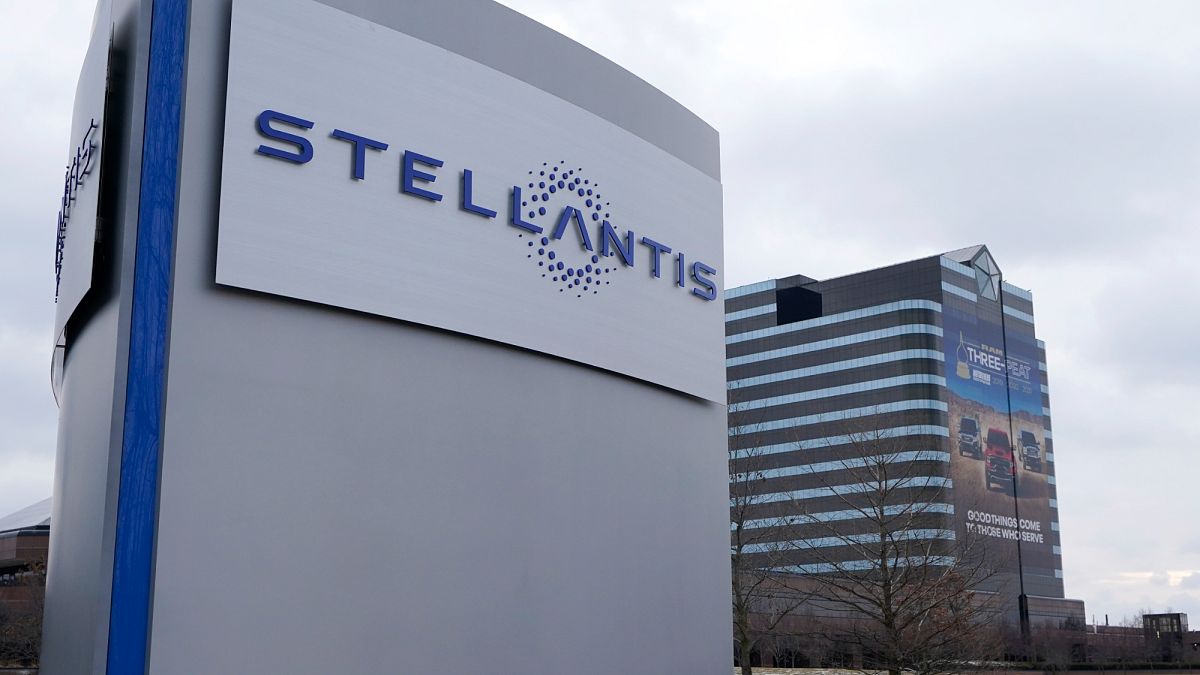
Another mass recall, once again linked to software and safety. Stellantis is recalling around 955,000 vehicles from the Chrysler, Dodge, Jeep and Ram brands because a problem with the infotainment system software may prevent the rear-view camera images from being displayed correctly when reversing.
ADVERTISEMENT


ADVERTISEMENT
The recall covers around 848,000 vehicles in the United States, 83,000 in Canada, 8,000 in Mexico and roughly another 15,000 in markets outside North America. It affects various 2026 and 2027 model-year vehicles, including the Chrysler Pacifica, Pacifica Plug-in Hybrid and Voyager, Dodge Charger, Jeep Cherokee, Compass, Gladiator, Grand Cherokee, Grand Wagoneer and Wrangler, as well as Ram models. Stellantis plans to resolve the issue through an over-the-air software update. The group says it is not aware of any crashes or injuries linked to the defect.
The direct cost of this campaign should be relatively limited precisely because the solution is digital and can be delivered remotely. But the real issue for Stellantis may be another one: the group’s credibility on quality.
This is not the first recall over the rear-view camera
The latest case has a particularly sensitive aspect. In June 2024 Stellantis had already recalled around 1.16 million vehicles in North America over a very similar problem: at that time the radio system software could also prevent the rear-view camera image from appearing.
That recall involved around 1.03 million vehicles in the United States and another 126,000 in Canada, including the Dodge Durango, Chrysler Pacifica, Jeep Grand Cherokee, Ram and Wagoneer. There too the solution was a software update.
The recurrence of a problem from the same family, just two years later, therefore makes the new recall more significant in reputational terms.
And the issue goes well beyond cameras.
13.4 million vehicles recalled in 2025
Figures in the latest financial report point to a situation that Stellantis itself considers problematic. In 2025 the group decided to recall around 13.4 million vehicles, compared with 7.3 million in 2024.
The increase was driven in particular by two major campaigns covering a total of 5.6 million vehicles: one concerning 1.5-litre DV5R diesel engines and another linked to the software for the onboard diagnostic system. These came on top of campaigns already under way, including those relating to Takata airbags.
The figure is particularly striking because Stellantis, in its Annual Report 2025, spells out the possible reputational impact of recalls: they can damage the group’s reputation and prompt consumers to question the safety and reliability of its products.
So this is not an outside interpretation: Stellantis itself acknowledges that recalls can turn into a problem of customer trust.
The cost of quality is already very high
The issue becomes even more sensitive when you look at the money.
In the second half of 2025 Stellantis booked a charge of around €5.3 billion after revising its estimates for provisions covering contractual warranties. The company explained that the new assessment took into account rising costs and a “deterioration in quality” attributed to previous operational choices that had failed to deliver the expected results.
In other words, the problem is not just how much it costs to repair recalled cars. The problem is how much poor quality over time costs.
According to Warranty Week’s analysis of European carmakers’ accounts, in 2025 Stellantis set aside around €11.65 billion for warranties, 84 percent more than in 2024. Actual payments on warranty claims amounted to around €6.26 billion.
These figures need to be treated with caution: provisions do not equate to an immediate cost and are not all directly linked to recalls. But they give a sense of the pressure that quality problems are exerting on the group’s finances.
How much could the 955,000-car recall cost?
There is still no separate official figure for the latest campaign. And it would be misleading simply to multiply the number of vehicles by an average cost: an over-the-air software update has a completely different cost from replacing a mechanical component in a workshop.
In this case, then, the direct industrial cost should be far lower than for a recall that requires millions of physical interventions.
The bigger economic risk is indirect: repeated campaigns mean more inspection and service work, more customer management and potential lost sales. And Stellantis explicitly admits this in its report, warning that recalls can have negative effects both on reputation and on sales.
Credibility is the real test
The new recall also comes as Stellantis is trying to prove it has changed course.
In February 2026 the group announced a deep “reset” of its operations after booking around €22.2 billion in charges in the second half of 2025. Of that total, €5.4 billion related to other operational changes, including €4.1 billion due to changes in the estimate of warranty provisions.
Management insists, however, that the quality situation has already started to improve. According to Stellantis, since the start of 2025 the number of problems reported on vehicles in their first month of service has fallen by more than 50 percent in North America and by more than 30 percent in wider Europe.
The new recall therefore does not, on its own, prove that the improvement process has failed. But it makes it harder to convince customers and investors that the worst phase is definitively over.
The issue is not a million cameras
Ultimately, the point is not the 955,000 cars involved in the latest campaign, nor, above all, the cost of the software update.
The real problem is the accumulation of warning signs: 7.3 million recalls in 2024, 13.4 million in 2025, more than a million vehicles involved in the previous rear-view camera recall and, in June 2026, more than 1.3 million Jeep Wranglers and Gladiators recalled over a fault in the wiring for the electric power-steering pump that could cause a fire. In that case Stellantis had recorded at least 72 potential fires and one injury.
For a carmaker, quality is not just a line in the accounts. It is one of the key factors on which customers base their decision to buy the same brand again.
That is why today’s recall may be manageable economically but far more costly in reputational terms. The challenge for Stellantis will be to prove that mass recalls belong to the previous phase and that the new course announced by management really can put reliability, quality and trust back at the heart of the group.
Read the full article here