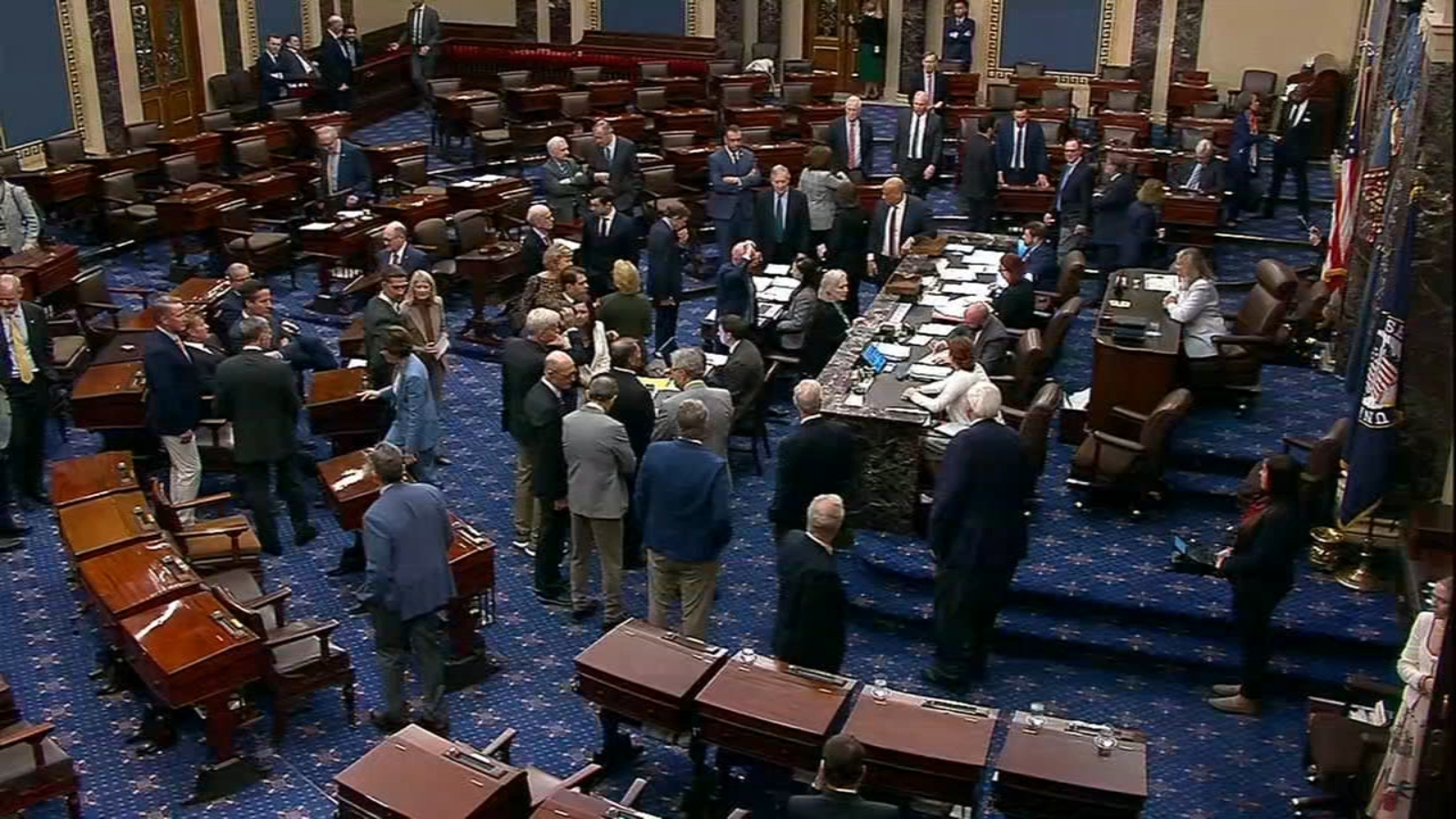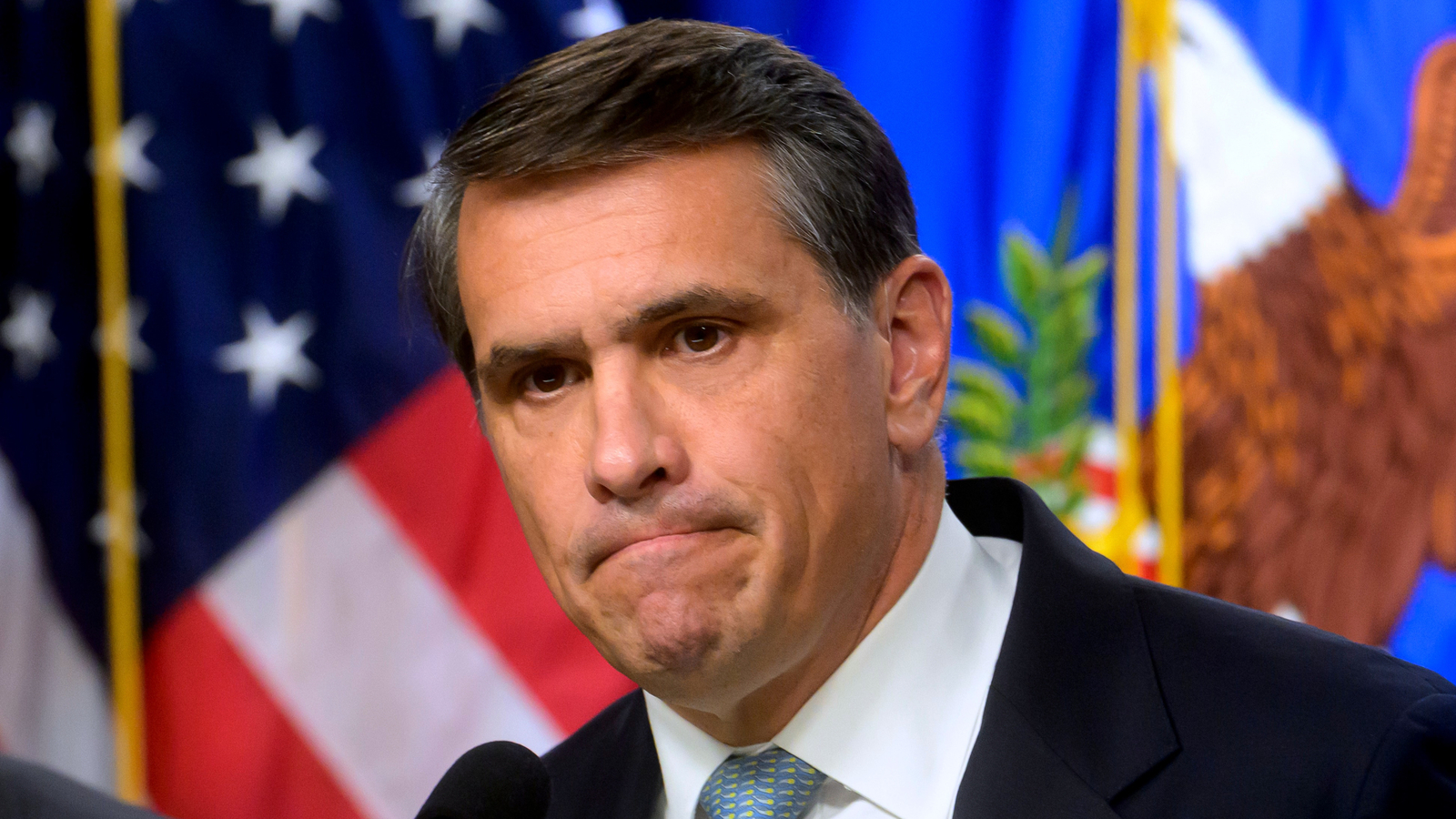









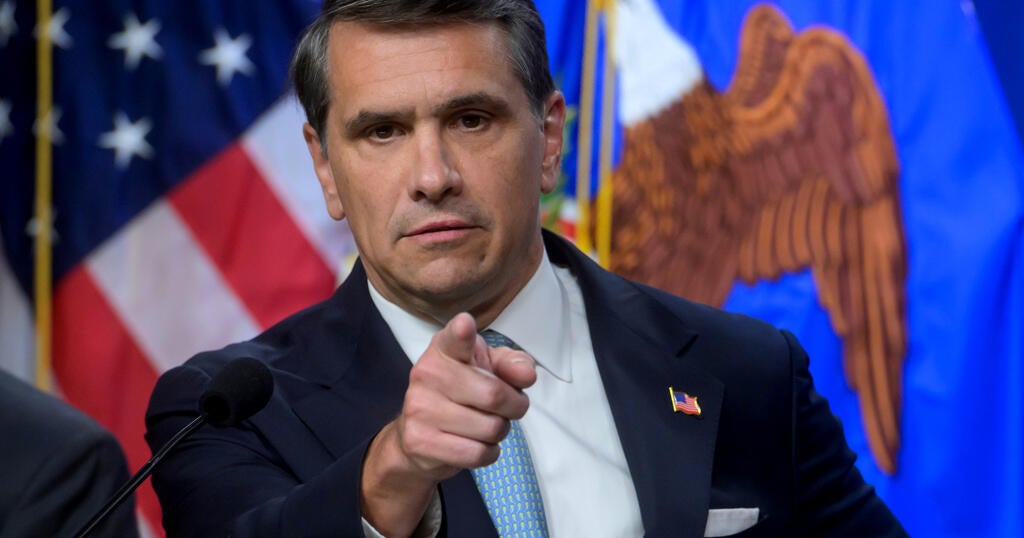
Washington — The Senate early on Saturday confirmed Todd Blanche as attorney general, installing President Trump’s former defense lawyer as the nation’s top law enforcement official.
Blanche narrowly won approval from the upper chamber in a 50-49 vote. Two Republicans — Sens. Susan Collins of Maine and Lisa Murkowski of Alaska — joined with all Democrats in voting against his nomination to helm the Justice Department.
Blanche’s path for confirmation cleared earlier Friday when Sen. Bill Cassidy, a Louisiana Republican, announced he would back his nomination. With Collins’ and Murkowski’s opposition, and GOP Sen. Mitch McConnell of Kentucky absent, Cassidy’s vote was decisive.
In a social media post shortly after the vote, Blanche thanked the Senate for the early-hours vote and said he was “deeply honored by the trust and confidence President Trump has placed in me to lead the Department of Justice.”
Blanche joined the second Trump administration as deputy attorney general and was tapped for acting attorney general following the removal of Pam Bondi from the role in April. Mr. Trump announced in June that he had selected Blanche to permanently lead the Justice Department.
But Blanche faced headwinds during his confirmation, as Democrats and some Republicans took issue with the Justice Department’s creation of a $1.8 billion “anti-weaponization” fund to provide payouts to people who alleged they were wronged by the federal government. The program was part of a settlement agreement the department reached with Mr. Trump in May to resolve a $10 billion civil lawsuit he filed against the Internal Revenue Service over the leak of his tax returns by a former government contractor.
Senators also pushed back on a second provision of the settlement, which provided broad immunity to Mr. Trump, members of his family and his businesses from tax audits and investigations.
During his confirmation hearing before the Senate Judiciary Committee in June, Blanche told senators that the “anti-weaponization” fund is “dead,” and reiterated that the department was “not moving forward” with the program amid fierce pushback from lawmakers on the heels of its creation.
But he still faced skepticism from two key Republicans on the panel, Sens. John Cornyn of Texas and Thom Tillis of North Carolina.
Following weeks of negotiations with the Justice Department, though, the two senators reached an agreement with the Justice Department that clinched their support for Blanche’s nomination. As part of the deal, Blanche issued an order late Sunday rescinding his initial May directive that established the “anti-weaponization” fund. He also clarified that the immunity deal applies to claims arising from already-filed tax returns and covers only the president, his two oldest sons and the Trump Organization.
With the backing of Cornyn and Tillis, Blanche advanced out of the Senate Judiciary Committee in a party-line vote Tuesday. He needed a simple majority of votes from the full Senate to be confirmed attorney general. But with the absence of Sen. Mitch McConnell, a Kentucky Republican, Blanche could only afford to lose support from two Republicans and still win approval from the upper chamber.
Days before the vote on the Senate floor, Collins announced she would oppose Blanche’s nomination because of “several actions that have further eroded the Department’s independence,” including the tax immunity deal and the “anti-weaponization” fund. Murkowski then said Friday she would vote against Blanche.
But he secured support from two other key Republicans, Cassidy and Sen. John Curtis of Utah.
Before joining the second Trump administration, Blanche represented Mr. Trump in his criminal case in New York state court that stemmed from a $130,000 “hush money” payment his lawyer made to an adult film star before the 2016 election. The president was convicted of 34 counts of falsification of business records.
Blanche was also on the legal team defending Mr. Trump in two federal cases brought by former special counsel Jack Smith: one relating to his alleged efforts to subvert the transfer of presidential power after the 2020 election and a second arising out of his handling of sensitive government documents after his first term. Both cases ended when Mr. Trump was elected for a second term.
In his role as deputy attorney general, Blanche oversaw the Justice Department’s release of more than 2 million files from its investigation into convicted sex offender Jeffrey Epstein and met with Ghislaine Maxwell, Epstein’s longtime associate who was convicted of sex-trafficking crimes, last year. After their meeting, Maxwell was transferred from a low-security correctional facility in Florida to a minimum-security prison camp in Texas.
The Justice Department came under fire for its handling of the Epstein files when records were released that included unredacted names and personal information of survivors of Epstein’s sex-trafficking operation.
Blanche acknowledged during his confirmation hearing that “mistakes were made” with some of the documents made public. He also met with survivors of Epstein’s crimes at the Justice Department last month after Tillis said he would withhold support until Blanche did so.
But some of the survivors criticized Blanche for his behavior during the meeting, with one describing it as a “check-the-box exercise” designed to secure votes for his confirmation. They urged senators to reject his nomination.