








For nearly three decades, Ragtime has challenged audiences to confront America’s unfinished conversations around race, immigration, power, and belonging. Today, as the acclaimed Broadway revival continues its celebrated run at the Vivian Beaumont Theater and heads into Tony Awards season as one of the year’s most honored productions, those themes feel more resonant than ever.
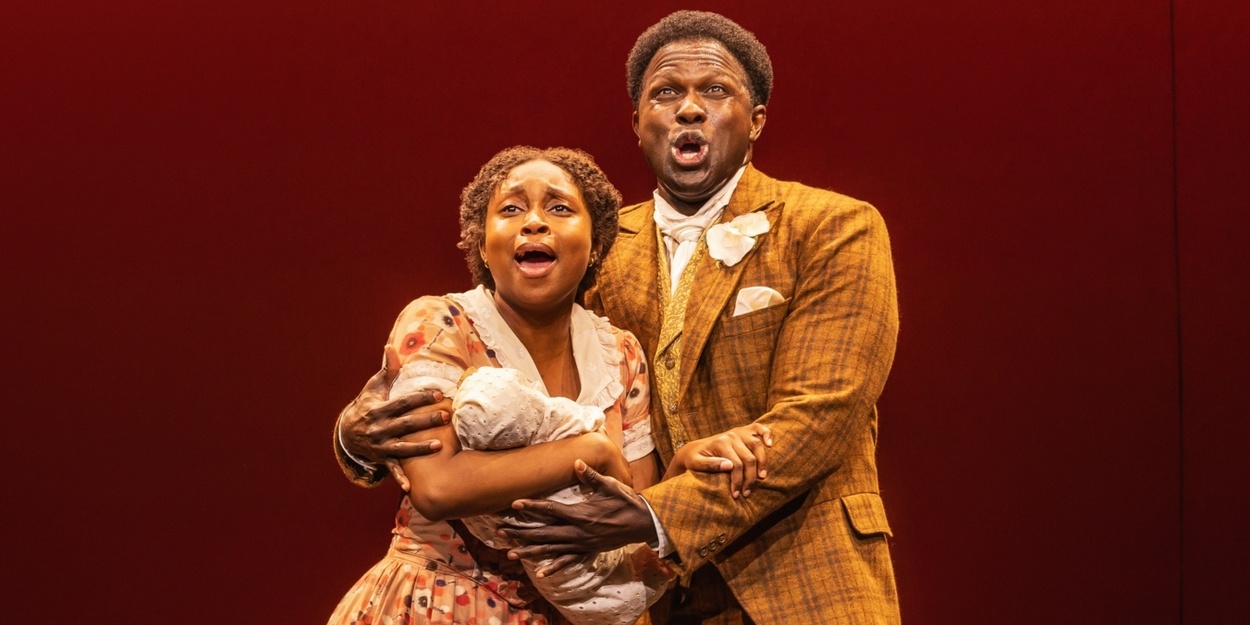
Few people understand that better than Nichelle Lewis. Lewis, who earned her first Tony Award nomination for Best Performance by an Actress in a Featured Role in a Musical for her portrayal of Sarah, has become one of the emotional anchors of the production. Her performance brings extraordinary humanity, dignity, and vulnerability to a character whose journey continues to devastate audiences night after night.
“I think America is still healing,” Lewis says. “I think it still has a lot of growing to do. And I think a lot of people are looking to connect right now.” She continues, “I think they need a show like this right now to express those truths that don’t get talked about enough. And to remind people that this wasn’t that long ago and it’s still happening now. There’s so many instances that we have that we can support each other, lift each other up, and be there for each other. And I think that is what’s so beautiful and important and impactful about Ragtime.”
For Lewis, the show’s urgency is tied directly to the current cultural moment. “I think because of these moments right now in history, it seems like we’re almost going backwards when we were taking steps forward,” she explains. “Now it seems like we’re going all the way back. That’s why this show is so urgent right now.”
That willingness to confront difficult truths is woven throughout the production. The musical does not shy away from the racism, hatred, and violence that shaped the era it depicts, including language that remains deeply painful to hear. “It’s hurtful,” Lewis points out about hearing the harsh language in the production. “It is really hurtful to hear it offstage. I definitely wince a lot any time I hear those words.”
Yet, she believes those moments serve an important purpose. “I think it is meant to hold up a mirror and be like, ‘These are the things that are happening, these are the things that have happened in the past, and the things that have been said in the past.’ They’re not good words. They are uncomfortable. They do hurt.”
While Sarah’s story is often remembered for its tragedy, Lewis sees something much deeper at the heart of the character. “Sarah is somebody that holds hope with her pain,” she points out. “I feel like with hope there’s always pain somewhere in it. There’s always going to be hurt and challenges, but those are what inspire the hope and the braveness and the strength that Sarah has.”
That balance between heartbreak and hope is central to Lewis’ interpretation. “I think she holds onto it [hope] as much as she can, and that’s where she gets that strength from.”
Although Sarah spends comparatively little time onstage, Lewis’ performance leaves an outsized emotional impact. She attributes that power to extensive research and a commitment to grounding the character in truth. “I derive a lot of what I feel from truth and from real life things,” she reveals. “That includes experiences that my grandmother has talked about, experiences that I know my ancestors have dealt with, and from doing extensive research on the time period and what it was like.”
Lewis views Sarah as embodying the cyclical nature of American progress itself. “She almost signifies it in a way because her story is one of deep despair in the beginning, then it’s hopeful, and then it’s back down,” Lewis says. “She is the motion, the thing that stops the show, and also the thing that reminds you of everything in the past.” She adds, “She encapsulates so much, and I think that is what makes her so amazing and memorable.”
Having first performed in the celebrated 2024 New York City Center concert presentation before bringing the role to Broadway, Lewis says her relationship to the material has only deepened. “My realization of the importance and urgency of this show has grown in such a way,” she states. “I just want to impact people and encourage people to have hope, but continue to think about how we can make a difference, how we can change perspectives, and how we can hold on to one another.”
When audiences leave the theater, Lewis hopes the conversations continue long after the final curtain. “I hope that they are sitting with questions,” she said. “I hope that they’re continuing to ask questions and think about how they can make a difference, think about how they can change others’ perspectives around them.”
Most importantly, she hopes audiences remember that the stories depicted in Ragtime are not ancient history. “Just remembering these stories, not forgetting these stories,” says says. “They’re not that far away. It wasn’t so long ago.”
As awards season continues, Lewis remains focused less on accolades and more on the impact of the work itself. Still, her first Tony nomination carries profound personal meaning. “My grandmother passed not too long ago. She actually passed on opening night,” Lewis reveals.
When her nomination was announced, she immediately thought of the people who helped guide her journey. “I remembered immediately all the people who believed in me and the fact that, in my mind, all these people are sitting in heaven still rooting for me, and they died believing in me,” she states. “It was like the most beautiful moment ever.”
Despite the recognition, Lewis remains remarkably grounded. “I don’t really care that much about awards,” she says. “What I’m doing it for is just the hope that it changes a little girl’s life.” She adds, “It [the Tony nomination] doesn’t change me. It doesn’t change how I walk into the room. It doesn’t change anything. It just reminds me just to keep going.”
That generosity of spirit extends beyond Ragtime as well. Lewis is quick to celebrate fellow Tony nominee CATS: THE JELLICLE BALL, one of the productions competing against Ragtime in the Best Revival category. “I definitely am so happy that they brought ballroom culture into the theater and, and made it this beautiful thing using CATS,” she gushes. “It’s so incredible to me.”
Whether Ragtime and Lewis ultimately take home some of Broadway’s highest honors or not, Lewis hopes audiences recognize the extraordinary emotional commitment behind the production. “We give every single part of ourselves every night,” she emphasizes. “We have to put on this show every night and give you the most guttural, raw performance every night. And it’s hard. It is very, very hard.”
Still, what remains with her most is the sense of community that exists within the company itself. “We all love each other so, so much,” Lewis says. “We just uplift one another because it’s hard.” And perhaps that spirit of connection is precisely why Ragtime continues to resonate so deeply.
“I just hope that the audience walks away, you know, feeling the same thing that we feel every night,” she concludes.
Ragtime runs through August 2, 2026 at the Vivian Beaumont Theater (150 West 65th Street, New York). Tickets and additional information are available at www.LCT.com/Shows/Ragtime.
2026 Theater Fans’ Choice Awards – Live Stats
Best Choreography – Top 3
1.
Christopher Gattelli – Schmigadoon!
20% of votes
2.
Lauren Yalango-Grant, Christopher Cree Grant – The Lost Boys
17.6% of votes
3.
Omari Wiles, Arturo Lyons – CATS: The Jellicle Ball
17.1% of votes