







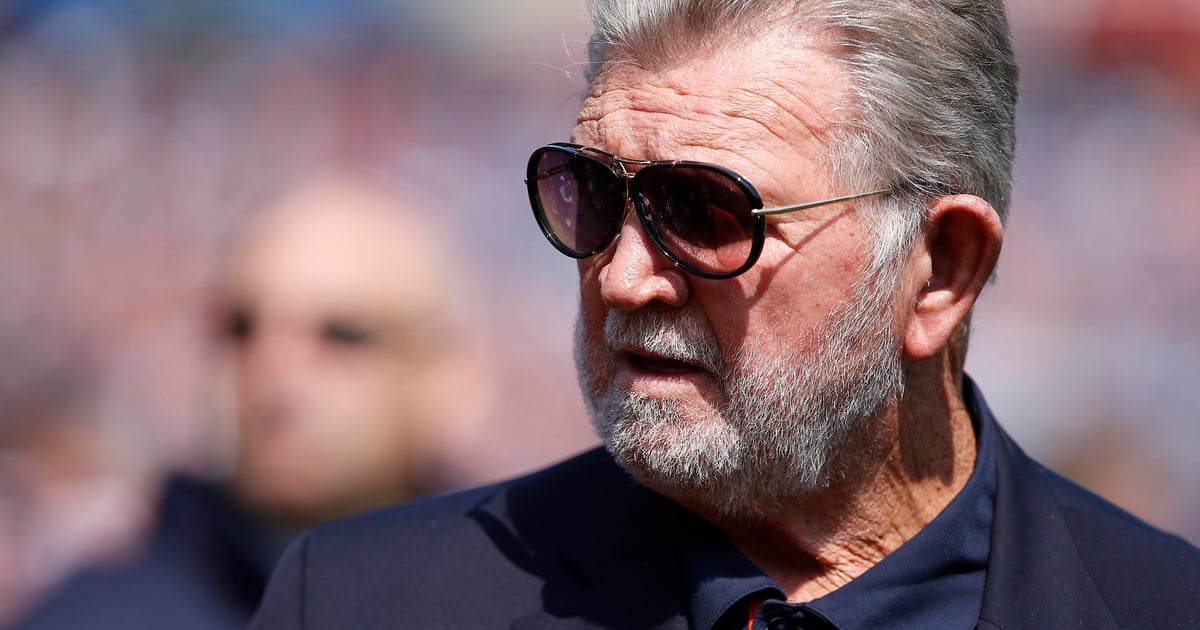
Mike Ditka, a football legend who went from a star tight end for the Chicago Bears to its most famous coach to this day, has died at the age of 86.
His family confirmed his death in a statement, writing, “It is with profound sadness that we announce the passing of our beloved husband, father, grandfather, and friend, Mike Ditka. While the world knew Mike as a Hall of Fame football player, legendary coach, and leader of the Chicago Bears’ Super Bowl XX championship team, we knew him as the heart of our family Mike will be missed beyond measure and remembered forever.”
Ditka was born Oct. 18, 1939. Before he became Da Coach, the legend of “Iron” Mike Ditka was forged in the blue-collar town of Aliquippa, Pennsylvania, northwest of Pittsburgh.
Ditka never forgot his working-class roots, but he did use football as his ticket out of working in the steel mills. He earned a scholarship to the University of Pittsburgh, where he became an All-American tight end in 1960.
“If you wanted to be good at something, you had to work at it,” Ditka told CBS Chicago in 1985, “and nobody was going to give you nothing for nothing.”
The Bears drafted him fifth overall in 1961. He was named the NFL’s rookie of the year and went on to revolutionize the tight end position as a pass-catcher.
“I didn’t particularly like those people I was playing against, I really didn’t,” Ditka said. “I wasn’t a guy who went up and shook hands before the game or after the game.”
The pinnacle of Ditka’s six-year run with the Bears came in 1963, when #89 helped lead the team to an NFL championship.
However, after a contract dispute with owner George “Papa Bear” Halas, the five-time Pro Bowler was traded to the Philadelphia Eagles prior to the 1967 season.
Ditka would cap off his playing days by catching a touchdown in Super Bowl VI for the Dallas Cowboys. Upon retirement, he immediately joined Tom Landry’s coaching staff in Dallas.
In 1982, Ditka’s career came full circle when Halas brought him back to the Bears as the 10th head coach in franchise history.
As coach, both fans and the media couldn’t get enough of Ditka’s gruff and tough coaching persona. Ditka’s fiery sideline demeanor quickly turned into on-field success.
“I don’t want to be competitive. I know what that is,” Ditka said in 1985. “I want to be the winner.”
The 1985 Bears reached and won Super Bowl XX. On Jan. 26, 1986, in New Orleans, Ditka’s Bears dominated the New England Patriots 46-10, making Ditka one of only two men to win an NFL title as a player, assistant coach, and head coach.
Focus On Sport / Getty Images 

In 1988, Ditka became the first tight end ever inducted into the Pro Football Hall of Fame.
However, later that year, he suffered a heart attack. He would recover, and in 1990, he led the Bears to a sixth division crown.
But following a 5-11 finish in the 1992 season, Ditka was fired.
Ditka later returned to the NFL for a three-season stint as head coach of the New Orleans Saints, from 1997 through 1999. Afterward, Ditka retired from coaching.
But the iconic status of Da Coach continued to grow, especially in Chicago. He became a successful restaurateur and appeared in commercials for a range of products, hawking everything from wine to wieners.
In late 2013, Chicago’s favorite Grabowski received the ultimate tribute — as his iconic jersey #89 was retired during a halftime ceremony at Soldier Field.
Ditka also had a longstanding relationship with CBS Chicago. Throughout his run as Bears head coach, Ditka also made weekly appearances during football season with Channel 2 sports director Johnny Morris on “The Mike Ditka Show.”
CBS 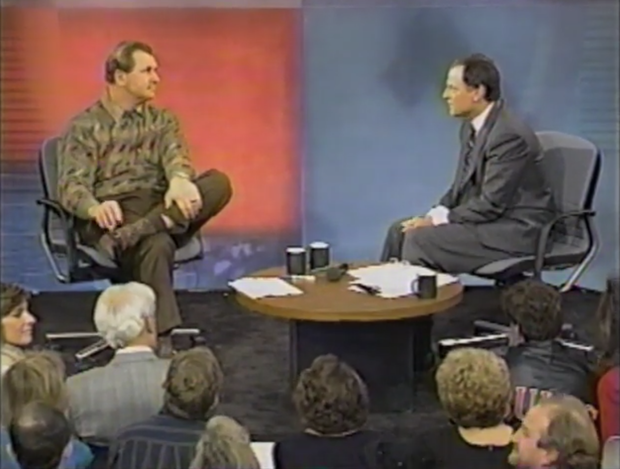

“The Mike Ditka Show” ended after Ditka was fired from the Bears in January 1993. But in the mid-2000s, Ditka was appearing on CBS Chicago again as an analyst for the program “2 on Football” with sports director Mark Malone. He also appeared as a color analyst for local broadcasts of preseason Bears games.
Ditka was also a commercial spokesperson for many products and an avid golfer. He was also closely tied to Misericordia, the Chicago facility that serves young people with developmental and physical disabilities.