










Microsoft researchers said in a study that a new artificial intelligence (AI) tool that can diagnose patients step by step, like how a doctor would do, was more than twice as accurate as general physicians at solving complex medical cases.
The study, which was published on Thursday in Science, said that the AI model takes a different approach to diagnosing medical issues than most other models that seek to address those issues.
Microsoft said the AI model identifies and coordinates the questions that should be asked of a patient, as well as the exams and tests that should be ordered, using an “orchestrator” that organizes how AI will tackle a problem by employing a simulated panel of clinical experts collaborating to solve diagnostic cases, the report said.
By contrast, existing AI models typically take an all-at-once approach that examines all of a patient’s symptoms, lab results, and imaging studies to generate a diagnosis.
MICROSOFT PRESIDENT SAYS AI FACES FEWER SAFETY RULES THAN MILK IN CALL FOR GLOBAL REGULATION
While the orchestrator coordinates the steps to reach a diagnosis, the AI model first decides what questions to ask about the patient’s medical history and identifies significant findings in the physical exam.
Based on what it learns from that process, it decides which tests to order, considers the results and orders further testing as appropriate. While those tasks are occurring, the AI model is updating its working hypotheses and plans.
MICROSOFT UNVEILS CODE OF CONDUCT FOR AI MODELS AS SAFETY CONCERNS MOUNT

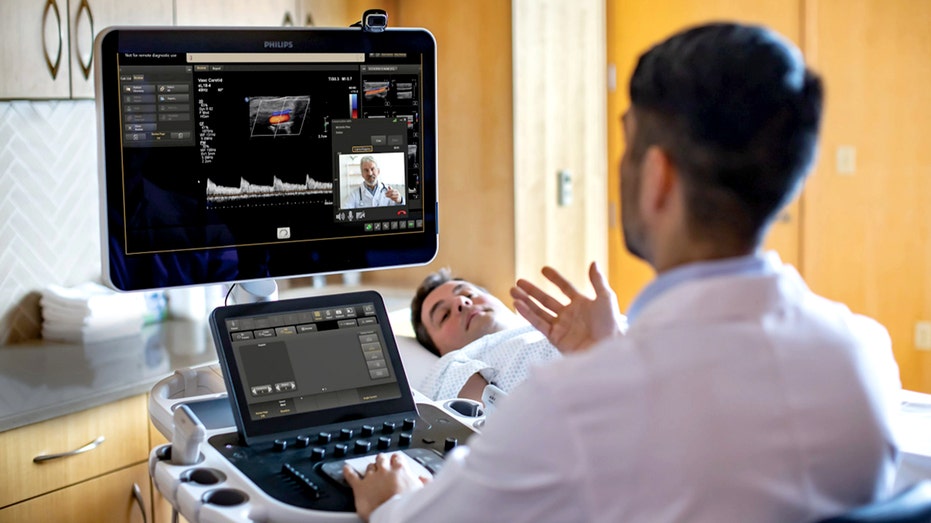
The tool also outperformed human physicians when it was presented with scenarios drawn from a major database of emergency room admissions. Researchers said that assessments comparing these types of older systems to human doctors usually use multiple choice questions.
“AI has become very good at getting a 100% pass rate on those,” said Dr. Dominic King, the corporate VP of the health unit at Microsoft AI, which is developing the new technology. “But of course, that’s not real-world. No patient ever came to see me with a nice summary.”
The researchers tasked the model with diagnosing over 300 highly unusual and confusing medical dilemmas and found that the model using the diagnostic orchestrator was over twice as accurate at “working up” the patient and determining the diagnosis as general physicians using textbooks and the internet.
ANTHROPIC SILENT ON WHETHER IT WILL DISTRIBUTE SHARES TO AMERICANS FOLLOWING MUSK SPACEX PLEDGE
| Ticker | Security | Last | Change | Change % |
|---|---|---|---|---|
| MSFT | NO DATA AVAILABLE | – | – | – |
Researchers also found that diagnostic processes cost less when the orchestrator designs the work-ups than when human doctors do.
“We’re not just measuring the accuracy of the systems. We’re also measuring how judiciously and carefully it goes through a diagnostic work-up,” said Harsha Nori, head of AI at Microsoft AI Health.
The Microsoft research team’s next test will occur through a collaboration with Beth Israel Deaconess Medical Center in Boston, where they will evaluate the tool’s ability to triage patients in emergency department waiting rooms.
CLICK HERE TO DOWNLOAD THE FOX NEWS APP
Reuters contributed to this report.