






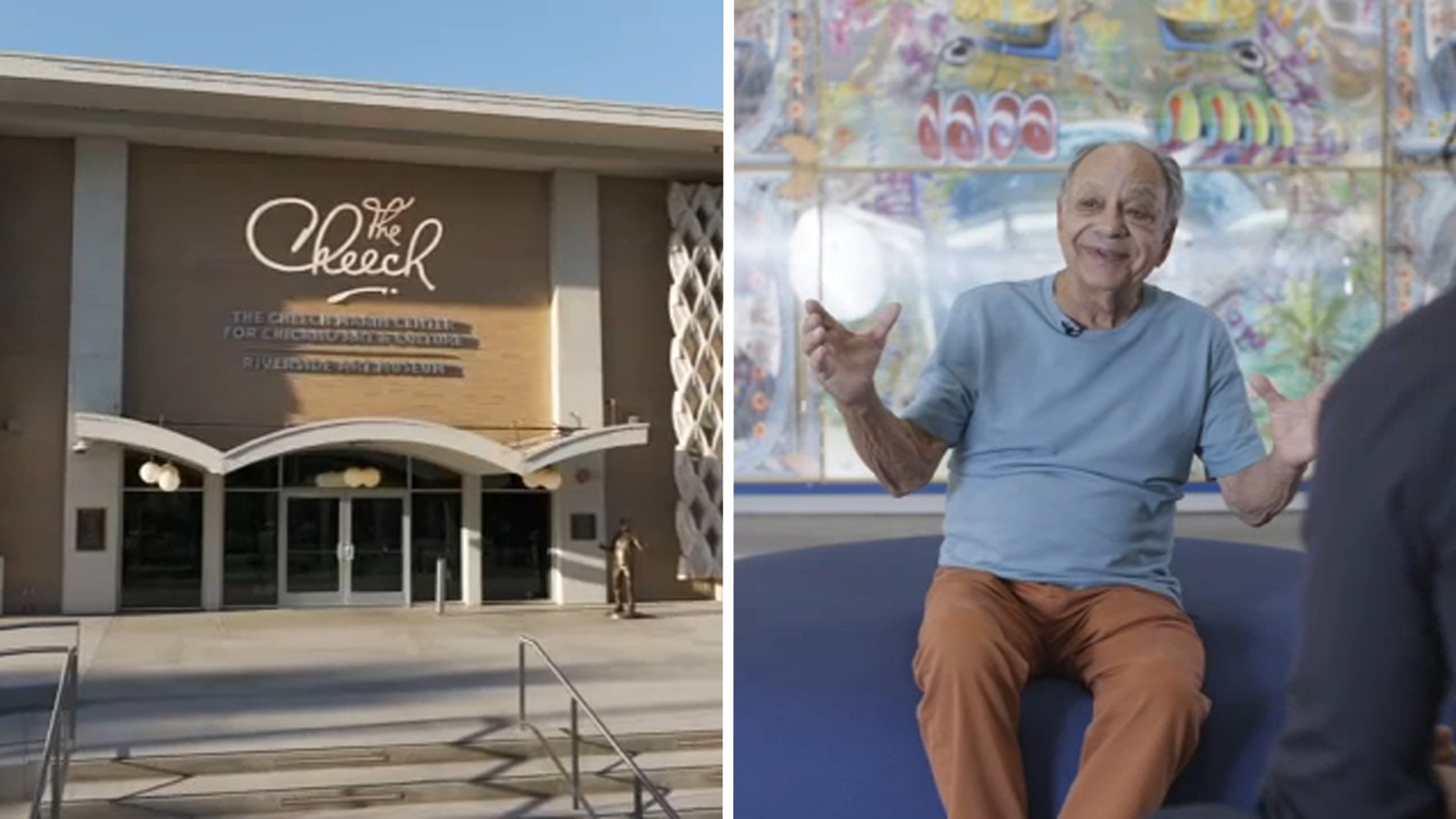
RIVERSIDE, Calif. () — Cheech Marin turned 80 on Monday, marking the milestone after an early celebration Sunday at The Cheech Marin Center for Chicano Art and Culture at the Riverside Art Museum.
Cheech, whose full name is Richard Anthony Marin, first became famous in the 1970s as half of the stoner comedy duo Cheech and Chong. He later built a long acting career and became an avid collector of Chicano art, much of which is now on display at the museum.
The museum, known as “The Cheech,” is housed in a former public library in Riverside. A bronze statue of Marin welcomes visitors inside the Center for Chicano Art and Culture.
Cheech told Eyewitness News anchor David Ono that his interest in art began when he was 9 years old in South Los Angeles and was challenged by his cousin.
“‘Cheech, you go learn about art.’ ‘OK, how do you do that?'” Cheech said. “So, I started going to the library every week, every Saturday. ‘OK, what do you wanna learn about today, impressionism or expressionism?’ ‘I don’t know the difference,’ And we went through everything.”
It’s only fitting that the city of Riverside offered the former library as a home for his collection.
Cheech’s large art collection includes more than 700 pieces that he’s donated after gathering for over 40 years — half of his life.
“Just about. 66,420 square feet. That’s the sign! 420!” Cheech laughed. “I was looking for a sign, and that was the sign.”
Cheech became famous in the 1970s when he partnered with Tommy Chong. For years, the duo made movies and comedy albums about marijuana and the counterculture movement at a time when marijuana was illegal and widely shunned. Still, they made people laugh by getting stoned.
That success enabled Cheech to collect what he loved so much, Chicano art.
But what is “Chicano?”
“It was first an insult. It’s like a low grade, uh, los de abajo, you know? The underdogs. I think during my father’s era, they started, ‘Yeah, I’m a Chicano, Y que?’ You know? Then it gained movement during the Chicano civil rights movement,” Cheech explained. “It was the Chicanos who were already here, and had been born here, and now want exactly the same rights that every other American enjoyed.”
One major moment in Chicano history was Aug. 29, 1970, during the Chicano Moratorium. The anti-war demonstration in East Los Angeles erupted into violence when the Los Angeles Sheriff’s Department moved in on peaceful protesters. Eyewitness News cameras captured deputies brutally beating citizens. Three people were killed.
Inside the museum, the art tells Chicano stories through stained glass, paintings of everyday life and works reflecting neighborhood scenes.
“And by and large, that’s what Chicano art is. ‘This is my neighborhood. These are activities that are going on in my neighborhood. How does it look to you? Is this like your neighborhood?'” Cheech said.
Artist Margaret Garcia of Boyle Heights said she is proud to have her work shown at the museum.
“We are American citizens. I am an American,” Garcia said. “We’re here, and we’ve been here a long time.”
Cheech also highlighted works including a portrait by Vincent Valdez and Frank Romero’s “The arrest of the Paleteros.”
“This is funny, and it’s serious, and it’s incredibly well-painted,” Cheech said. “They sent the SWAT team in to arrest the ice cream men. You know, the paleteros. And it tells you the whole absurdity of that whole move. They didn’t go there to help people. You know, they just wanted to show force to them.”
Romero created the painting 30 years ago in Echo Park, and with ICE raids across Los Angeles in the past year, some would argue that little has changed.
Sean Mill said the museum has become a draw for Riverside.
“People come from all over the world to see The Cheech,” Mill said. “He’s given us something that no other place in America has. It’s attracting people from outside to come to Riverside. In the first two years, $29 million into our economy.”
For Cheech, the response has been powerful.
“The response has been unbelievably fantastic,” he said.
The former library now continues to teach through Cheech’s collection, bringing visitors into the world of Chicano art that he spent half his life helping preserve and share.
© 2026 Television,