







Swiss voters overwhelmingly rejected a proposal to strengthen the country’s neutrality in a referendum on Sunday, with around 70% voting against the measure.
ADVERTISEMENT


ADVERTISEMENT
According to final results published by the Swiss government, the proposal was rejected in all 26 Swiss cantons.
The initiative would have restricted Switzerland’s ability to impose sanctions on other countries, allowing such measures only if they had been approved by the United Nations.
That would have limited Switzerland’s ability to adopt sanctions against Russia, which holds veto power as one of the five permanent members of the UN Security Council.
Supporters of the proposal, led by the far right Swiss People’s Party (SVP), argued that Switzerland had moved too close to the European Union and NATO, particularly since Russia’s full-scale invasion of Ukraine.
“This result is not a vote against neutrality,” Swiss Foreign Minister Ignazio Cassis said at a press conference on Sunday as the referendum results were announced.
“Switzerland was neutral yesterday, it will be neutral today and it will remain neutral,” he stressed.
A costly campaign ends in defeat
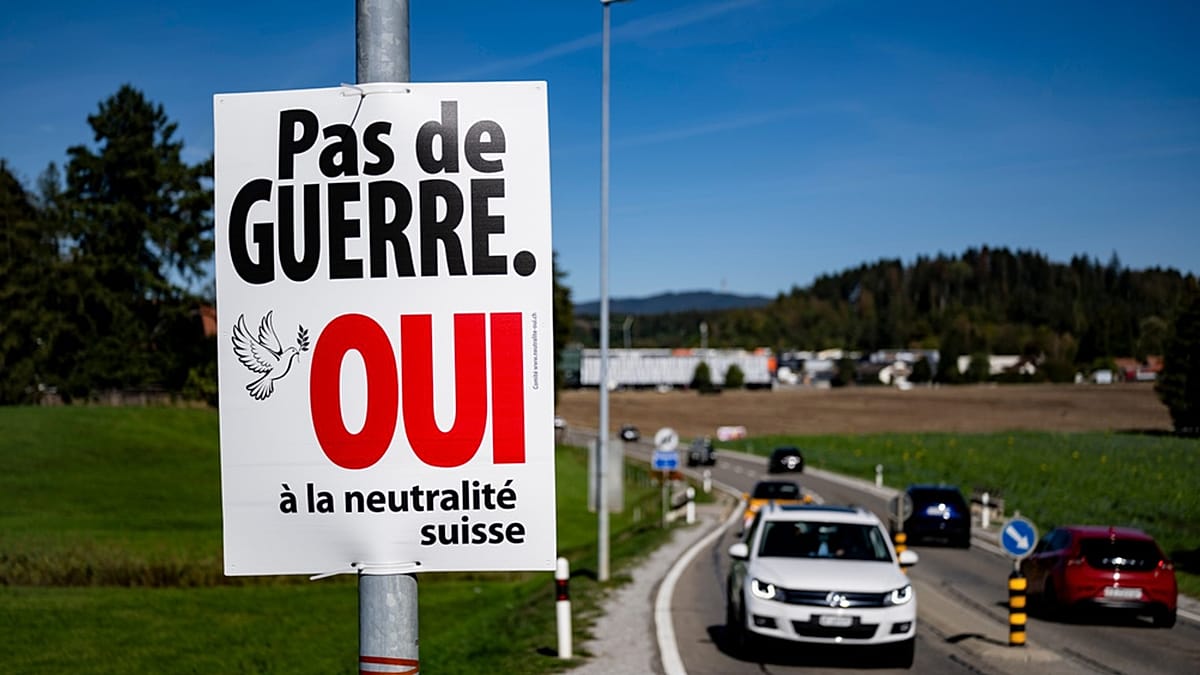
The initiative was championed by Christoph Blocher, the 85-year-old billionaire and influential figure within the SVP, with campaign posters promoting the so-called “neutrality initiative” carried the slogan “No to war”.
Its defeat had been widely anticipated. According to Swiss media reports, the foreign ministry in Bern had privately forecast the outcome several weeks before the vote.
Despite the expected result, Blocher invested heavily in the campaign.
According to Swiss newspaper Berner Zeitung, he spent 3.8 million Swiss francs on the initiative, reportedly the largest amount ever contributed by a single individual to a Swiss referendum campaign.
The result prompted criticism from political opponents.
“The initiative would have set neutrality in stone and would no longer have allowed an adequate response to a given situation,” argued said Susanne Vincenz-Stauffacher, a member of the Swiss National Council, referring to Russia’s war against Ukraine.
She warned that defining neutrality in such rigid terms could prevent Switzerland from imposing sanctions on an aggressor.
“At the end of the day you are not neutral but on the aggressor’s side,” she said.
“Blocher has completely lost his way here,” said Marianne Binder, a Centre Party member of the Council of States representing Aargau.
What does neutrality mean for Switzerland?
Switzerland has maintained a longstanding policy of neutrality and is not a member of any military alliance.
However, the interpretation of that neutrality has been the subject of political debate for years, particularly since Russia’s invasion of Ukraine.
The Swiss government currently advocates a policy of “cooperative neutrality”, under which the country remains militarily non-aligned while retaining the ability to impose sanctions when it considers them necessary to uphold international law.
Swiss Defence Minister Martin Pfister has also called for closer cooperation with NATO.
The rejected initiative sought to enshrine “perpetual and armed neutrality” in the Swiss constitution. It would also have restricted military cooperation with NATO to situations involving an imminent military attack.
While Swiss voters rejected the proposed restrictions, support for neutrality itself remains widespread.
According to the latest survey cited in the debate, 82% of respondents continue to support Switzerland’s neutrality.
The referendum was part of Sunday’s nationwide round of votes on national and local issues.
Under Switzerland’s system of direct democracy, citizens typically vote four times a year on proposed legislation, constitutional amendments and other policy questions.
Read the full article here