








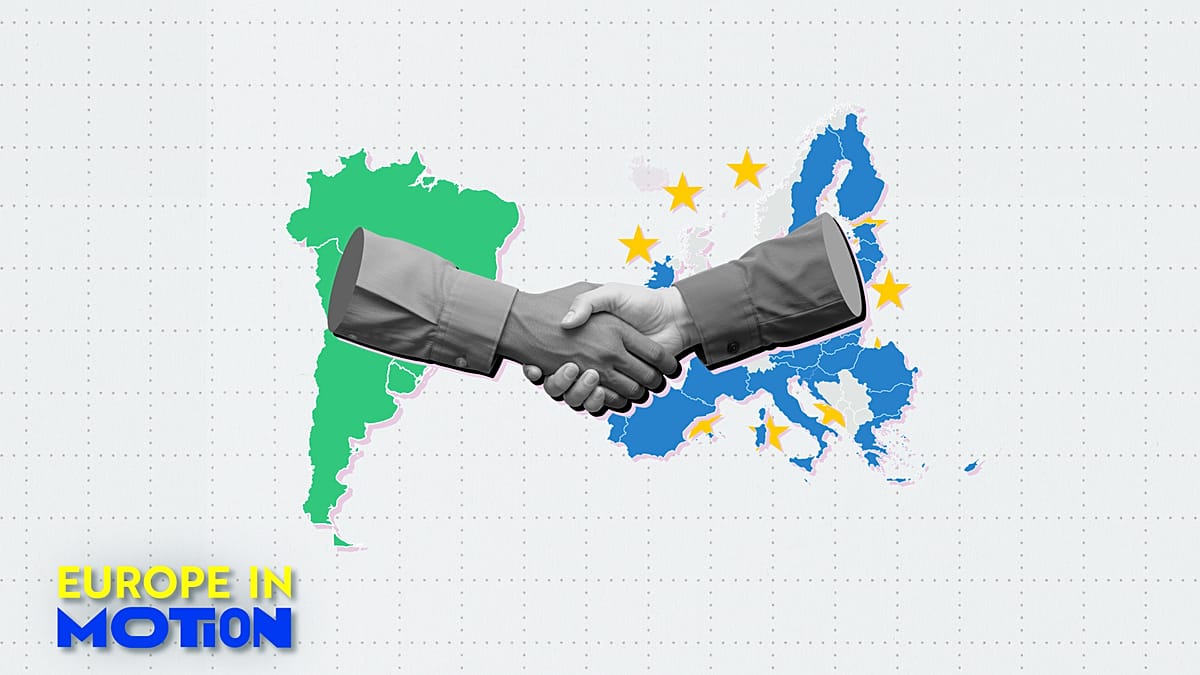
The European Union and Mercosur trade relationship connects over 700 million consumers across Europe and South America.
ADVERTISEMENT


ADVERTISEMENT
The EU is Mercosur’s second-largest partner in trade in goods, accounting for almost 17% of Mercosur’s total trade in 2024.
Meanwhile, Mercosur, which counts Argentina, Bolivia, Brazil, Paraguay and Uruguay among its members, is the EU’s tenth-largest partner for trade in goods.
In 2024, the EU’s trade with Mercosur was worth more than €111 billion: €55.2 billion in exports and €56 billion in imports. More than 80% of the trade flow was between the EU and Brazil.
Between 2014 and 2024, EU-Mercosur trade in goods grew by more than 36%: imports shot up by more than 50%, while exports increased by 25%.
Machinery and appliances, chemicals and pharmaceutical products and transport equipment are the top goods that the EU exports to Mercosur.
On the other hand, agricultural products, mineral products, and pulp and paper are the top goods the EU imports from Mercosur.
After more than 25 years of negotiations, the trade deal between the European Union and Mercosur countries took provisional effect at the beginning of May.
The free trade accord is set to cut South American tariffs on European cars, clothes, food, fine wines and medicines.
In exchange, the EU will open its markets to South American agricultural exports, although it has set limits on imports of beef, pork, ethanol, honey and sugar.
Some 99,000 tonnes of beef per year will be allowed into the EU at 7.5% tariffs, and 180,000 tonnes of poultry at 0%, with both phased in over five to six years.
By 2040, the EU-Mercosur trade deal is expected to boost the EU’s GDP by €77.6 billion.
Criticism of the deal
On 1 May, Ursula von der Leyen, President of the European Commission, celebrated the trade deal in a tweet, reassuring that “provisional application will show the agreement’s tangible benefits”.
However, the deal has raised many concerns across Europe, such as fears it will damage European agriculture, drive deforestation in South America and harm human rights conditions.
Several EU nations, such as France and Ireland, and various environmental groups have warned that the Amazon rainforest may be damaged by increased agricultural expansion and environmental degradation stemming from the deal, and that European cattle farmers may be put at a disadvantage.
Indeed, many European farmers worry about being undercut by a surge of cheaper agricultural goods from the Mercosur trade bloc.
In addition, there have also been concerns about the possible concentration of quotas allocated to products such as South American beef, with members of the European Parliament claiming that Mercosur agricultural heavyweights could dominate access to the quotas.
To address some of these concerns, the 2026 implementation of the deal includes a “provisional safeguard mechanism” that allows the EU to pause imports if they cause serious injury to local industries.
Read the full article here