









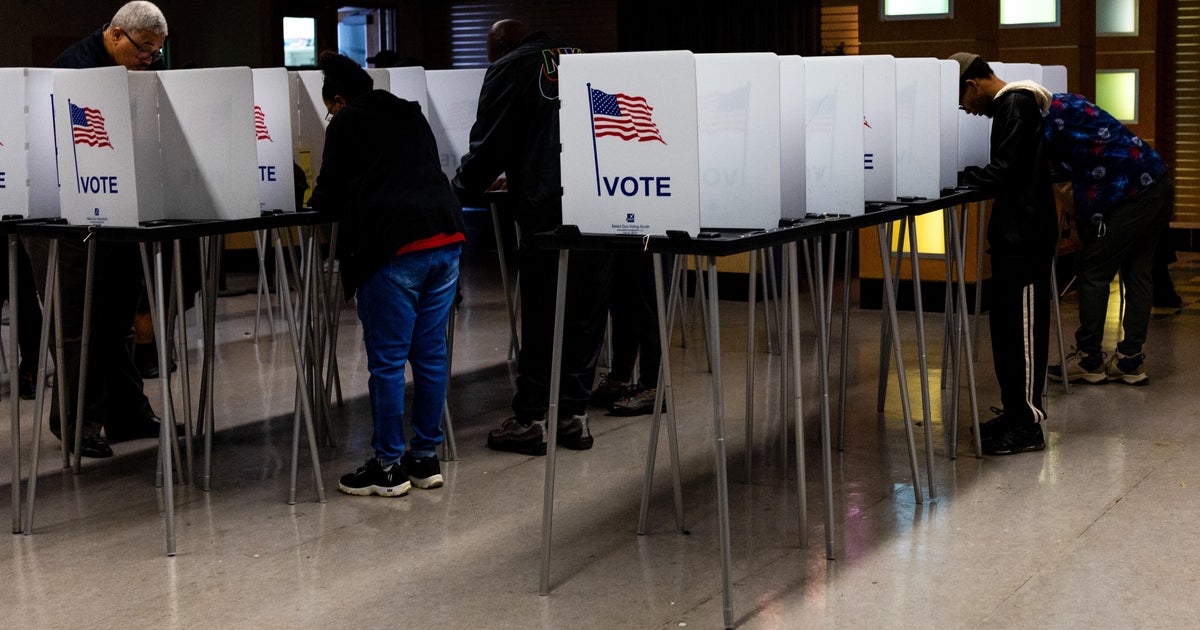
Voters throughout the country head to the polls on Tuesday, Nov. 3, for the midterm elections, with control of Congress, dozens of governorships, and major policy proposals all on the line.
What’s on the ballot today?
All 435 seats in the House of Representatives and 35 seats in the Senate are up for grabs. Beyond Washington, 36 states will choose their next governor, while voters also decide on ballot measures on issues ranging from redistricting to abortion rights to a proposed billionaire tax in California.
What is a midterm election?
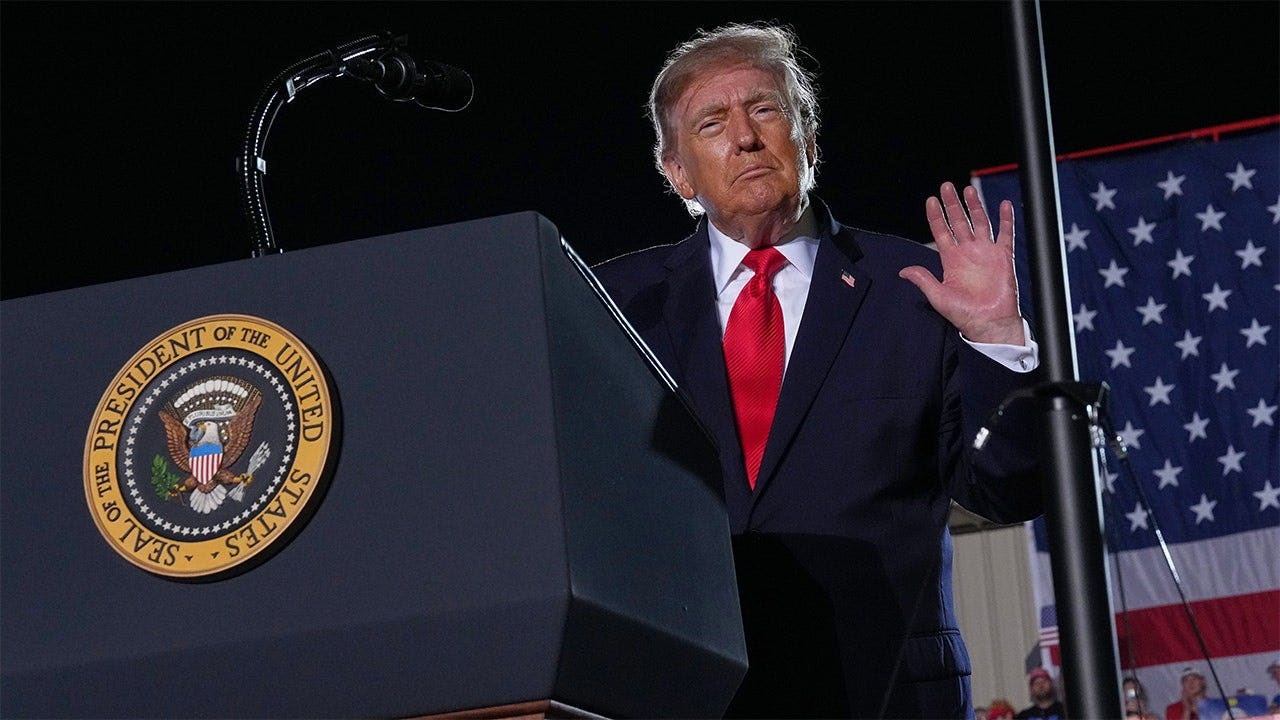
Midterm elections get their name because they happen in the middle of a presidential term. Although the president isn’t on the ballot, the midterm elections often turn into referendums on the president and the party in power.
Key races that are high-stakes today:
House of Representatives
Republicans hold a narrow, three-seat majority in the U.S. House as voters head to the polls on Tuesday. Historically speaking, that could be a tall task for the GOP, as the party controlling the White House hasn’t picked up seats in the House during the midterms since 2002.
The road to a majority for both parties runs through several key districts, the most prominent of which may lie in Pennsylvania. A cluster of four suburban Philadelphia, Lehigh Valley and central Pennsylvania districts are all held by Republicans in competitive territory. With control of the House being decided by such narrow margins, Democrats can put themselves within striking distance of a majority if they’re able to flip all four seats, potentially making Pennsylvania an early bellwether for how the night will go.
Just to the north, in New York’s 17th Congressional District in the Hudson Valley, incumbent two-term Republican Rep. Mike Lawler faces Democratic challenger Cait Conley in a race that has focused a lot of time on foreign policy, immigration and data centers. Lawler has won this seat by less than 30,000 votes in the last two cycles and the district voted for Vice President Kamala Harris in 2024, but faces a much tougher hill to climb, with the national environment blowing strongly in the face of House Republicans.
Further to the west in Iowa, Republicans control all four House seats and have tight races expected in three of them. In the 1st District in the southeastern part of the state, incumbent Republican Mariannette Miller-Meeks will seek to defend herself in a seat that is no stranger to tight races, including in 2020 where Miller-Meeks won by just six votes. Another potentially vulnerable Republican incumbent lies in the 3rd District, where Rep. Zach Nunn seeks a third term in what has traditionally been Iowa’s “bluest” district. The northeastern 2nd District, currently held by now-Senate candidate Ashley Hinson, is a slightly taller task for Democrats, and features two young candidates: 29-year-old GOP nominee Joe Mitchell, and 42-year-old Democrat Lindsay James.
Arizona, long a bastion of tight elections, is set to feature two more in the 1st and 6th congressional districts. In the state’s 1st District, which includes parts of Phoenix, Scottsdale and other suburbs, GOP nominee Jay Feely, a former NFL kicker, will face Democrat Amish Shah, a physician. Shah, who worked on the medical team for the New York Jets at the same time Feely played there, narrowly lost in 2024 to current Rep. David Schweikert. In the 6th district near the border, incumbent Republican Juan Ciscomani is seeking a third term in a seat that he has held on to by less than 3 points in each of the last two cycles.
In Colorado, two House races could potentially make headlines for very different reasons on Election Night. In the deep-blue 1st Congressional District in Denver, 29-year-old Melat Kiros is a heavy favorite to become the first member of “Gen Z” to be elected to Congress, after she defeated longtime incumbent Rep. Diana DeGette in the primary. In the western part of the state, Republican Rep. Lauren Boebert faces an unexpectedly tight battle for reelection in the 4th District. This is a district with a strong Republican lean, as Mr. Trump won it by more than 17 points just two years ago, but recent polling shows Boebert in a close race with Democratic challenger Eileen Laubacher.
California is also set to potentially play a major role in determining who may control the House, as Democrats try to capitalize on a set of newly redrawn districts. The new map, designed to help Democrats pick up five seats currently held by Republicans, is intended to offset gains made by the GOP redistricted states. Among them is the hotly contested Central Valley 22nd congressional district, where incumbent Rep. David Valadao faces Democrat Randy Villegas. In southern California, Republicans look to hold onto the seat in the 48th district, which is being vacated by retiring Rep. Darrell Issa.
But the most intriguing races may be in South Texas, where Republicans hope to hold on to their gains among Latino voters in 2024. In the Corpus Christi border 15th District, Republican Rep. Monica De La Cruz faces Democratic challenger Bobby Pulido, a Latin Grammy-winning music artist. President Trump has made gains among Latino voters in South Texas, but after the GOP-led push to redraw districts, most of the voters are unfamiliar with De La Cruz. A bit further north, in the newly-redrawn open 35th District near San Antonio, Johnny Garcia, a longtime county sheriff’s deputy, will seek to flip the seat away from Republican candidate Carlos De La Cruz, Monica’s brother. There are two other border districts that Democrats are hoping to hold onto that were drawn to be more friendly to Republicans: longtime Rep. Henry Cuellar’s Laredo-area 28th District and Rep. Vicente Gonzalez’s 34th District.
Senate
The GOP is also looking to protect a 53-47 majority in the Senate. While a total of 35 seats are on the ballot, the race is likely to come down to 11 battleground races.
Democrats look set to retain their seat in Georgia, as incumbent Sen. Jon Ossoff appears to have a lead on his Republican challenger, Rep. Mike Collins, according to polling. North Carolina, a longtime Democratic target, seems poised to turn blue, as popular former two-term Democratic governor Roy Cooper has been leading polls to take the seat currently held by retiring Republican Sen. Thom Tillis.
In Maine, longtime Republican incumbent Sen. Susan Collins is facing one of the toughest reelection battles of her 29-year Senate career. Collins, who chairs the Senate Appropriations Committee, is seeking a sixth term in a state Kamala Harris won by three points in 2024. She faces former state Senate President Troy Jackson, who was chosen at the state party convention to replace scandal-plagued Graham Platner on the ballot.
In Alaska, Democratic challenger Mary Peltola faces not one but two Dan Sullivans, one of whom is the Republican incumbent. The other, a retired teacher named Daniel J. Sullivan, has drawn criticism from Republicans who argue his presence on the ballot could siphon votes away from the incumbent. Peltola’s campaign has recently come under fire following reports that operatives linked to her campaign recruited the “other Dan Sullivan” in an alleged attempt to confuse voters. Peltola’s campaign has denied those claims.
Ohio, meanwhile, is a chance for Democrats to reclaim a Senate seat in a state that has moved sharply toward the GOP in recent cycles. Former Democratic Sen. Sherrod Brown, who lost his reelection bid in 2024, faces incumbent Republican Sen. Jon Husted in a race to finish the final two years of now-Vice President JD Vance’s term. Mr. Trump won the state by more than 11 points in 2024, but recent polling shows Brown with a narrow lead heading into Election Day.
Texas, Iowa and Kansas are all states where Mr. Trump won in 2024 by more than 13 points, but are squarely in play. In Texas, Democratic state Rep. James Talarico faces Republican Attorney General Ken Paxton in a race that Democrats hope will deliver their first statewide election win in more than 30 years. Although Iowa has moved to the right over the last decade, Democrats also have their eyes on the Senate seat being vacated by retiring Sen. Joni Ernst. Rep. Ashley Hinson has been locked in a tight contest with Democratic state Rep. Josh Turek for months. Kansas, on the other hand, where Democrats have not won a Senate race since 1932, has also emerged as a battleground state. In a state Mr. Trump won by more than 16 points, recent polling by The Washington Post shows Democratic challenger Adam Hamilton leading incumbent GOP Sen. Roger Marshall by as much as 9 points.
Michigan could be an opportunity for Republicans to flip a seat currently held by Democrats. Former GOP Rep. Mike Rogers is making his second consecutive bid for the Senate two years after losing a tight race to Democrat Elissa Slotkin. He now faces Democrat Abdul El-Sayed, a progressive who would be the first Muslim American to serve in the Senate, in the race to replace retiring Sen. Gary Peters. If Rogers is able to win, it would mark the first Republican Senate victory in the state since 1994, although Mr. Trump has won the state twice. El-Sayed narrowly won the August primary against Democrat Haley Stevens, who then reversed course over the weekend and backed Rogers.
Governors’ races
Voters in 36 states will be electing governors on Tuesday, with several contests taking place in states that could also play important roles in the 2028 presidential election.
In Georgia, former Atlanta Mayor Keisha Lance Bottoms faces Republican Rick Jackson in a race to replace term-limited GOP Gov. Brian Kemp. The contest has featured heavy spending, particularly on Jackson’s side, while polls have Democrats within striking distance of winning the governor’s mansion for the first time since 1998. If Bottoms wins, she would also become the first Black woman elected governor in American history.
Iowa presents what may be Democrats’ best opportunity to flip a governor’s mansion blue. State Auditor Rob Sand, the only Democrat currently holding statewide elected office in Iowa, faces Republican farmer Zach Lahn in a contest to replace retiring GOP Gov. Kim Reynolds. Sand has emphasized his bipartisan credentials throughout the campaign, and has held a consistent lead in the polls since the summer, giving his party a shot to win the governor’s mansion for the first time since 2006.
Elsewhere in the Midwest, two other races in traditional battleground states have drawn national attention. Michigan Secretary of State Jocelyn Benson is taking on Republican Rep. John James in the race to succeed term-limited Democratic Gov. Gretchen Whitmer. In Wisconsin, Milwaukee County Executive David Crowley and Republican Rep. Tom Tiffany are competing to replace retiring Democratic Gov. Tony Evers. Both states voted for Mr. Trump in 2024 and Biden in 2020, and both have outgoing Democratic governors.
The race in Ohio, which has trended red in recent years, may have attracted the most controversy, as Republican entrepreneur and former presidential candidate Vivek Ramaswamy faces Democrat Amy Acton, the state’s former health director. The race grabbed headlines in recent weeks when Ramaswamy’s campaign released an ad featuring Acton’s estranged mother, who accused her daughter of lying about her childhood. Acton has been estranged from her mother for nearly 50 years after her stepfather was charged with sexually abusing her. Although the ad recently drew bipartisan backlash, Ramaswamy — and then Mr. Trump — defended the ad but eventually stopped airing it just days before Election Day.
Ballot measures
Beyond the race for elected office, voters will also have their say on statewide and local ballot measures. The proposals cover a broad range of issues, including abortion rights, voting requirements, redistricting, taxes and government powers.
In California, one of the most closely watched proposals is Proposition 40, which would impose a one-time 5% tax on billionaires living in the state. The measure, which supporters claim would raise tens of billions of dollars, would direct the funds toward healthcare, food assistance programs and education. It’s caused an intra-party fight among Democrats, with Sen. Bernie Sanders, who supports the proposal, repeatedly sparring with outgoing Gov. Gavin Newsom, who opposes it.
Redistricting will also be on the ballot across the country, as states continue to fight over changes to their congressional maps mid-decade. Voters in Maryland and Missouri will consider proposals that would entail major changes to how congressional maps are drawn in their respective states. The passage of either could have significant implications for the balance of power in Washington, particularly in an era when House majorities are especially narrow.
Changes to the electoral process go beyond redistricting, as election rules are also on voters’ minds in several states. Voters in California, Arizona, Colorado and Nevada will consider proposals that would create more stringent voter identification requirements. In Alaska, the ballot will feature a proposal that would repeal the state’s controversial ranked-choice voting system.
Abortion will also take center stage in several states once again, more than four years after the Supreme Court overturned Roe v. Wade. Missouri voters will decide whether to repeal a state constitutional amendment protecting reproductive freedoms passed just two years ago. Idaho will consider a measure that would protect abortion until fetal viability, while Virginia voters will consider a similar measure to protect reproductive rights that would allow some restrictions later in pregnancy.
An emerging local ballot issue is the rapid expansion of data centers. More than 40 local ballot measures across over a dozen states will address key issues relating to data centers, including construction, zoning and approval requirements. Voters throughout Ohio will decide on more than 20 such measures, while communities in parts of Maine, Florida and Kansas will do the same.